Instant
01 · Ask
Ask the AI a follow-up
Got more questions about table revarnishing? Describe the bit you're unsure about — the AI explains options, sequencing and what to ask the furniture repair.

Strip, sand and re-varnish — restores tired tabletops to deep, durable finish.
You've read the brief on table revarnishing. Now lean on us to find the right furniture repair — and stay in control of the job.
Got more questions about table revarnishing? Describe the bit you're unsure about — the AI explains options, sequencing and what to ask the furniture repair.
Costs, timelines, pitfalls and the right questions to ask before any furniture repair starts on table revarnishing.
Itemised quotes from up to 3 local furniture repairs on table revarnishing — so you can compare like-for-like, not lump sums.
Ready when you are
Enter your postcode and get free quotes from local pros.
Four moves that separate a smooth job from a nightmare.
Tiny particles landing in wet varnish create a "gritty" texture. Professionals use tack cloths and sealed environments to avoid this.
Often caused by silicone contamination (from household polish like Pledge) or improper mixing. This requires the coat to be stripped back and started again.
This occurs when moisture is trapped under the varnish, usually due to high humidity during application.
Blotchy patches can appear if the wood isn't prepped with a grain filler or conditioner, particularly on softwoods like pine.
Indicative UK ranges and what affects price.
By job type
Quote spread is typically ± 18% — always get 3 quotes.
Furniture Repair quick-view
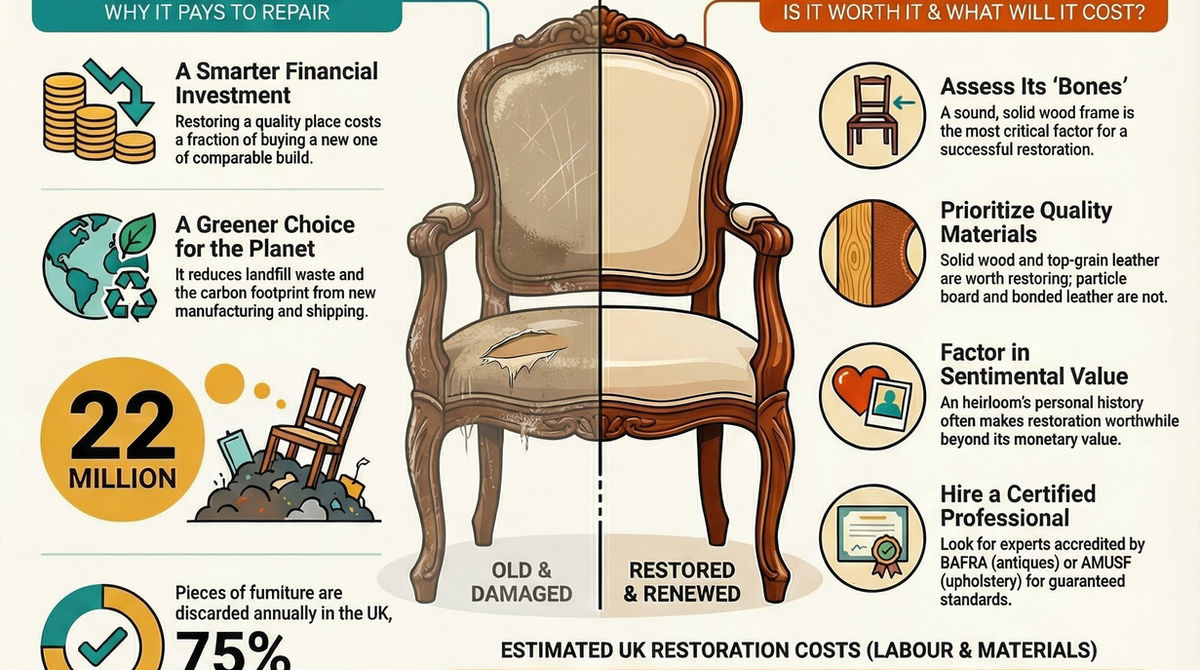
For UK homeowners, this process is an environmentally friendly alternative to buying new. A high-quality finish not only enhances the aesthetic of your dining or living space but also significantly increases the longevity of the timber, protecting it from moisture, heat, and UV damage.
The cost of revarnishing varies based on the table's size, the complexity of its design (e.g., carved legs), and the level of repair required. Prices generally include all materials, professional-grade abrasives, and waste disposal.
| Item | Low £ | High £ | Notes |
|---|---|---|---|
| Small Coffee or Side Table | £150 | £280 | Simple surfaces with minimal prep. |
| Standard 6-Seater Dining Table | £380 | £650 | Includes stripping the top and legs. |
| Large/Extending Dining Table | £600 | £1,200 | Includes extra leaves and complex bases. |
| Specialist Repairs (Per Hour) | £40 | £65 | For deep heat marks or veneer replacement. |
| On-site Call Out / Minimum Charge | £80 | £150 | Covers travel and initial setup. |
Note: Premium finishes like French Polishing or high-gloss "piano" finishes will sit at the top end of these estimates due to the intensive labour involved. Always clarify if VAT is included in your quote.
While a basic sanding and "refresh" is achievable for a confident DIYer on inexpensive pine furniture, professional restoration is highly recommended for valuable hardwoods or antiques. Professionals use industrial-grade dust extraction, preventing fine particles from coating your home, and have the expertise to handle chemical strippers safely.
Professional furniture restorers have access to AC (Acid Catalyst) lacquers and high-build varnishes that are far more durable than the "off-the-shelf" products found in local DIY sheds.
Attempting to sand a veneered table without experience often results in "sanding through" the thin layer of decorative wood, which can be an expensive mistake to rectify. For anything of sentimental or financial value, hiring a specialist ensures a flat, bubble-free finish.
Yes. Once the old finish is stripped back to bare wood, a stain can be applied to lighten, darken, or change the tone (e.g., turning orange-toned pine into a modern walnut shade) before the protective varnish is applied.
Most professional-grade polyurethane and AC lacquers are highly resistant to heat and liquids. However, they are not heat-proof; we still recommend using coasters and heat mats for items straight from the oven.
Yes, many professionals offer on-site refinishing. They will use "tenting" and dust extraction to protect your home. However, for very large jobs or those requiring spraying, the table may need to go to a workshop.
Avoid silicone-based aerosol polishes. Use a slightly damp, lint-free cloth followed by a dry microfibre cloth. For stubborn marks, a very weak solution of pH-neutral dish soap is sufficient.
This is usually "finish failure" caused by a build-up of household cleaning fats or UV degradation of the old lacquer. The only permanent fix is to strip the table back to bare wood and revarnish.
This guide was written with AI assistance and is intended for general information only. Prices are estimates based on UK averages and may vary by region. Always get at least three quotes and consult a qualified professional before starting any work.
Ask follow-ups in plain English. The AI explains options, sequencing and what to ask the furniture repair — so you walk in informed.
Restoring a cherished piece of furniture is often more cost-effective and sustainable than buying new. Whether it is a family heirloom or a high-quality find th...
READ GUIDE →GuideA high-quality sofa is often a significant investment, making professional repair a far more sustainable and cost-effective choice than replacement. Whether it ...
READ GUIDE →GuideA coffee table is often the focal point of a British living room, but years of tea spills, hot mugs, and general wear can leave it looking tired. Restoring a hi...
READ GUIDE →GuideMoth damage can be a distressing discovery for UK homeowners, often affecting expensive wool carpets, heirloom upholstery, or high-end cashmere garments. While ...
READ GUIDE →GuideReupholstering a cherished armchair is a sustainable way to breathe new life into high-quality furniture that has seen better days. Many older UK-made chairs fe...
READ GUIDE →GuideA broken or wobbly sofa leg can make your living room feel neglected and, worse, risks damaging your flooring or causing the frame to collapse. In most cases, a...
READ GUIDE →