Instant
01 · Ask
Ask the AI a follow-up
Got more questions about coffee table restoration? Describe the bit you're unsure about — the AI explains options, sequencing and what to ask the furniture repair.

Strip, sand, stain and lacquer — restored to factory finish by furniture restorers.
You've read the brief on coffee table restoration. Now lean on us to find the right furniture repair — and stay in control of the job.
Got more questions about coffee table restoration? Describe the bit you're unsure about — the AI explains options, sequencing and what to ask the furniture repair.
Costs, timelines, pitfalls and the right questions to ask before any furniture repair starts on coffee table restoration.
Itemised quotes from up to 3 local furniture repairs on coffee table restoration — so you can compare like-for-like, not lump sums.
Ready when you are
Enter your postcode and get free quotes from local pros.
Four moves that separate a smooth job from a nightmare.
This happens when moisture is trapped under a new finish, usually due to high humidity during application.
Using the wrong heat or chemical stripper can cause the glue underneath old veneer to fail and bubble.
Applying a water-based varnish over an old wax finish will cause the new coat to peel off almost immediately.
Small particles landing in wet lacquer can leave a "gritty" texture that requires the whole surface to be sanded back again.
Indicative UK ranges and what affects price.
By job type
Quote spread is typically ± 18% — always get 3 quotes.
Furniture Repair quick-view
Whether you have a mid-century G-Plan teak table or a solid oak heirloom, professional restoration can revive the natural grain and ensure structural integrity for decades to come. This guide covers everything you need to know about the process, costs, and finding the right craftsman in the UK.
The cost of restoration depends heavily on the table's size and the complexity of the finish. A simple sand-and-oil job on a solid pine table is significantly cheaper than a full French polish on a mahogany antique.
| Item / Service | Low £ | High £ | Notes |
|---|---|---|---|
| Minor Surface Refresh | £120 | £200 | Light sanding and re-waxing or oiling. |
| Full Strip & Refinish | £250 | £450 | Complete removal of old finish and new lacquer/varnish. |
| Veneer Repairs | £80 | £250 | Price depends on the rarity of the wood and area size. |
| Structural Stabilisation | £60 | £150 | Fixing loose joints and wobbly legs. |
| Specialist French Polishing | £350 | £650+ | Traditional hand-rubbed finish for high-end antiques. |
Prices generally include VAT and basic materials. Specialist stains or bespoke replacement parts will increase the final quote, as will collection and delivery fees if the work is done off-site.
Basic waxing or light sanding on a solid wood table is a manageable DIY task for most homeowners. However, if your table is veneered, you risk sanding right through the thin layer of wood, which is a permanent and costly mistake.
Professional restorers have the tools to match historical stains and the patience to apply finishes in dust-free environments that are nearly impossible to replicate in a domestic garage.
For valuable antiques or mid-century modern pieces, a professional ensures the "patina" is preserved rather than destroyed. They also use industrial-grade finishes that offer far superior heat and water resistance compared to off-the-shelf DIY products.
While there are few specific building regulations for furniture restoration, professional restorers must comply with the VOC (Volatile Organic Compounds) Regulations regarding the types of solvents and finishes used. If your furniture is an antique (pre-1960s), it may have been treated with lead-based paints or finishes; a professional will know how to strip these safely without releasing toxic dust into your home.
Yes, white rings are usually moisture trapped in the top layer of the finish. A professional can often "flash" these out with specialist chemicals or a light abrasive polish without needing to strip the whole table.
If the table is made of solid wood or high-quality plywood, it is usually worth it. If it is made of MDF or chipboard with a plastic laminate "wood effect," restoration is rarely possible or cost-effective.
Avoid silicone-based spray polishes as they build up a greasy residue. Use a damp microfibre cloth for cleaning and a high-quality beeswax or specialist furniture oil once or twice a year depending on the finish.
To an extent. Once the old dark stain is stripped, the wood can be bleached or finished with a "raw" effect oil to keep it as light as possible, though the natural species of the wood (like dark mahogany) will always have a limit.
Sympathetic restoration usually increases value by stabilising the piece. However, "over-restoring" by removing the natural aged character (patina) can occasionally reduce the value of very rare antiques. Always consult a specialist first.
This guide was written with AI assistance and is intended for general information only. Prices are estimates based on UK averages and may vary by region. Always get at least three quotes and consult a qualified professional before starting any work.
Ask follow-ups in plain English. The AI explains options, sequencing and what to ask the furniture repair — so you walk in informed.
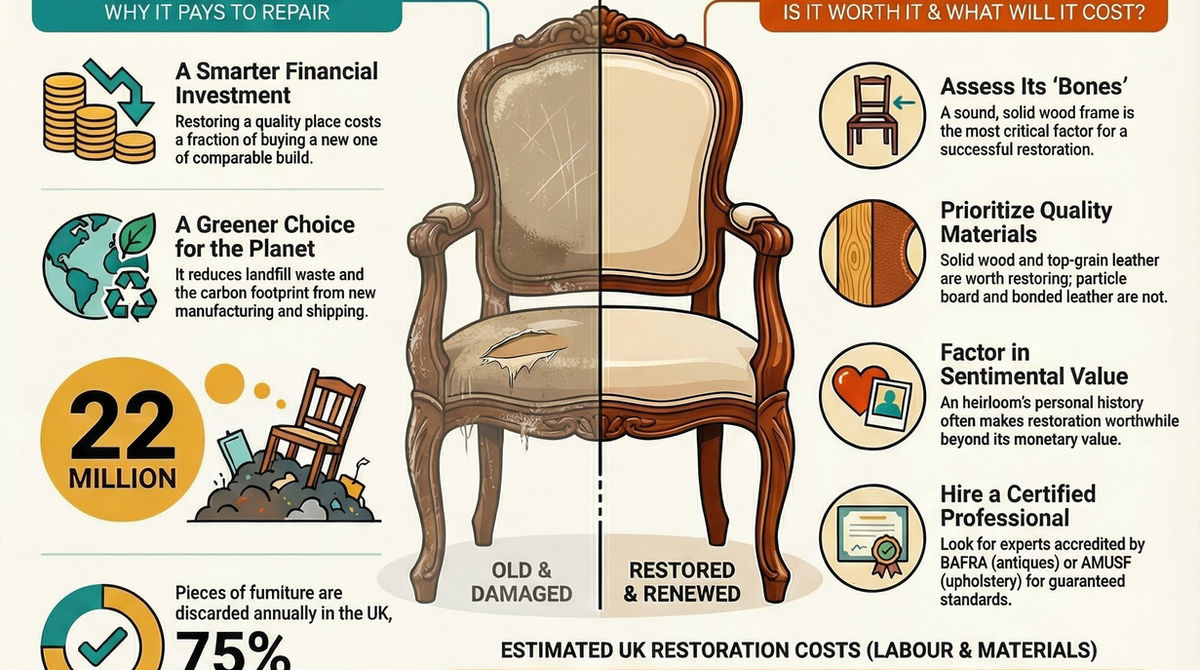
Restoring a cherished piece of furniture is often more cost-effective and sustainable than buying new. Whether it is a family heirloom or a high-quality find th...
READ GUIDE →GuideTable revarnishing is one of the most effective ways to breathe new life into tired furniture. Whether it is a cherished family heirloom, a sturdy oak dining ta...
READ GUIDE →GuideA high-quality sofa is often a significant investment, making professional repair a far more sustainable and cost-effective choice than replacement. Whether it ...
READ GUIDE →GuideMoth damage can be a distressing discovery for UK homeowners, often affecting expensive wool carpets, heirloom upholstery, or high-end cashmere garments. While ...
READ GUIDE →GuideReupholstering a cherished armchair is a sustainable way to breathe new life into high-quality furniture that has seen better days. Many older UK-made chairs fe...
READ GUIDE →GuideA broken or wobbly sofa leg can make your living room feel neglected and, worse, risks damaging your flooring or causing the frame to collapse. In most cases, a...
READ GUIDE →