Instant
01 · Ask
Ask the AI a follow-up
Got more questions about furniture sanding and staining? Describe the bit you're unsure about — the AI explains options, sequencing and what to ask the furniture repair.

Old finish stripped, timber sanded back, new stain or paint applied and sealed.
You've read the brief on furniture sanding and staining. Now lean on us to find the right furniture repair — and stay in control of the job.
Got more questions about furniture sanding and staining? Describe the bit you're unsure about — the AI explains options, sequencing and what to ask the furniture repair.
Costs, timelines, pitfalls and the right questions to ask before any furniture repair starts on furniture sanding and staining.
Itemised quotes from up to 3 local furniture repairs on furniture sanding and staining — so you can compare like-for-like, not lump sums.
Ready when you are
Enter your postcode and get free quotes from local pros.
Four moves that separate a smooth job from a nightmare.
Softwoods like pine and cherry often absorb stain unevenly. Professionals use a "pre-stain conditioner" to prevent a patchy appearance.
"Pig tails" or swirl marks caused by poor technique become highly visible once a dark stain is applied.
Tiny particles of dust landing in wet varnish create a sandpaper-like texture. This is avoided by using "tack cloths" and a clean environment.
Over-sanding edges or corners on veneered furniture is the most common irreversible mistake made by non-specialists.
Indicative UK ranges and what affects price.
By job type
Quote spread is typically ± 18% — always get 3 quotes.
Furniture Repair quick-view
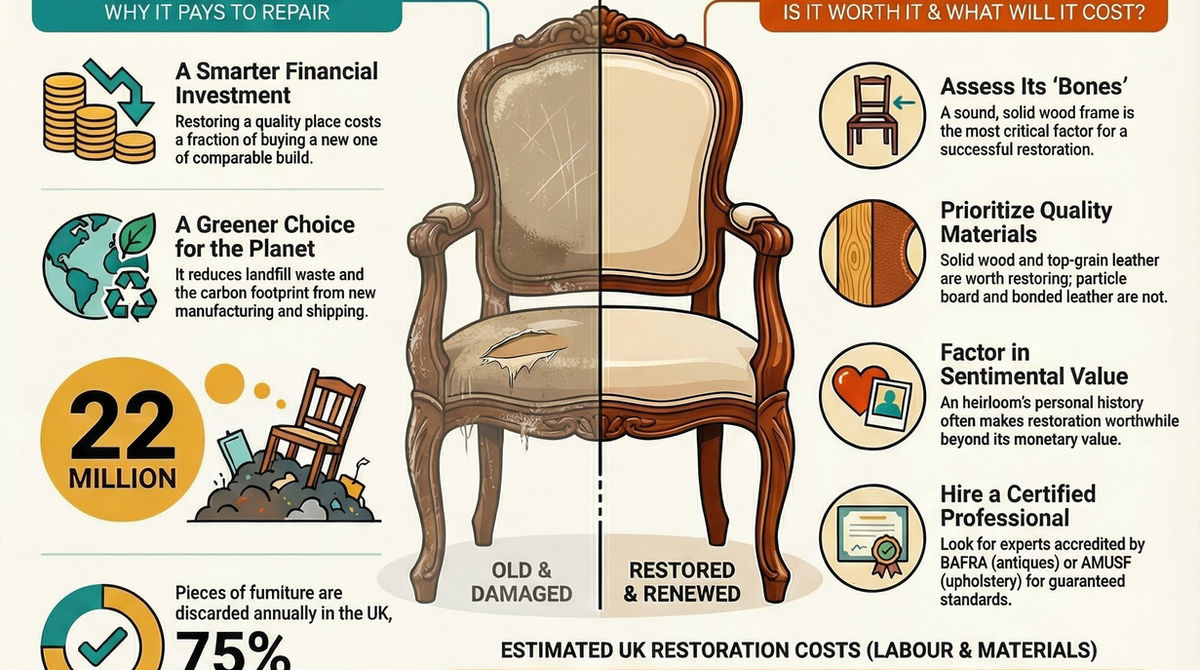
In the UK, where solid wood furniture like oak, mahogany, and pine is common, professional restoration preserves the value of the piece. A specialist finish not only enhances the grain but provides essential protection against the humidity and temperature shifts typical of British homes.
Prices for furniture restoration vary based on the complexity of the piece and the type of finish required. Intricate carvings or "shabby chic" paint removal will always command a premium over flat surfaces like dining tables.
| Item / Service | Low £ | High £ | Notes |
|---|---|---|---|
| Minimum Call-out / Small Item | £80 | £150 | Covers bedside tables or small coffee tables. |
| Dining Table (Standard 6-seater) | £250 | £550 | Includes top and legs; price depends on wood type. |
| Set of 4 Chairs | £180 | £400 | Fiddly work with many spindles increases labour. |
| Large Sideboard or Dresser | £350 | £750 | Extensive surface area and internal sanding. |
| Materials & Sundries | £30 | £120 | Premium oils, stains, and high-performance abrasives. |
The primary cost driver is labour. Hardwoods like oak take longer to sand than softwoods like pine, and removing modern polyurethane finishes is more labour-intensive than stripping old wax.
While sanding a flat pine board is a common DIY task, high-value furniture carries significant risks. Many modern pieces use thin veneers; an amateur with a power sander can "sand through" to the MDF core in seconds, effectively ruining the piece beyond repair.
Professional restorers use industrial dust extraction and have the skill to match stains to existing decor. For antiques or items with sentimental value, a professional finish is an investment in the item's longevity.
It is difficult to go lighter with stain alone. While you can strip a dark finish back to the natural wood, the underlying species (like Mahogany) has a natural dark tone that cannot be easily lightened without chemical bleaching, which can be risky.
Most modern professionals use "extraction sanding" where the sander is connected to a high-powered vacuum. This removes up to 95% of dust at the source, though some fine settling is inevitable.
Water-based finishes have very low odour and dissipate in hours. Oil or solvent-based finishes can "off-gas" for 2–7 days, so good ventilation is essential during this period.
Generally, no. Most flat-pack furniture is made of chipboard with a paper or plastic laminate. You cannot sand or stain these materials; they can only be lightly scuffed and painted.
A high-quality polyurethane varnish or a modern hard-wax oil (like Osmo or Fiddes) offers the best protection against heat and liquid spills common in UK kitchens and dining rooms.
This guide was written with AI assistance and is intended for general information only. Prices are estimates based on UK averages and may vary by region. Always get at least three quotes and consult a qualified professional before starting any work.
Ask follow-ups in plain English. The AI explains options, sequencing and what to ask the furniture repair — so you walk in informed.
Table revarnishing is one of the most effective ways to breathe new life into tired furniture. Whether it is a cherished family heirloom, a sturdy oak dining ta...
READ GUIDE →GuideA high-quality sofa is often a significant investment, making professional repair a far more sustainable and cost-effective choice than replacement. Whether it ...
READ GUIDE →GuideA coffee table is often the focal point of a British living room, but years of tea spills, hot mugs, and general wear can leave it looking tired. Restoring a hi...
READ GUIDE →GuideMoth damage can be a distressing discovery for UK homeowners, often affecting expensive wool carpets, heirloom upholstery, or high-end cashmere garments. While ...
READ GUIDE →GuideReupholstering a cherished armchair is a sustainable way to breathe new life into high-quality furniture that has seen better days. Many older UK-made chairs fe...
READ GUIDE →GuideA broken or wobbly sofa leg can make your living room feel neglected and, worse, risks damaging your flooring or causing the frame to collapse. In most cases, a...
READ GUIDE →