Instant
01 · Ask
Ask the AI a follow-up
Got more questions about sofa Repair Costs? Describe the bit you're unsure about — the AI explains options, sequencing and what to ask the furniture repair.

What different sofa repairs cost in 2026 — and when full reupholstery is actually cheaper.
You've read the brief on sofa Repair Costs. Now lean on us to find the right furniture repair — and stay in control of the job.
Got more questions about sofa Repair Costs? Describe the bit you're unsure about — the AI explains options, sequencing and what to ask the furniture repair.
Costs, timelines, pitfalls and the right questions to ask before any furniture repair starts on sofa Repair Costs.
Itemised quotes from up to 3 local furniture repairs on sofa Repair Costs — so you can compare like-for-like, not lump sums.
Ready when you are
Enter your postcode and get free quotes from local pros.
Four moves that separate a smooth job from a nightmare.
Using cheap foam toppers instead of addressing failed webbing. This only hides the problem for a few weeks.
Assuming a sag is just the cushion, when it is actually a snapped cross-rail. A professional inspection is vital.
Replacing springs in only one seat, leading to an uneven sit. It is usually best to refresh the whole row.
If a frame is repaired poorly, it can put uneven tension on the upholstery, leading to premature tearing.
Indicative UK ranges and what affects price.
By job type
Quote spread is typically ± 18% — always get 3 quotes.
Furniture Repair quick-view
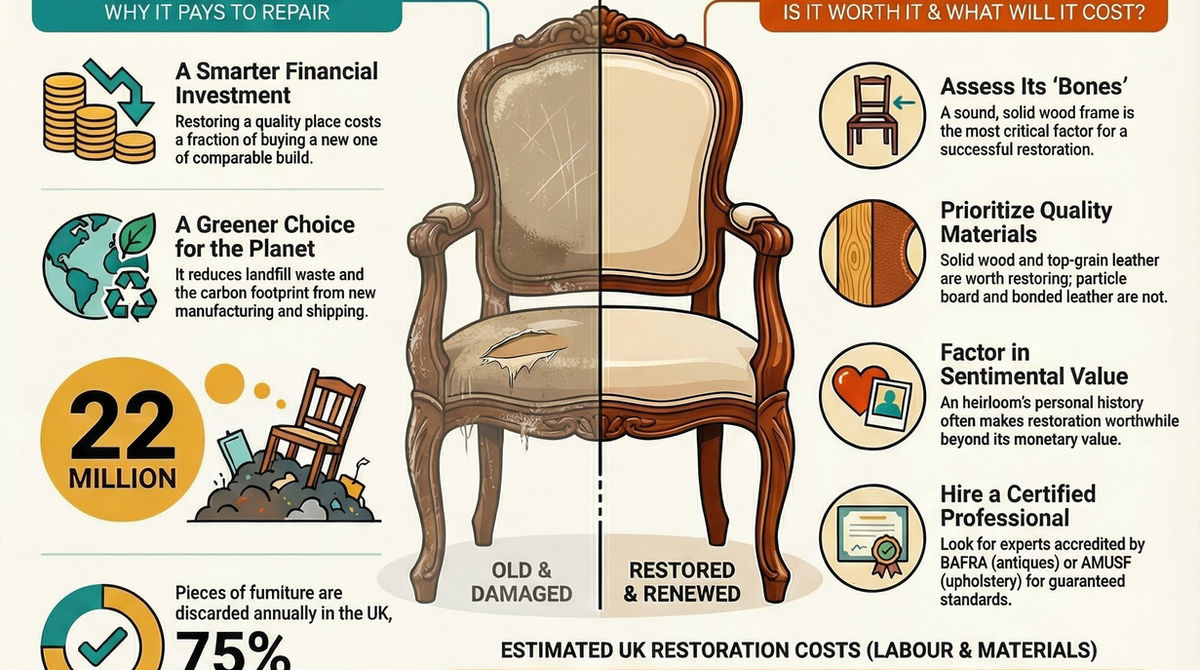
In the UK, modern furniture must also adhere to strict fire safety standards. Professional restoration ensures that any replacement foams or linings keep your home compliant and safe while extending the life of your furniture by years.
| Item / Service | Low £ | High £ | Notes |
|---|---|---|---|
| Call-out / Assessment Fee | £50 | £95 | Often deducted from the final repair bill. |
| Spring / Webbing Repair (per seat) | £80 | £160 | Includes materials and labour for one seating area. |
| Frame Rail Repair | £120 | £250 | Bracing or replacing snapped hardwood or ply rails. |
| Replacement Foam Cushion (per seat) | £70 | £130 | High-density reflex foam including VAT. |
| Recliner Cable / Handle Replacement | £65 | £110 | Common fix for manual reclining sofas. |
| Sofa-Bed Mechanism Replacement | £200 | £450 | Price depends heavily on the specific brand/model. |
| Total Average Project | £250 | £850 | Varies by sofa size and extent of damage. |
Prices are influenced by the quality of the original sofa and the accessibility of the repair. Repairs on high-end designer pieces or complex electric recliners generally sit at the higher end of the scale due to specialized parts.
While minor cosmetic fixes like fabric cleaning or "booster" pads can be DIY tasks, structural and mechanical repairs require professional expertise. Working on springs involves high tension which can be dangerous if the correct tools are not used.
Crucially, professional repairers ensure all materials meet the Furniture and Furnishings (Fire) (Safety) Regulations 1988. Attempting to replace foam yourself with non-compliant materials can create a significant fire hazard in your home.
Top Tip: Always check if your sofa is still under a manufacturer’s warranty or covered by accidental damage insurance before paying for a private repair.
If the frame is made of chipboard or low-grade MDF, the repair cost might exceed the sofa's value. However, if the frame is solid, even a "budget" sofa is worth saving to avoid the cost of new furniture and disposal fees.
Yes. This is usually caused by stretched webbing or fatigued zig-zag springs. A professional can strip the base and install new, high-tension supports to make the sofa feel like new.
For structural repairs, the original fabric is usually reused. If a panel needs replacing, most upholsterers can source a close match, or you can provide your own if you have spare offcuts from the original purchase.
Generally, motors are replaced rather than repaired. A technician will diagnose whether the fault lies in the transformer, the hand switch, or the motor unit itself and swap the faulty component.
No. Most structural repairs are performed from underneath or behind the fabric. Once the dust cover is re-stapled, there should be no visible evidence of the work.
This guide was written with AI assistance and is intended for general information only. Prices are estimates based on UK averages and may vary by region. Always get at least three quotes and consult a qualified professional before starting any work.
Ask follow-ups in plain English. The AI explains options, sequencing and what to ask the furniture repair — so you walk in informed.
Restoring a cherished piece of furniture is often more cost-effective and sustainable than buying new. Whether it is a family heirloom or a high-quality find th...
READ GUIDE →GuideTable revarnishing is one of the most effective ways to breathe new life into tired furniture. Whether it is a cherished family heirloom, a sturdy oak dining ta...
READ GUIDE →GuideA coffee table is often the focal point of a British living room, but years of tea spills, hot mugs, and general wear can leave it looking tired. Restoring a hi...
READ GUIDE →GuideMoth damage can be a distressing discovery for UK homeowners, often affecting expensive wool carpets, heirloom upholstery, or high-end cashmere garments. While ...
READ GUIDE →GuideReupholstering a cherished armchair is a sustainable way to breathe new life into high-quality furniture that has seen better days. Many older UK-made chairs fe...
READ GUIDE →GuideA broken or wobbly sofa leg can make your living room feel neglected and, worse, risks damaging your flooring or causing the frame to collapse. In most cases, a...
READ GUIDE →