Instant
01 · Ask
Ask the AI a follow-up
Got more questions about shelf installation? Describe the bit you're unsure about — the AI explains options, sequencing and what to ask the handyman.

Floating, bracket or alcove shelving — measured, levelled and properly anchored to wall or stud.
You've read the brief on shelf installation. Now lean on us to find the right handyman — and stay in control of the job.
Got more questions about shelf installation? Describe the bit you're unsure about — the AI explains options, sequencing and what to ask the handyman.
Costs, timelines, pitfalls and the right questions to ask before any handyman starts on shelf installation.
Itemised quotes from up to 3 local handymans on shelf installation — so you can compare like-for-like, not lump sums.
Ready when you are
Enter your postcode and get free quotes from local pros.
Four moves that separate a smooth job from a nightmare.
Drilling into a water pipe or electrical cable is the most common disaster. This is avoided by using high-quality multi-detectors.
This happens when the span between brackets is too wide or the fixings are inappropriate for the wall type (e.g., using standard plugs in hollow plasterboard).
Many UK walls are not perfectly flat or square. A professional will "scribe" or shim the shelf to ensure it looks level even if the wall isn't.
Using a hammer-action drill on old lath and plaster walls can cause large chunks of plaster to blow out. Using the correct masonry bit and technique is vital.
Indicative UK ranges and what affects price.
By job type
Quote spread is typically ± 18% — always get 3 quotes.
Handyman quick-view
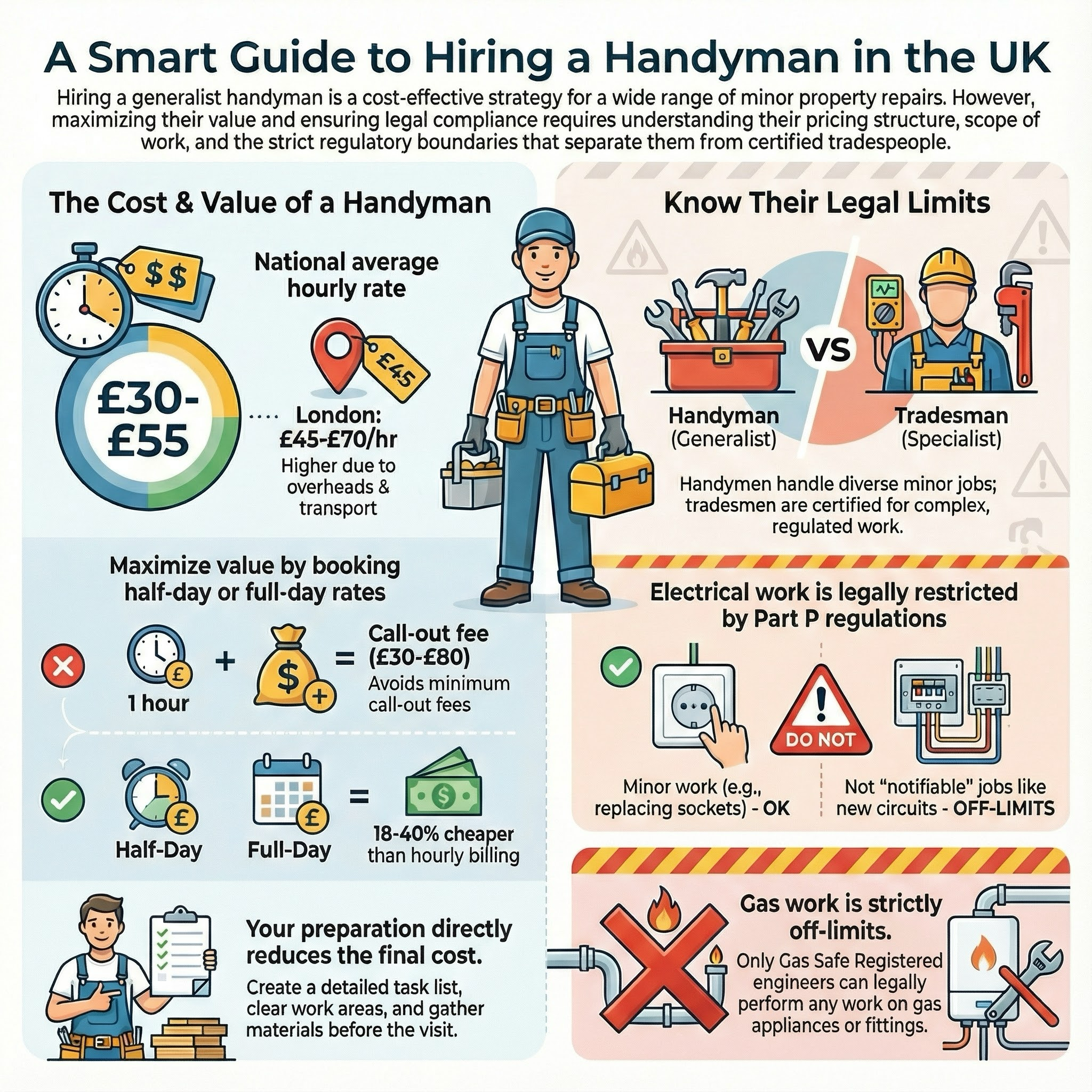
Handyman explained
For many homeowners, the challenge lies in the variety of UK wall types—ranging from solid brick and breeze block to modern "dot and dab" or timber stud partitions. Hiring a professional handyman ensures that your shelves are not only perfectly level but also safely rated for the weight they need to carry, preventing costly damage to your walls or belongings.
The cost of shelf installation in the UK typically depends on the number of shelves, the type of wall, and whether the handyman needs to supply the materials. Most professionals charge a minimum call-out fee to cover travel and the first hour of labour.
| Item | Low £ | High £ | Notes |
|---|---|---|---|
| Call-out / Minimum Charge | £75 | £120 | Covers the first 45–60 minutes of work. |
| Hourly Labour Rate | £40 | £70 | Higher rates apply in London and the South East. |
| Standard Bracketed Shelf (Labour) | £30 | £50 | Per shelf, assuming 2-3 shelves are installed. |
| Floating Shelf Installation (Labour) | £45 | £85 | Requires higher precision and specialist fixings. |
| Materials (Fixings & Brackets) | £15 | £60 | Basic hardware; designer brackets cost significantly more. |
| Waste Disposal | £0 | £40 | Removal of old shelving units or bulky packaging. |
Prices generally include VAT unless the handyman is a sole trader below the threshold. If you require bespoke timber cutting or painting, expect the labour costs to shift toward the higher end of the scale.
While putting up a basic shelf is a common DIY task, it is frequently underestimated. In the UK, many modern homes use "dot and dab" plasterboard, which leaves a precarious gap between the board and the masonry; using the wrong fixing here will cause the shelf to sag or pull a hole in the wall. If you are drilling near light switches, sockets, or in bathrooms, the risk of hitting a cable or pipe is high. A professional handyman carries the correct detection equipment and insurance to mitigate these risks, making them a safer choice for heavy or high-value items.
Always hire a professional if you are installing shelving in "wet zones" (bathrooms/kitchens) or if the shelves are intended to hold heavy loads like large book collections or kitchen appliances.
Finding a reliable handyman involves more than just picking the lowest quote. Look for someone who specialises in internal maintenance and has a track record of joinery or mounting work.
Questions to ask:
Standard shelf installation does not usually require Building Regulations approval. However, certain safety standards apply:
Yes, but it is more difficult than on a solid wall. You must either fix the internal bracket directly into the wooden studs or use specialist heavy-duty plasterboard anchors like Gripit or Snaptoggle fixings. Standard floating shelf kits from high-street retailers often have weight limits as low as 5kg when fitted to hollow walls.
A shelf fixed into solid brick with quality 50mm screws and plugs can often hold 30kg-50kg depending on the bracket size. On a plasterboard wall, this drops significantly to around 10kg-20kg unless fixed into the timber studs. Always consult your handyman about the intended use (e.g., heavy books vs. light ornaments).
Most homeowners buy the shelves and brackets they like for aesthetic reasons. The handyman will usually provide the internal fixings (screws and wall plugs) as they carry a variety of types for different wall conditions. Confirm this when booking to avoid a trip to the hardware store.
Dot and dab is a common UK construction method where plasterboard is stuck to a brick wall with dabs of adhesive, leaving a small gap. Standard wall plugs will fail here because they expand in the empty gap rather than the brick. A pro will use "Rigifix" or long frame fixings that bridge the gap into the solid wall behind.
Yes, this is a common repair. They will usually need to move the shelf slightly up or down to find "fresh" wall, or use a chemical resin anchor to fill the damaged hole and provide a rock-solid base for a new fixing.
This guide was written with AI assistance and is intended for general information only. Prices are estimates based on UK averages and may vary by region. Always get at least three quotes and consult a qualified professional before starting any work.
Ask follow-ups in plain English. The AI explains options, sequencing and what to ask the handyman — so you walk in informed.
An emergency roof repair is often the only thing standing between a minor leak and a catastrophic repair bill. In the UK, where driving rain and high winds are ...
READ GUIDE →GuideLuggage Repair Guide Scope of Works Assess damage & quote – check zip, wheels, handle, shell cracks; photograph for records. Strip & clean component are...
READ GUIDE →GuideSofa Assembly Service Guide Scope of Works Check delivery note, photograph boxes and inspect for transit damage . Protect floors, then move boxed sofa to the as...
READ GUIDE →GuideWardrobe Assembly Costs Scope of Works Arrival & parts check – count panels, fixings and ensure no transit damage before work starts. Room protection & ...
READ GUIDE →GuideCustom kitchen shelving has become a staple of modern UK home design. Whether you are looking to create an open-plan feel with oak "floating" shelves or need he...
READ GUIDE →GuideSetting up a professional workspace requires more than just a screwdriver and some patience. Commercial-grade furniture is often heavier, more complex, and subj...
READ GUIDE →