Instant
01 · Ask
Ask the AI a follow-up
Got more questions about levelling Tool Equipment Hire? Describe the bit you're unsure about — the AI explains options, sequencing and what to ask the hire services.

Laser level, transit, total station — for site setting out and building level checks.
You've read the brief on levelling Tool Equipment Hire. Now lean on us to find the right hire services — and stay in control of the job.
Got more questions about levelling Tool Equipment Hire? Describe the bit you're unsure about — the AI explains options, sequencing and what to ask the hire services.
Costs, timelines, pitfalls and the right questions to ask before any hire services starts on levelling Tool Equipment Hire.
Itemised quotes from up to 3 local hire servicess on levelling Tool Equipment Hire — so you can compare like-for-like, not lump sums.
Ready when you are
Enter your postcode and get free quotes from local pros.
Four moves that separate a smooth job from a nightmare.
If a tool is dropped during transit, it may give false readings; always perform a quick check against a known level point.
Wind or nearby heavy traffic can cause "laser shake," leading to inaccurate readings on sensitive rotary units.
Forgetting to charge the unit overnight can stall a project; always request a model that can run on standard AA/D-cell batteries as a backup.
Red laser beams are often invisible outdoors; ensure your hire includes a digital receiver and grade staff for exterior work.
Indicative UK ranges and what affects price.
By job type
Quote spread is typically ± 18% — always get 3 quotes.
Hire Services quick-view
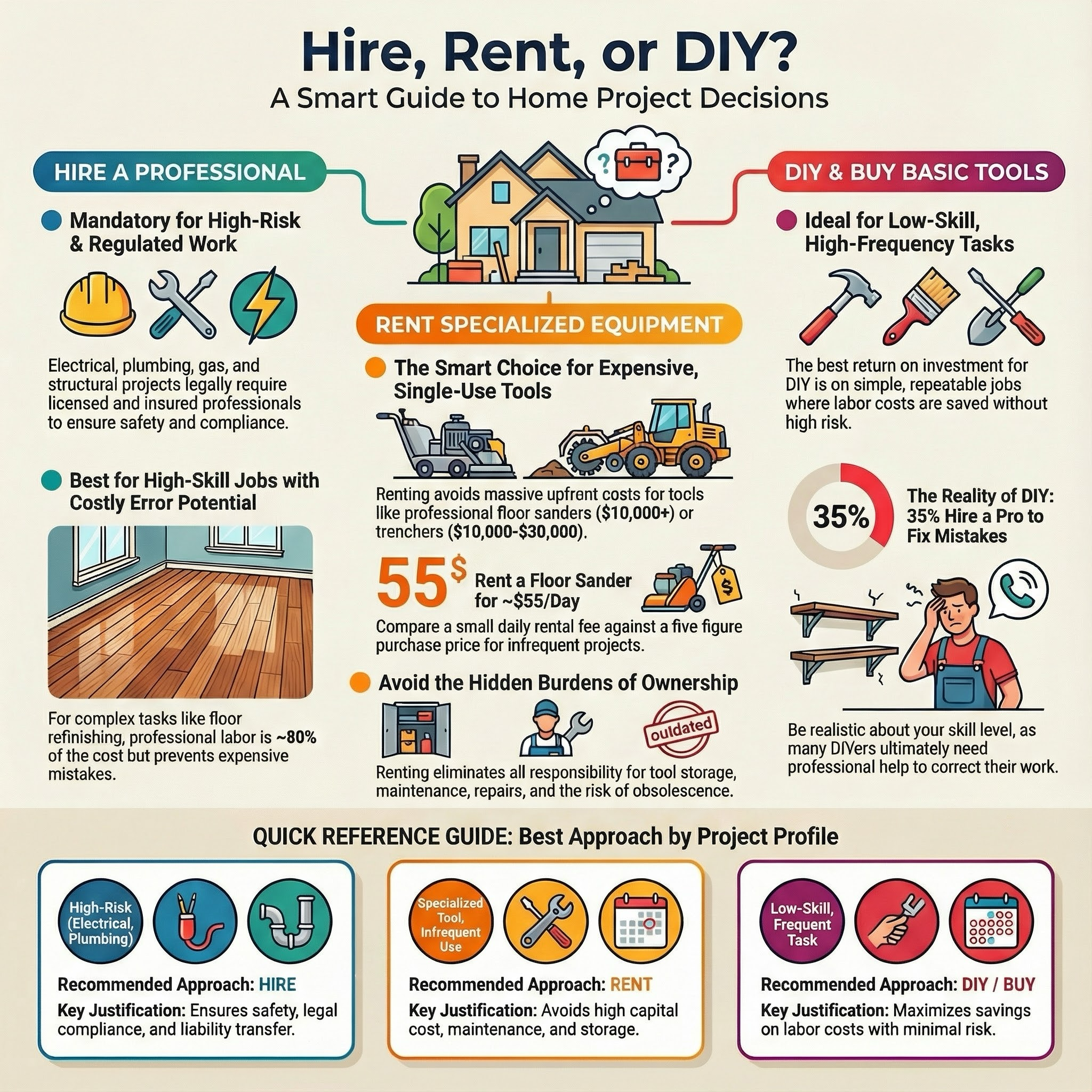
Hiring this equipment allows you to access high-specification technology, such as rotary lasers and optical levels, without the significant capital outlay. Professional hire shops also ensure the tools are calibrated and maintained to industry standards, saving you from costly errors in your construction work.
Prices for levelling equipment hire vary based on the complexity of the tool and the duration of the hire. Most UK hire shops offer daily, weekend, or weekly rates, with discounts applied for longer periods.
| Item | Low £ | High £ | Notes |
|---|---|---|---|
| Cross-line Laser (Daily) | £30 | £50 | Best for indoor tiling and kitchen fitting. |
| Rotary Laser Level (Daily) | £55 | £85 | Includes tripod and detector; essential for outdoors. |
| Optical (Dumpy) Level (Daily) | £25 | £45 | Manual setup; requires two people to operate. |
| Pipe Laser (Daily) | £70 | £110 | Specialist tool for drainage and pipe gradients. |
| Delivery & Collection | £30 | £70 | Depends on distance from the hire depot. |
| Damage Waiver | £10 | £25 | Usually 10-15% of the total hire value. |
Factors affecting the price include the brand (e.g., Leica or Topcon), the IP rating for weatherproofing, and whether you require a technician to perform the initial site benchmark setup.
Using a laser level is generally DIY-friendly, provided you understand how to establish a "datum" (a fixed reference point). However, for complex tasks like calculating drainage falls or structural foundations, mistakes can be incredibly expensive to fix later.
If your project involves structural foundations or critical drainage gradients, it is often safer to hire a professional surveyor or groundworker to set the levels for you.
Most professional rotary lasers have an IP54 or IP66 rating, meaning they are resistant to water splashes and dust. However, you should always check the specific rating of the hired unit before using it in heavy British weather.
Green lasers are significantly more visible to the human eye (up to four times brighter) than red lasers. They are excellent for indoor work, but they consume more battery power and are typically more expensive to hire.
For outdoor work and groundworks, a tripod is essential for stability and height. For indoor work like tiling, you might use a floor stand or a wall mount, but a tripod remains the most versatile option.
A professional rotary laser is accurate to within +/- 1.5mm over a 30-metre range. A standard spirit level's accuracy degrades significantly as the distance increases, making lasers far superior for large areas.
The hirer is usually responsible for the full replacement cost unless a specific insurance or damage waiver was purchased. Always store the equipment in a locked, secure location overnight.
This guide was written with AI assistance and is intended for general information only. Prices are estimates based on UK averages and may vary by region. Always get at least three quotes and consult a qualified professional before starting any work.
Ask follow-ups in plain English. The AI explains options, sequencing and what to ask the hire services — so you walk in informed.
Scope of Services Assess client’s tool requirements based on project scope and duration Recommend suitable tools and hire packages to meet budget and timeline C...
READ GUIDE →GuideHiring a cherry picker, technically known as a Mobile Elevating Work Platform (MEWP), is often the safest and most efficient way for UK homeowners to tackle hig...
READ GUIDE →GuideHiring a mini or micro digger is a game-changer for UK homeowners tackling landscaping, extensions, or driveway renovations. These compact machines can do the w...
READ GUIDE →GuideScope of Hire Inspect equipment condition and functionality before hire Confirm delivery, setup and return times Provide operational instructions and safety gui...
READ GUIDE →GuideFor UK homeowners embarking on major landscaping, extensions, or driveway renovations, plant hire is the most efficient way to handle heavy-duty tasks. Whether ...
READ GUIDE →GuideScaffolding for a gable end is a critical requirement for any significant work on the side of a UK property, including repointing, bargeboard replacement, or ch...
READ GUIDE →