Instant
01 · Ask
Ask the AI a follow-up
Got more questions about digital Marketing Asset Costs? Describe the bit you're unsure about — the AI explains options, sequencing and what to ask the it & consultancy.

Website, logo, photography, copy and ads — what each asset costs and when to commission them.
You've read the brief on digital Marketing Asset Costs. Now lean on us to find the right it & consultancy — and stay in control of the job.
Got more questions about digital Marketing Asset Costs? Describe the bit you're unsure about — the AI explains options, sequencing and what to ask the it & consultancy.
Costs, timelines, pitfalls and the right questions to ask before any it & consultancy starts on digital Marketing Asset Costs.
Itemised quotes from up to 3 local it & consultancys on digital Marketing Asset Costs — so you can compare like-for-like, not lump sums.
Ready when you are
Enter your postcode and get free quotes from local pros.
Four moves that separate a smooth job from a nightmare.
Using low-quality images that look "pixelated" or blurry on high-resolution screens.
Assets that look like they belong to different brands, confusing your customers.
Not accounting for the price of stock photography or premium font licences.
Designs that look good on a desktop but are unreadable on a mobile phone.
Indicative UK ranges and what affects price.
By job type
Quote spread is typically ± 18% — always get 3 quotes.
IT & Consultancy quick-view
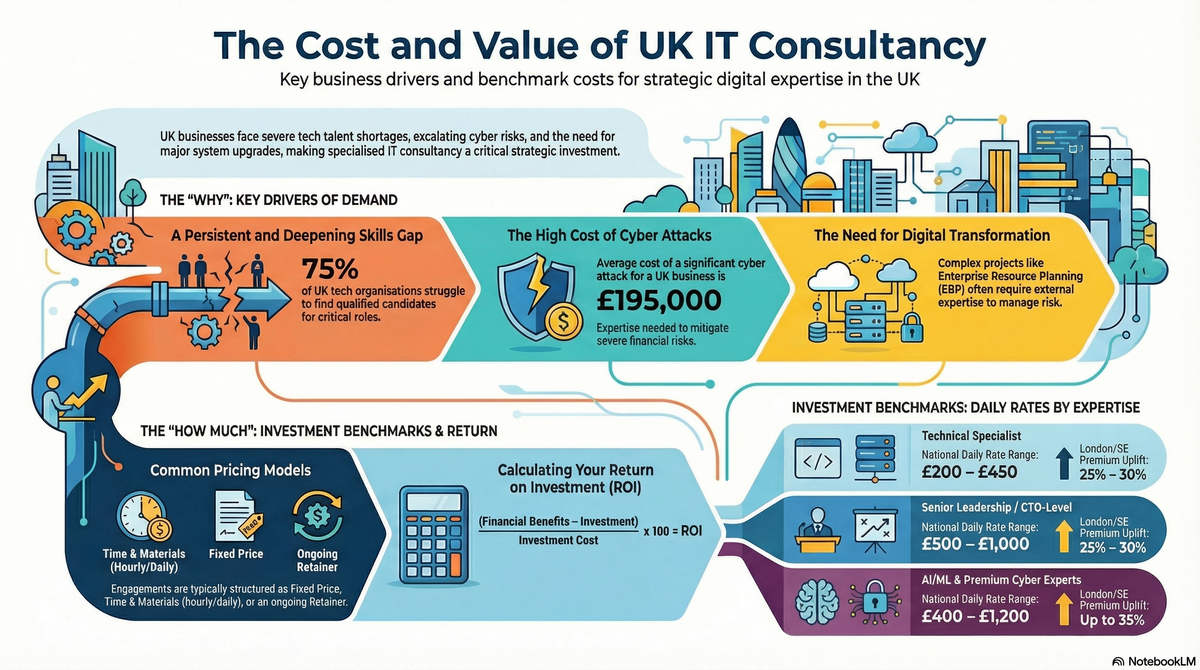
IT & Consultancy explained
Investing in professionally designed assets helps you stand out in a crowded digital marketplace. These elements, ranging from social media headers to email templates, provide the visual consistency needed to build long-term brand recognition.
| Item | Low £ | High £ | Notes |
|---|---|---|---|
| Basic Logo Design | £250 | £600 | Includes 2-3 concepts and final vector files. |
| Social Media Starter Pack | £200 | £500 | Profile pictures, headers, and 5 post templates. |
| Email Newsletter Template | £150 | £400 | Custom layout for Mailchimp or similar platforms. |
| Full Brand Identity Kit | £800 | £2,500 | Logo, fonts, palette, and comprehensive style guide. |
| Digital Ad Set (5 sizes) | £150 | £350 | Optimised for Google Ads or Meta. |
Prices vary based on the designer's experience and the complexity of the brief. Freelancers often charge lower rates than boutique agencies, but agencies may provide a more comprehensive strategy and faster turnaround.
While DIY tools like Canva are excellent for basic social media posts, they often lack the bespoke scalability needed for a professional brand. Professional designers use industry-standard software to create vector files, which can be resized infinitely without losing quality.
A professional designer doesn't just make things look "pretty"; they ensure your assets are technically sound and strategically aligned with your business goals.
Questions to ask:
In the UK, the creator usually owns the copyright by default. You must ensure your contract includes a clause that transfers ownership to you once the final invoice is paid.
Vector files (like .EPS or .SVG) are math-based graphics that can be scaled to any size—from a business card to a billboard—without becoming blurry. They are essential for logos.
You can provide your own high-quality images, or the designer can source stock photography. Note that premium stock images may incur an additional licensing fee.
This depends on the software used. If you want to edit them, ask the designer to create templates in a user-friendly tool like Canva or Adobe Express.
Most professionals include 2-3 "revision rounds" in their quote. Clear communication during the briefing stage is the best way to avoid designs that don't meet your expectations.
This guide was written with AI assistance and is intended for general information only. Prices are estimates based on UK averages and may vary by region. Always get at least three quotes and consult a qualified professional before starting any work.
Ask follow-ups in plain English. The AI explains options, sequencing and what to ask the it & consultancy — so you walk in informed.
Setting up a new home office or upgrading a family workstation is no longer just about plugging in a power lead. With the rise of remote working and high-perfor...
READ GUIDE →GuideSmartphones are the central hub of the modern UK home, managing everything from smart heating and security cameras to mobile banking and work communications. Wh...
READ GUIDE →GuideRegular computer maintenance is the digital equivalent of a boiler service or a car MOT. For UK homeowners, a well-maintained PC or laptop ensures longevity, pr...
READ GUIDE →GuideLosing access to precious family photos, critical financial documents, or years of work files is a distressing experience for any UK homeowner. Whether it is a ...
READ GUIDE →GuideLaptops are essential tools for modern life, serving as our offices, entertainment hubs, and connection to the world. When they fail, the disruption to your wor...
READ GUIDE →GuideSmart home integration has evolved from a luxury novelty to a practical investment for UK homeowners. Beyond the convenience of voice-activated lighting, a prof...
READ GUIDE →