Instant
01 · Ask
Ask the AI a follow-up
Got more questions about artificial grass installation? Describe the bit you're unsure about — the AI explains options, sequencing and what to ask the landscaper.

Premium artificial turf supplied, base prepped, edges and joints sealed — for gardens, balconies and play areas.
You've read the brief on artificial grass installation. Now lean on us to find the right landscaper — and stay in control of the job.
Got more questions about artificial grass installation? Describe the bit you're unsure about — the AI explains options, sequencing and what to ask the landscaper.
Costs, timelines, pitfalls and the right questions to ask before any landscaper starts on artificial grass installation.
Itemised quotes from up to 3 local landscapers on artificial grass installation — so you can compare like-for-like, not lump sums.
Ready when you are
Enter your postcode and get free quotes from local pros.
Four moves that separate a smooth job from a nightmare.
Caused by poor sub-base compaction or using the wrong type of stone. This usually manifests after the first heavy winter rain.
If the "grain" of the two pieces isn't perfectly aligned or the gap between the two pieces is too wide, the join will look like a visible line.
Often occurs if the membrane wasn't tucked into the edging or if the perimeter wasn't treated with weed killer.
In households with dogs, a standard install can trap ammonia. This is avoided by using a "pet-pro" system with specialized drainage and zeolite infill.
Indicative UK ranges and a typical week-by-week schedule.
By job type
Quote spread is typically ± 18% — always get 3 quotes.
Mid-size garden redesign · week by week
Schedule slips on dependencies — pad each phase by 10–20% for real-world delays.
Landscaper quick-view
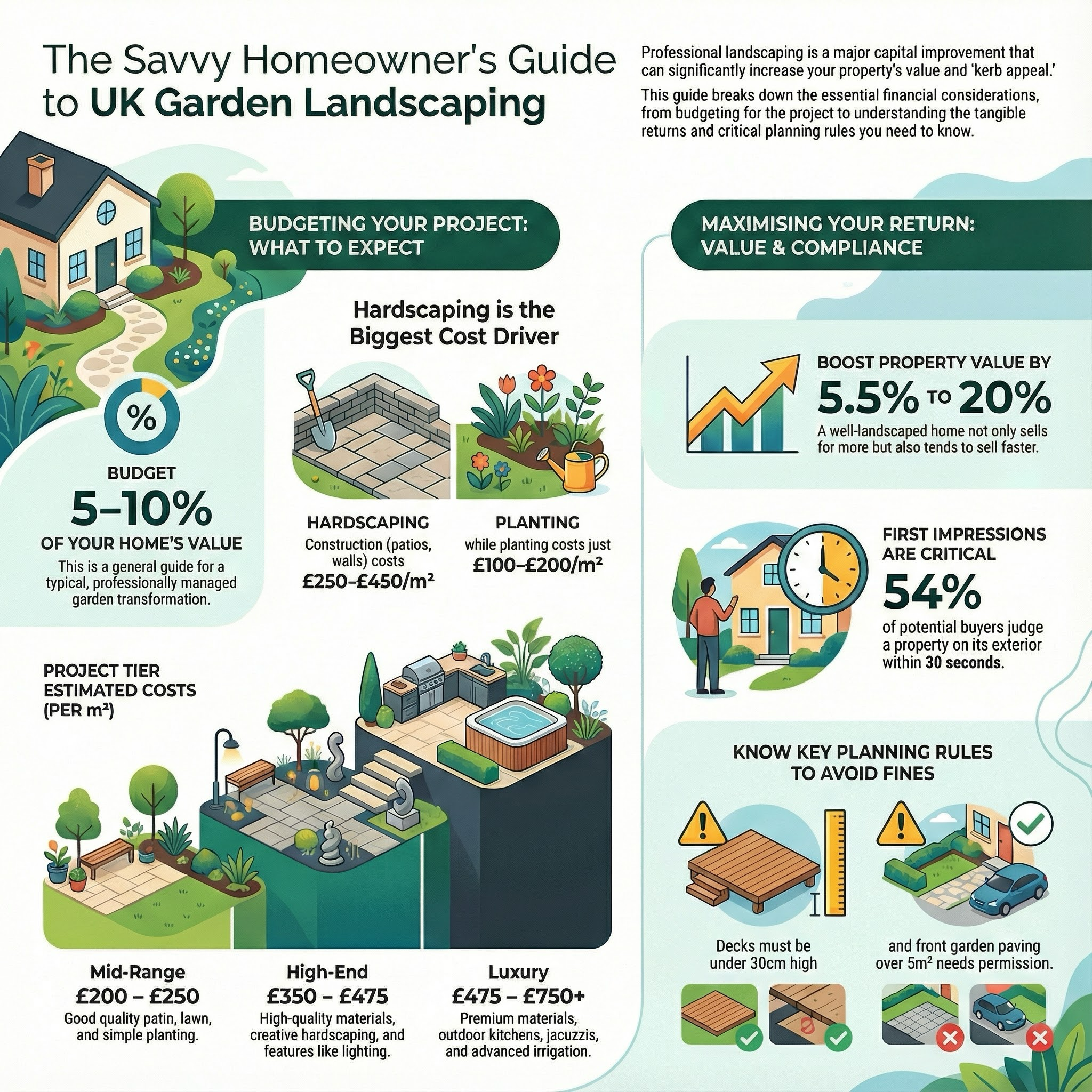
Landscaper explained
A professional installation is far more than just rolling out a green carpet. It requires significant groundworks and precise engineering to ensure the lawn drains correctly and remains level for its 15-to-20-year lifespan.
The cost of artificial grass installation is largely driven by the quality of the turf selected and the complexity of the groundworks required. Factors such as restricted access (e.g., carrying materials through a terraced house) or the need for significant drainage corrections will increase the final quote.
| Item | Low £ | High £ | Notes |
|---|---|---|---|
| Entry-level Turf (Material only) | £15 | £25 | Per m². Thinner pile, shorter lifespan. |
| Premium Turf (Material only) | £30 | £55 | Per m². High density, realistic multi-tones. |
| Full Professional Install | £65 | £110 | Per m². Includes all prep, labour, and waste. |
| Skip Hire / Muck Away | £250 | £450 | Per 6-8 yard skip for soil/turf removal. |
| Weed Membrane & Sub-base | £10 | £20 | Per m². Quality of stone and membrane. |
| Pet-Specific Underlay/Infill | £12 | £25 | Per m². Zeolite infill to neutralise odours. |
Pro Tip: Always ask for the "total project price" rather than just the price per square metre. Hidden costs like waste disposal and edging can add 20-30% to a basic quote.
The duration of the project depends on the size of the garden and the volume of soil that needs to be excavated manually or by machine.
While DIY is possible, it is physically demanding work. Excavating 50mm of soil from a 40m² garden generates roughly 4 to 5 tonnes of waste that must be moved by hand. Without a heavy-duty plate compactor, the ground will eventually sink, leading to puddles and an uneven surface.
Professionals use power brushes to ensure the grass looks natural and "alive." A DIY finish often results in visible seams and flat-looking grass. Furthermore, professionals understand SUDS (Sustainable Urban Drainage Systems) regulations, ensuring your new lawn doesn't cause flooding in your or your neighbour's garden.
Not all landscapers specialise in artificial turf. Look for installers who can demonstrate a portfolio of specific synthetic grass projects rather than general gardening.
Questions to ask:
In most cases, installing artificial grass in a residential back garden does not require planning permission. However, there are standards to consider:
Yes, it is highly durable and pet-friendly. However, you should opt for a shorter pile for easier cleaning and ensure the installer uses a pet-specific sub-base to prevent urine odours from lingering.
A high-quality, professionally installed lawn should last between 15 and 20 years. The UV stability of the fibres ensures it won't fade in the sun, though the pile may flatten in high-traffic areas over time.
It is "low maintenance," not "no maintenance." You will need to blow or rake off fallen leaves to prevent organic matter from turning into compost on top of the membrane, and an occasional brush-up will keep the fibres standing.
Artificial grass can become significantly warmer than natural grass in direct sunlight. On very hot days, a quick spray with a garden hose will cool the surface down instantly for children or pets.
If installed correctly with a perforated backing and a crushed stone sub-base, it can actually drain faster than a natural lawn, which can become waterlogged if the soil is heavy clay.
This guide was written with AI assistance and is intended for general information only. Prices are estimates based on UK averages and may vary by region. Always get at least three quotes and consult a qualified professional before starting any work.
Ask follow-ups in plain English. The AI explains options, sequencing and what to ask the landscaper — so you walk in informed.
Professional garden design is the blueprint for a successful outdoor transformation. It bridges the gap between a vague idea and a functional, beautiful space t...
READ GUIDE →GuideA crisp, well-defined lawn edge is often the difference between a garden that looks "done" and one that looks truly professional. In the UK, our damp climate an...
READ GUIDE →GuideA level garden is the essential foundation for almost every outdoor improvement, from installing a new lawn or patio to erecting a summerhouse. Beyond aesthetic...
READ GUIDE →GuideProfessional landscaping is one of the most effective ways to increase your home’s kerb appeal and market value, often adding up to 20% to a UK property's price...
READ GUIDE →GuideRevitalising your outdoor space often starts with the basics: a lush, level lawn and a clean, stable patio. In the UK, our damp winters and variable summers tak...
READ GUIDE →GuideProfessional landscaping and garden design involve much more than just planting flowers or mowing a lawn. It is the process of modifying the visible features of...
READ GUIDE →