Instant
01 · Ask
Ask the AI a follow-up
Got more questions about artificial Grass Laying? Describe the bit you're unsure about — the AI explains options, sequencing and what to ask the landscaper.

Sub-base prepped, weed membrane and 30-40mm artificial turf — looks and feels like real grass.
You've read the brief on artificial Grass Laying. Now lean on us to find the right landscaper — and stay in control of the job.
Got more questions about artificial Grass Laying? Describe the bit you're unsure about — the AI explains options, sequencing and what to ask the landscaper.
Costs, timelines, pitfalls and the right questions to ask before any landscaper starts on artificial Grass Laying.
Itemised quotes from up to 3 local landscapers on artificial Grass Laying — so you can compare like-for-like, not lump sums.
Ready when you are
Enter your postcode and get free quotes from local pros.
Four moves that separate a smooth job from a nightmare.
Caused by poor cutting or not "peeling back" the factory edge. This is almost impossible to fix once the specialist adhesive has set.
Usually the result of insufficient compaction or using the wrong sub-base material, such as soft building sand which washes away over time.
High-performance "Low-E" glass windows can reflect intense sunlight onto the grass, occasionally melting the plastic fibres in specific spots.
If the membrane isn't tucked correctly into the edging, weeds will find the gap and grow around the perimeter.
Indicative UK ranges and a typical week-by-week schedule.
By job type
Quote spread is typically ± 18% — always get 3 quotes.
Mid-size garden redesign · week by week
Schedule slips on dependencies — pad each phase by 10–20% for real-world delays.
Landscaper quick-view
Landscaper explained
Whether you want to create a pet-friendly space, a safe play area, or simply reclaim your weekends from the lawnmower, professional installation is the key to longevity. A poorly laid lawn will ripple, sink, and drain poorly, whereas a professionally installed system can last upwards of 15 years.
| Item | Low £ | High £ | Notes |
|---|---|---|---|
| Artificial Grass (Supply Only) | £15 | £45 | Per m²; price varies by pile height and density. |
| Full Installation (Supply & Fit) | £65 | £110 | Per m²; includes ground prep, base, and turf. | Labour Only | £40 | £60 | Per m²; assumes materials are already on site. |
| Sub-base Materials | £10 | £20 | Per m²; MOT Type 1 and sharp sand/granite dust. |
| Edging Installation | £12 | £25 | Per linear metre; timber, brick, or metal. |
| Waste Removal (Skip Hire) | £220 | £380 | Per 6-8 yard skip for soil and turf disposal. |
| Weed Membrane & Fixings | £2 | £5 | Per m²; heavy-duty membrane and U-pins. |
Total project costs are primarily driven by the quality of the artificial turf selected and the extent of ground preparation required. Difficult site access, the need for significant excavation of existing soil, and your geographic location—with London and the South East commanding higher labour rates—will also influence the final quote.
While laying the grass itself looks simple, the groundworks are back-breaking and technically demanding. Removing several tonnes of turf and compacting a professional-grade sub-base requires specialist machinery like turf cutters and wacker plates that most homeowners don't own.
Professional landscapers ensure the drainage is handled correctly—if you get this wrong, you'll end up with a stagnant "pond" under your lawn or a surface that ripples like an old carpet.
There are no specific building regulations for artificial grass in the UK, but you must ensure your installation complies with Sustainable Urban Drainage Systems (SUDS). A professional will ensure the base is permeable to prevent contributing to local surface water flooding.
On average, professional installation costs between £60 and £100 per square metre. This price typically includes the grass itself, ground preparation materials, and expert labour. High-quality grasses or complex garden shapes will sit at the higher end of this range.
For a standard-sized UK garden (approx. 40-50 square metres), a professional team can usually complete the job in 1 to 2 days. This timeframe includes the essential ground preparation, such as removing existing turf and laying the sub-base, which is the most time-consuming part of the process.
In most cases, you do not need planning permission for artificial grass in a residential garden. however, you must ensure the installation is permeable to comply with Sustainable Drainage Systems (SuDS) regulations. If you live in a conservation area or a listed building, it is always best to check with your local council first.
While DIY is possible, hiring a professional landscaper is recommended for the best results. Professionals have the heavy machinery required for excavation and ensure the sub-base is perfectly level and free-draining. Expert installation also prevents visible seams and ensures the grass is securely anchored for long-term durability.
Yes, artificial grass is highly durable and pet-friendly. When hiring a pro, ensure they use a permeable latex or polyurethane backing to allow liquid waste to drain away. Regular rinsing and the use of pet-specific infills will keep the area hygienic and odour-free.
A high-quality artificial lawn installed by a professional should last between 15 and 20 years. Its lifespan depends on the volume of foot traffic and basic maintenance, such as occasional brushing to keep the fibres upright and removing organic debris to prevent weed growth.
This guide was written with AI assistance and is intended for general information only. Prices are estimates based on UK averages and may vary by region. Always get at least three quotes and consult a qualified professional before starting any work.
Ask follow-ups in plain English. The AI explains options, sequencing and what to ask the landscaper — so you walk in informed.
Professional garden design is the blueprint for a successful outdoor transformation. It bridges the gap between a vague idea and a functional, beautiful space t...
READ GUIDE →GuideA crisp, well-defined lawn edge is often the difference between a garden that looks "done" and one that looks truly professional. In the UK, our damp climate an...
READ GUIDE →GuideA level garden is the essential foundation for almost every outdoor improvement, from installing a new lawn or patio to erecting a summerhouse. Beyond aesthetic...
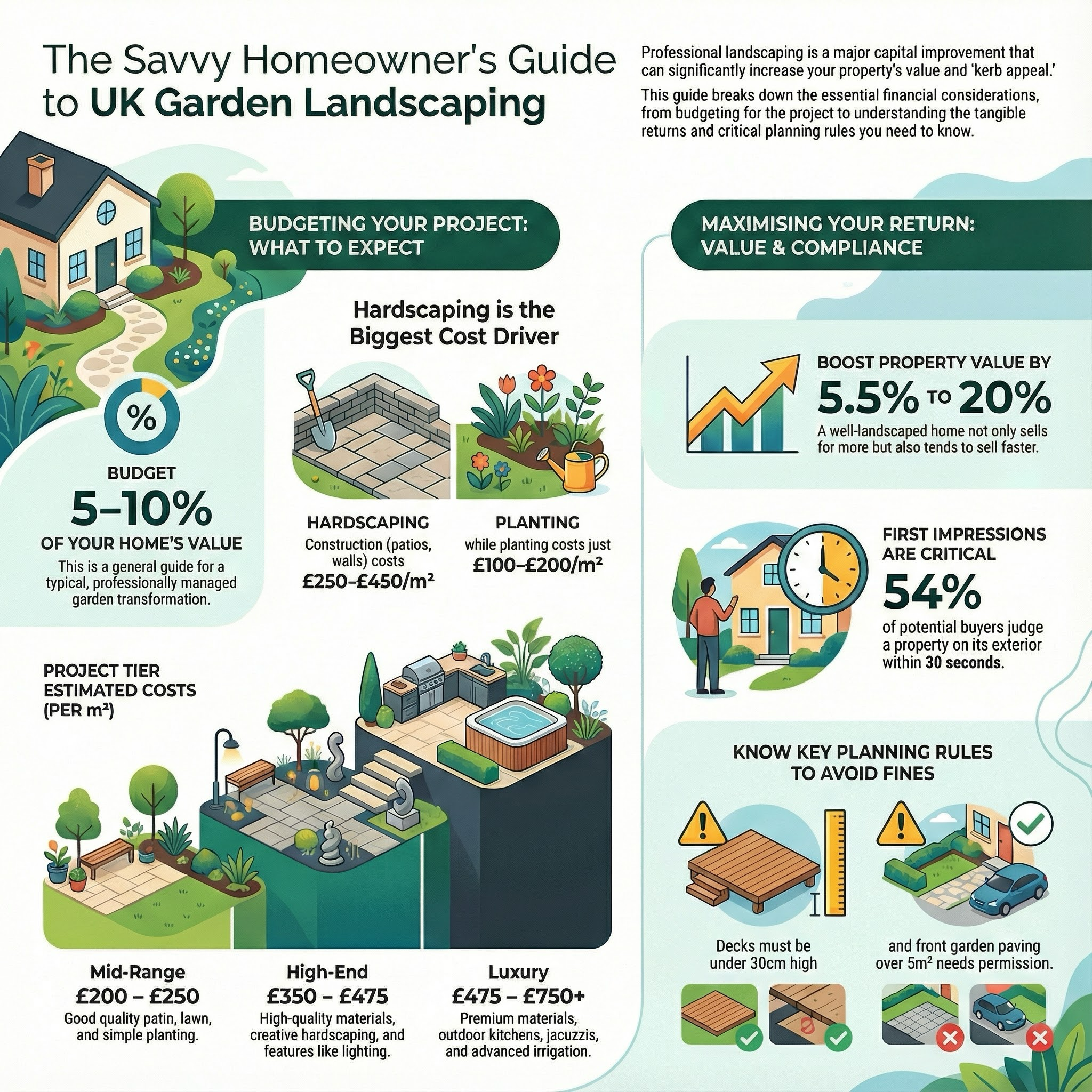
READ GUIDE →GuideProfessional landscaping is one of the most effective ways to increase your home’s kerb appeal and market value, often adding up to 20% to a UK property's price...
READ GUIDE →GuideRevitalising your outdoor space often starts with the basics: a lush, level lawn and a clean, stable patio. In the UK, our damp winters and variable summers tak...
READ GUIDE →GuideProfessional landscaping and garden design involve much more than just planting flowers or mowing a lawn. It is the process of modifying the visible features of...
READ GUIDE →