Instant
01 · Ask
Ask the AI a follow-up
Got more questions about back garden redesign? Describe the bit you're unsure about — the AI explains options, sequencing and what to ask the landscaper.

Full garden redesign — design, hard landscape, planting and lighting. From sketch to finished garden in 6-12 weeks.
You've read the brief on back garden redesign. Now lean on us to find the right landscaper — and stay in control of the job.
Got more questions about back garden redesign? Describe the bit you're unsure about — the AI explains options, sequencing and what to ask the landscaper.
Costs, timelines, pitfalls and the right questions to ask before any landscaper starts on back garden redesign.
Itemised quotes from up to 3 local landscapers on back garden redesign — so you can compare like-for-like, not lump sums.
Ready when you are
Enter your postcode and get free quotes from local pros.
Four moves that separate a smooth job from a nightmare.
Caused by an inadequate sub-base. A professional should use a minimum of 100mm-150mm of compacted MOT Type 1.
White salty deposits on new stone. This is natural but can be minimised by using the correct mortar mix and sealing stone at the right time.
"Puddling" on lawns or patios often occurs when the garden hasn't been graded with a slight fall away from the property.
Failure to identify Japanese Knotweed or Bamboo before starting work can lead to expensive structural damage later.
Indicative UK ranges and a typical week-by-week schedule.
By job type
Quote spread is typically ± 18% — always get 3 quotes.
Mid-size garden redesign · week by week
Schedule slips on dependencies — pad each phase by 10–20% for real-world delays.
Landscaper quick-view
Landscaper explained
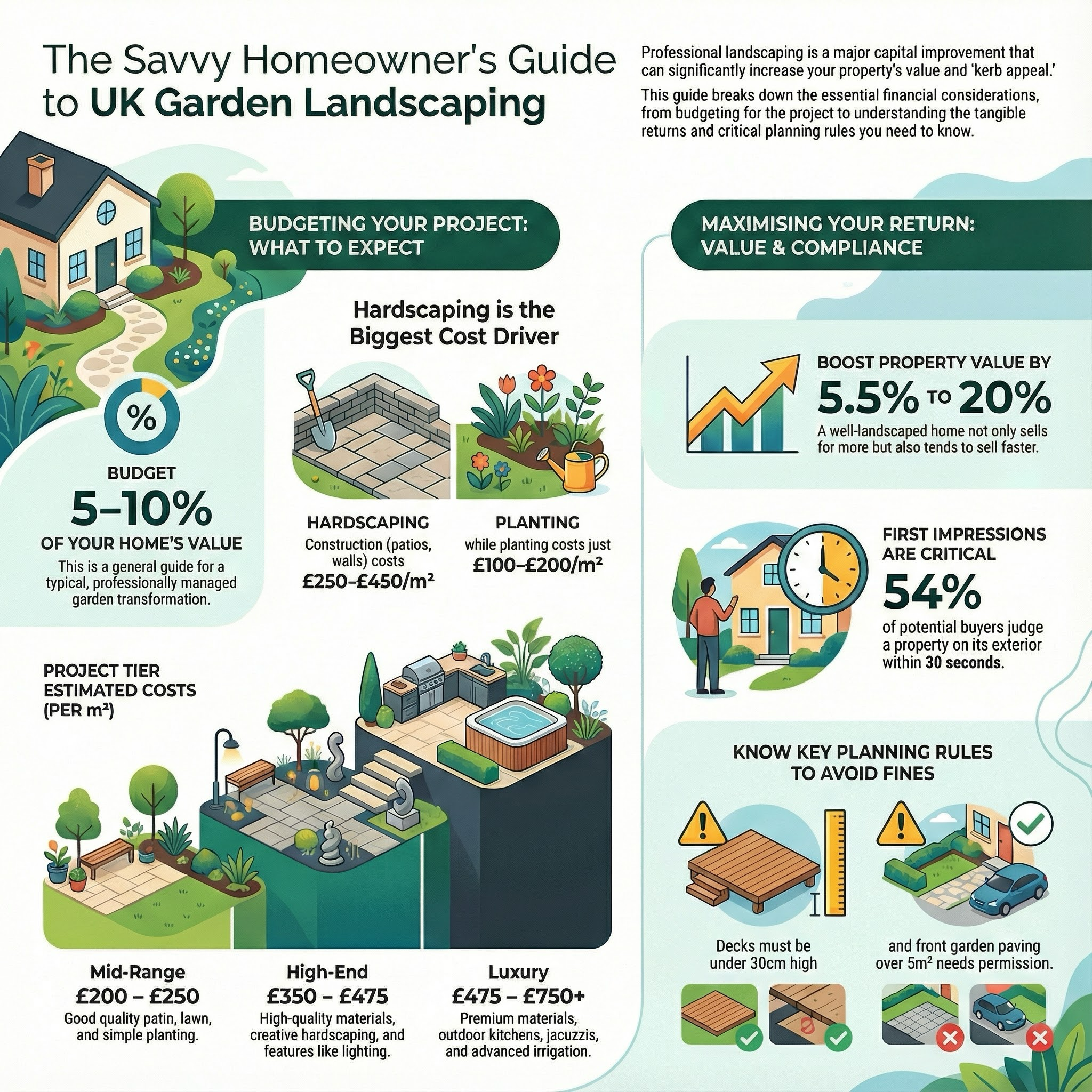
Given the UK's unpredictable climate, a successful redesign must balance aesthetics with practicalities like effective drainage and durable material selection. This guide outlines what to expect when hiring a professional landscaper to overhaul your outdoor space in 2025/26.
Landscaping costs vary significantly based on material choice (e.g., Indian Sandstone vs. Italian Porcelain) and site access. The prices below include professional labour, materials, and VAT for 2025/26.
| Item | Low £ | High £ | Notes |
|---|---|---|---|
| Small Garden Redesign (30m²) | £5,500 | £10,000 | Basic materials and simple layout. |
| Medium Garden Redesign (70m²) | £12,000 | £25,000 | Mix of hard and soft landscaping. |
| Large/Complex Redesign (100m²+) | £30,000 | £60,000+ | Multiple levels, high-end stone, and lighting. |
| Professional Design Fee | £600 | £2,500 | Detailed 3D renders and planting plans. |
| Waste Disposal (8-yard Skip) | £300 | £450 | Price varies by region (London is higher). |
| Labour (Daily Rate per person) | £200 | £350 | Usually involves a lead and an assistant. |
Factors such as "muck away" (removing large volumes of soil), limited access through a terraced house, and the need for specialist machinery like mini-diggers will push costs toward the higher end of the scale.
While DIY is suitable for basic planting or painting fences, a full redesign involves structural engineering and complex drainage. Incorrectly installed patios will sink or "rock" within one winter, and poor drainage can lead to damp issues in your home's foundations.
Professional landscapers have the machinery and expertise to manage levels and soil disposal, which are the most physically demanding and technically difficult parts of the job.
Any electrical work (lighting) must be carried out by a Part P registered electrician, and gas fire pits or outdoor kitchens require a Gas Safe engineer. Attempting these yourself is not only dangerous but can invalidate your home insurance.
Questions to ask:
In most cases, no. However, you will need it for walls over 2m, significant changes in ground levels, or if you live in a Conservation Area or Listed Building. Always check with your local authority first.
Autumn and winter are ideal for hard landscaping and structural work so that the garden is ready for planting in spring. However, very wet or freezing conditions can delay concrete and mortar work.
Porcelain requires a specialist diamond blade for cutting and a "primer" (SBR) applied to the back of every slab to ensure it bonds to the mortar. It is more labour-intensive than natural stone.
Choose high-quality materials for the areas closest to the house (like the main patio) and use cheaper alternatives like gravel or bark for secondary paths and utility areas.
Yes, but this is a significant cost factor. "Muck away" services via grab lorries or skips are expensive, so discuss if any soil can be repurposed for raised beds or mounds on-site.
This guide was written with AI assistance and is intended for general information only. Prices are estimates based on UK averages and may vary by region. Always get at least three quotes and consult a qualified professional before starting any work.
Ask follow-ups in plain English. The AI explains options, sequencing and what to ask the landscaper — so you walk in informed.
Professional garden design is the blueprint for a successful outdoor transformation. It bridges the gap between a vague idea and a functional, beautiful space t...
READ GUIDE →GuideA crisp, well-defined lawn edge is often the difference between a garden that looks "done" and one that looks truly professional. In the UK, our damp climate an...
READ GUIDE →GuideA level garden is the essential foundation for almost every outdoor improvement, from installing a new lawn or patio to erecting a summerhouse. Beyond aesthetic...
READ GUIDE →GuideProfessional landscaping is one of the most effective ways to increase your home’s kerb appeal and market value, often adding up to 20% to a UK property's price...
READ GUIDE →GuideRevitalising your outdoor space often starts with the basics: a lush, level lawn and a clean, stable patio. In the UK, our damp winters and variable summers tak...
READ GUIDE →GuideProfessional landscaping and garden design involve much more than just planting flowers or mowing a lawn. It is the process of modifying the visible features of...
READ GUIDE →