Instant
01 · Ask
Ask the AI a follow-up
Got more questions about decking Installation Cost &? Describe the bit you're unsure about — the AI explains options, sequencing and what to ask the landscaper.

Hardwood, softwood or composite decking — sub-base, joists, boards and balustrade fitted to current Part K.
You've read the brief on decking Installation Cost &. Now lean on us to find the right landscaper — and stay in control of the job.
Got more questions about decking Installation Cost &? Describe the bit you're unsure about — the AI explains options, sequencing and what to ask the landscaper.
Costs, timelines, pitfalls and the right questions to ask before any landscaper starts on decking Installation Cost &.
Itemised quotes from up to 3 local landscapers on decking Installation Cost & — so you can compare like-for-like, not lump sums.
Ready when you are
Enter your postcode and get free quotes from local pros.
Four moves that separate a smooth job from a nightmare.
Using standard timber instead of "Use Class 4" (UC4) treated wood for posts that touch the ground leads to collapse within 5-7 years.
If water cannot escape from under the deck, it creates a damp microclimate that rots the joists and encourages mould.
Boards laid too close together will buckle in the summer heat or trap debris that holds moisture, leading to surface rot.
Algae growth on timber is common in the UK; this is usually caused by lack of cleaning or poor sunlight. Choosing "anti-slip" boards with grit inserts can mitigate this.
Indicative UK ranges and a typical week-by-week schedule.
By job type
Quote spread is typically ± 18% — always get 3 quotes.
Mid-size garden redesign · week by week
Schedule slips on dependencies — pad each phase by 10–20% for real-world delays.
Landscaper quick-view
Landscaper explained
However, the British climate poses unique challenges. From selecting moisture-resistant materials to ensuring proper drainage and structural integrity, a successful installation requires more than just laying boards. This guide breaks down the essential costs, timelines, and regulations for your decking project.
The total cost of decking in the UK is heavily influenced by your choice of material—timber is budget-friendly but requires maintenance, while composite offers longevity at a premium. Prices below include professional labour and VAT.
| Item / Material Type | Low £ | High £ | Notes |
|---|---|---|---|
| Softwood Decking (per m²) | £80 | £120 | Pressure-treated pine; requires annual sealing. |
| Composite Decking (per m²) | £150 | £250 | Low maintenance; resists rot and fading. |
| Hardwood Decking (per m²) | £200 | £350 | Oak, Ipe, or Balau; extremely durable and premium. |
| Raised/Elevated Subframe | £500 | £2,000+ | Additional cost for scaffolding and structural supports. |
| Balustrades (per linear metre) | £60 | £200 | Timber, glass, or wire rope options. |
| Waste Removal (Skip Hire) | £200 | £400 | Based on a standard 6-8 yard skip. |
Aside from materials, costs vary based on your location (London and the South East typically see 20% higher labour rates) and the complexity of the terrain. A steeply sloped garden will require significantly more structural engineering and labour than a flat site.
While a simple, ground-level timber deck is a feasible project for a highly skilled DIYer, any structure that is raised or attached to the house should be handled by a professional. Structural failure on a raised deck can be catastrophic.
Professionals ensure the subframe is built to withstand "live loads" and that the "fall" is calculated correctly to prevent water pooling against your house. Furthermore, composite manufacturers often only honour warranties if the product is installed according to their strict specifications, which can be tricky for novices.
Pro Tip: If your deck is more than 300mm off the ground, it must comply with UK Building Regulations regarding structural safety and guarding heights.
Look for a landscaper or specialist decking installer with a proven track record. Not all general builders understand the nuances of timber expansion or the specific ventilation requirements for composite boards.
In most cases, decking is considered 'permitted development'. However, you will need planning permission if the deck is more than 300mm above the ground, if it covers more than 50% of your total garden area, or if it affects the privacy of your neighbours. Always check with your local council if you are unsure.
Composite is often better suited to the UK's damp climate as it does not rot, warp, or require annual staining. While the initial cost is higher, it lasts 25+ years with minimal maintenance, whereas softwood timber may need replacing after 10-15 years if not meticulously cared for.
A softwood deck should be cleaned and treated with a high-quality oil or protector once a year, ideally in spring. Hardwoods may only need oiling every 2 years to maintain their colour, otherwise, they will naturally silver over time.
Yes, provided the patio is stable and has good drainage. You can use adjustable pedestals to support the subframe, which allows for airflow and prevents the timber from sitting in standing water.
UC4 timber is wood that has been kiln-dried and pressure-treated specifically for permanent contact with the ground. Using UC3 (standard fencing grade) for decking posts is a common mistake that leads to early rot and structural failure.
Slipperiness is usually caused by a build-up of algae and biofilm, not the wood itself. Regular pressure washing (on a low setting) and using specialized deck cleaners will remove this. For high-traffic areas, consider boards with built-in abrasive non-slip strips.
This guide was written with AI assistance and is intended for general information only. Prices are estimates based on UK averages and may vary by region. Always get at least three quotes and consult a qualified professional before starting any work.
Ask follow-ups in plain English. The AI explains options, sequencing and what to ask the landscaper — so you walk in informed.
Professional garden design is the blueprint for a successful outdoor transformation. It bridges the gap between a vague idea and a functional, beautiful space t...
READ GUIDE →GuideA crisp, well-defined lawn edge is often the difference between a garden that looks "done" and one that looks truly professional. In the UK, our damp climate an...
READ GUIDE →GuideA level garden is the essential foundation for almost every outdoor improvement, from installing a new lawn or patio to erecting a summerhouse. Beyond aesthetic...
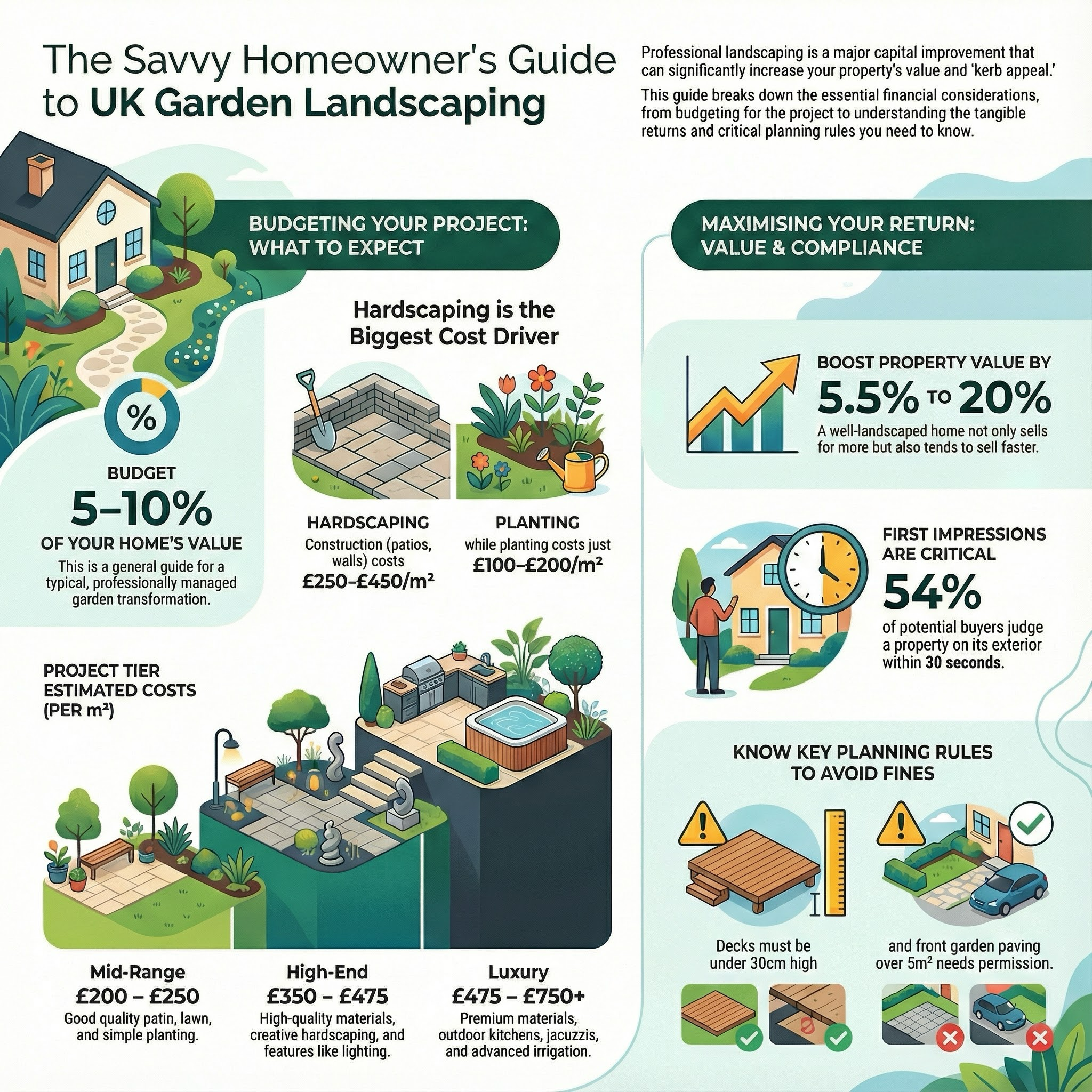
READ GUIDE →GuideProfessional landscaping is one of the most effective ways to increase your home’s kerb appeal and market value, often adding up to 20% to a UK property's price...
READ GUIDE →GuideRevitalising your outdoor space often starts with the basics: a lush, level lawn and a clean, stable patio. In the UK, our damp winters and variable summers tak...
READ GUIDE →GuideProfessional landscaping and garden design involve much more than just planting flowers or mowing a lawn. It is the process of modifying the visible features of...
READ GUIDE →