Instant
01 · Ask
Ask the AI a follow-up
Got more questions about front garden returfing? Describe the bit you're unsure about — the AI explains options, sequencing and what to ask the landscaper.

Old lawn lifted, soil prepped, fresh turf laid and watered in — usable lawn in 2-3 weeks.
You've read the brief on front garden returfing. Now lean on us to find the right landscaper — and stay in control of the job.
Got more questions about front garden returfing? Describe the bit you're unsure about — the AI explains options, sequencing and what to ask the landscaper.
Costs, timelines, pitfalls and the right questions to ask before any landscaper starts on front garden returfing.
Itemised quotes from up to 3 local landscapers on front garden returfing — so you can compare like-for-like, not lump sums.
Ready when you are
Enter your postcode and get free quotes from local pros.
Four moves that separate a smooth job from a nightmare.
If turf is not laid tightly or dries out, the rolls shrink, leaving brown gaps. This is avoided by "butting" the edges firmly during installation.
Often caused by turf sitting on a pallet for too long before being laid. Turf is a living product and should be laid within 24 hours of delivery.
Laying turf directly onto compacted clay will lead to waterlogging and "squelchy" patches in winter.
If the ground isn't levelled correctly, your mower will cut too low on high spots, killing the grass.
Indicative UK ranges and a typical week-by-week schedule.
By job type
Quote spread is typically ± 18% — always get 3 quotes.
Mid-size garden redesign · week by week
Schedule slips on dependencies — pad each phase by 10–20% for real-world delays.
Landscaper quick-view
Landscaper explained
Professional returfing involves far more than simply laying green carpet. Success depends entirely on the preparation of the soil beneath, ensuring proper drainage and nutrient levels so your new lawn thrives for years rather than weeks.
Prices for returfing vary based on the quality of the turf selected and the amount of preparation required. For 2025/26, expect to pay the following for a professional installation including materials and VAT.
| Item | Low £ | High £ | Notes |
|---|---|---|---|
| Small Lawn (up to 20m²) | £450 | £750 | Includes waste removal and topsoil. |
| Medium Lawn (approx. 50m²) | £900 | £1,600 | Economy to premium turf grades. |
| Turf Grade (per m²) | £5 | £12 | Utility vs. ornamental/luxury turf. |
| Topsoil (per bulk bag) | £90 | £130 | Screened sandy loam delivered. |
| Waste Disposal (Skip/Grab) | £150 | £350 | Heavy soil and old turf removal. |
Labour costs typically range from £150 to £250 per person per day. Total costs increase if your garden has restricted access (e.g., no side gate) or requires significant drainage corrections before laying.
While laying turf is physically demanding, many homeowners attempt it as a DIY project. However, the "strip and flip" method often fails because the ground isn't properly prepared or levelled, leading to a bumpy, patchy lawn.
Professional landscapers have the machinery to rotovate hard ground and the expertise to ensure the lawn is perfectly level with your driveway and paths.
If you choose the DIY route, ensure you have a plan for the old turf. It is heavy, holds moisture, and cannot usually be put in standard garden waste bins in large quantities.
Spring (March to May) and Autumn (September to November) are ideal. The weather is cool and damp, which helps roots establish without the risk of drying out in summer heat or freezing in winter frost.
You should avoid walking on new turf for at least 2 to 3 weeks. Heavy use before the roots have knitted into the soil can cause indentations and prevent the turf from establishing properly.
In the first two weeks, you must water it every evening (unless it rains heavily). The water needs to soak through the turf into the soil beneath. Check by lifting a corner to see if the underside is damp.
Wait until the grass is about 2 inches high and the roots are firmly attached (test by gently tugging the grass). Set your mower to its highest setting for the first few cuts—never remove more than one-third of the blade length.
Standard "Stadium" or "Lawn" turf often struggles in heavy shade. Ask your landscaper for a specialist "Shade Tolerant" mix, which uses specific grass species like Fescues that require less direct sunlight.
This guide was written with AI assistance and is intended for general information only. Prices are estimates based on UK averages and may vary by region. Always get at least three quotes and consult a qualified professional before starting any work.
Ask follow-ups in plain English. The AI explains options, sequencing and what to ask the landscaper — so you walk in informed.
Professional garden design is the blueprint for a successful outdoor transformation. It bridges the gap between a vague idea and a functional, beautiful space t...
READ GUIDE →GuideA crisp, well-defined lawn edge is often the difference between a garden that looks "done" and one that looks truly professional. In the UK, our damp climate an...
READ GUIDE →GuideA level garden is the essential foundation for almost every outdoor improvement, from installing a new lawn or patio to erecting a summerhouse. Beyond aesthetic...
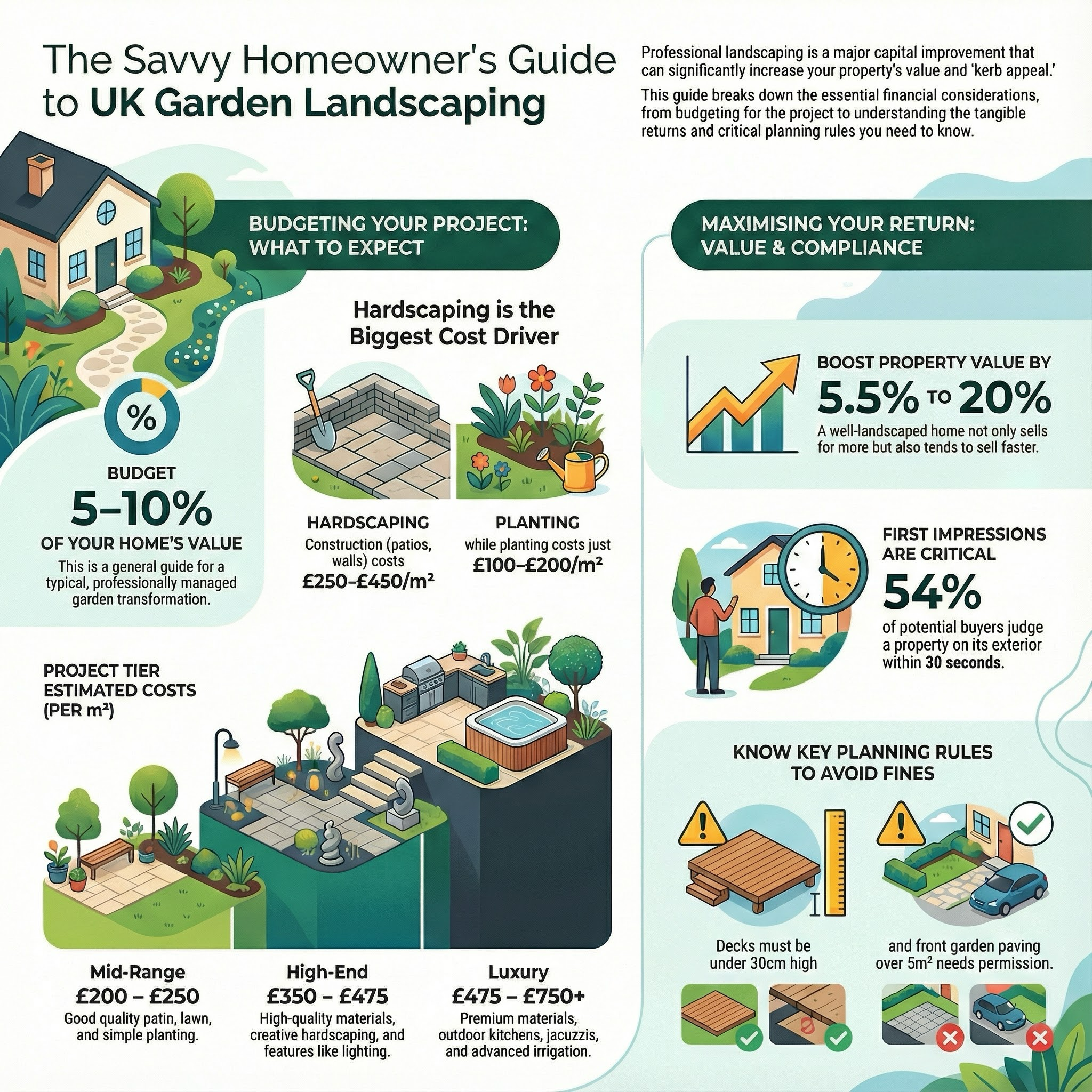
READ GUIDE →GuideProfessional landscaping is one of the most effective ways to increase your home’s kerb appeal and market value, often adding up to 20% to a UK property's price...
READ GUIDE →GuideRevitalising your outdoor space often starts with the basics: a lush, level lawn and a clean, stable patio. In the UK, our damp winters and variable summers tak...
READ GUIDE →GuideProfessional landscaping and garden design involve much more than just planting flowers or mowing a lawn. It is the process of modifying the visible features of...
READ GUIDE →