Instant
01 · Ask
Ask the AI a follow-up
Got more questions about garden design? Describe the bit you're unsure about — the AI explains options, sequencing and what to ask the landscaper.

Concept design, planting plan and hard-landscape spec — by a qualified garden designer.
You've read the brief on garden design. Now lean on us to find the right landscaper — and stay in control of the job.
Got more questions about garden design? Describe the bit you're unsure about — the AI explains options, sequencing and what to ask the landscaper.
Costs, timelines, pitfalls and the right questions to ask before any landscaper starts on garden design.
Itemised quotes from up to 3 local landscapers on garden design — so you can compare like-for-like, not lump sums.
Ready when you are
Enter your postcode and get free quotes from local pros.
Four moves that separate a smooth job from a nightmare.
Failing to account for water runoff often results in "bogginess" or pooling on new patios.
Hard landscaping (paving, walls, fencing) is significantly more expensive than soft landscaping (plants and turf).
Not checking for underground gas pipes, water mains, or electricity cables before digging foundations.
Designing a garden that looks great in June but is a "brown patch" for the remaining eight months of the year.
Indicative UK ranges and a typical week-by-week schedule.
By job type
Quote spread is typically ± 18% — always get 3 quotes.
Mid-size garden redesign · week by week
Schedule slips on dependencies — pad each phase by 10–20% for real-world delays.
Landscaper quick-view
Landscaper explained
Whether you are looking for a low-maintenance sanctuary or a structured space for entertaining, a professional designer balances soil health, drainage, and structural integrity with your personal style. This guide outlines what to expect when hiring a garden designer or a design-and-build landscaper in 2025.
Garden design fees are often separate from the actual construction costs. Many designers charge a fixed fee for the design package based on the size of the garden and the complexity of the terrain.
| Item | Low £ | High £ | Notes |
|---|---|---|---|
| Initial Consultation | £80 | £250 | Often redeemable against the full design fee. |
| Small Garden Design (2D) | £500 | £1,200 | Concept plan and basic planting list. |
| Large/Complex Design (3D) | £2,000 | £5,000+ | Includes technical drawings and lighting plans. |
| Planting Plan Only | £300 | £800 | Specific species selection for existing beds. |
| Hourly Design Rate | £50 | £120 | For ad-hoc revisions or site supervision. |
Factors affecting the price include the steepness of the site, the requirement for bespoke structures like pergolas, and whether you require 3D renders to visualise the final result before work begins.
While DIY is suitable for basic planting or laying a small bark-chip path, professional design is essential for projects involving changes in levels or significant hard landscaping. Incorrectly designed drainage can lead to damp issues in your home or disputes with neighbours over runoff.
Professional designers have a deep understanding of "Right Plant, Right Place," preventing you from wasting hundreds of pounds on specimens that won't survive your specific soil pH or light levels.
Structural work, such as retaining walls over 1 metre or complex electrical lighting, must be handled by professionals to ensure safety and compliance with UK building standards.
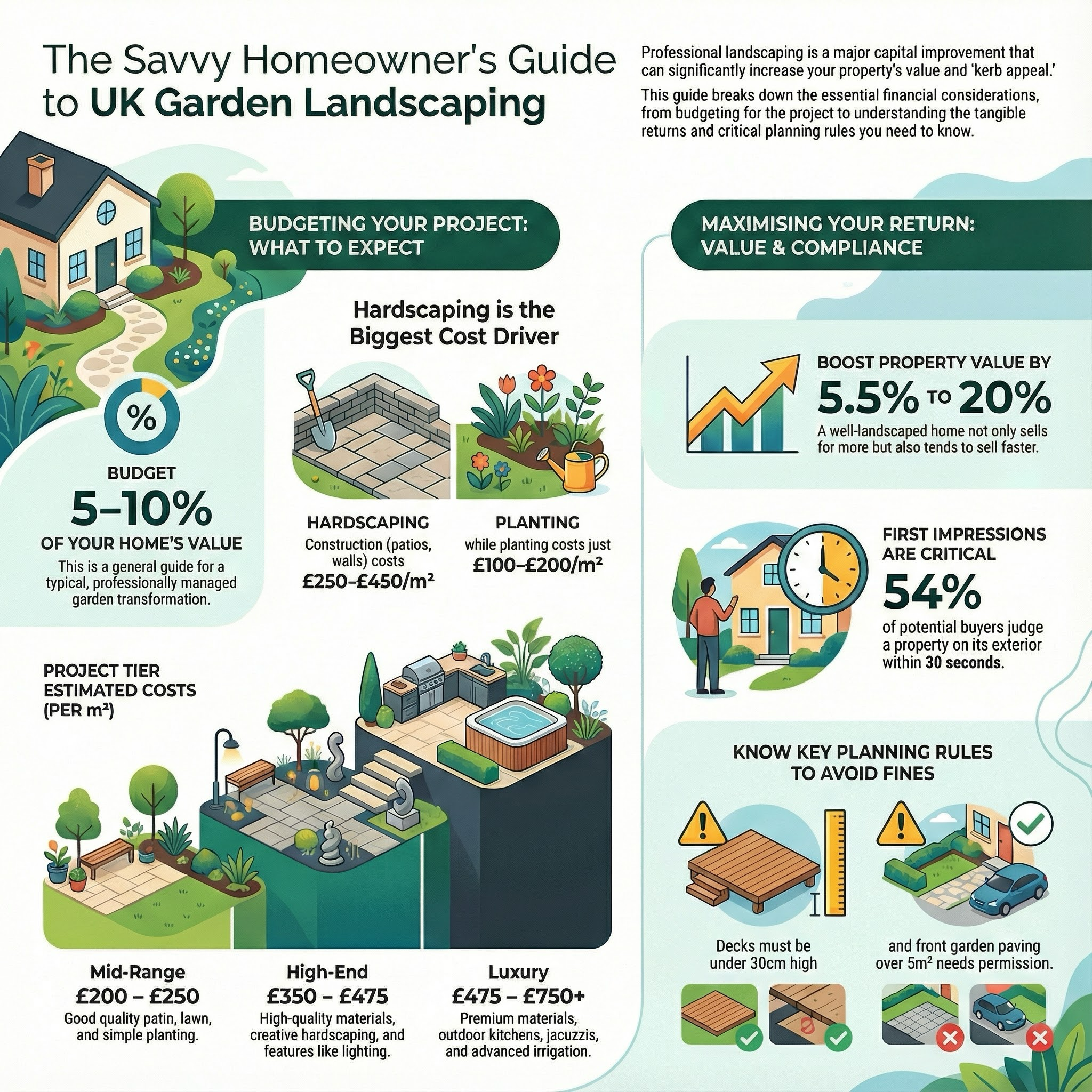
Yes. A professional design prevents costly mistakes like buying plants that die or building features that don't fit the space. It can also add up to 5-10% to your property value.
Autumn and winter are ideal. This allows the design and planning phase to be completed so that construction can begin in early spring, ready for you to enjoy the garden in summer.
A designer creates the plan and vision; a landscaper builds it. Some companies offer a "design and build" service which handles both, often providing a more seamless experience.
Most designers have relationships with wholesale nurseries. They can usually source higher-quality, larger specimens than those found in retail garden centres at competitive prices.
Absolutely. A professional master plan can be implemented over several years, ensuring that the work done in "Year 1" doesn't have to be ripped out to accommodate "Year 3" features.
This guide was written with AI assistance and is intended for general information only. Prices are estimates based on UK averages and may vary by region. Always get at least three quotes and consult a qualified professional before starting any work.
Ask follow-ups in plain English. The AI explains options, sequencing and what to ask the landscaper — so you walk in informed.
Professional garden design is the blueprint for a successful outdoor transformation. It bridges the gap between a vague idea and a functional, beautiful space t...
READ GUIDE →GuideA crisp, well-defined lawn edge is often the difference between a garden that looks "done" and one that looks truly professional. In the UK, our damp climate an...
READ GUIDE →GuideA level garden is the essential foundation for almost every outdoor improvement, from installing a new lawn or patio to erecting a summerhouse. Beyond aesthetic...
READ GUIDE →GuideProfessional landscaping is one of the most effective ways to increase your home’s kerb appeal and market value, often adding up to 20% to a UK property's price...
READ GUIDE →GuideRevitalising your outdoor space often starts with the basics: a lush, level lawn and a clean, stable patio. In the UK, our damp winters and variable summers tak...
READ GUIDE →GuideProfessional landscaping and garden design involve much more than just planting flowers or mowing a lawn. It is the process of modifying the visible features of...
READ GUIDE →