Instant
01 · Ask
Ask the AI a follow-up
Got more questions about garden design and landscaping? Describe the bit you're unsure about — the AI explains options, sequencing and what to ask the landscaper.

Single contractor for design plus build — saves the handover gaps and gets garden finished faster.
You've read the brief on garden design and landscaping. Now lean on us to find the right landscaper — and stay in control of the job.
Got more questions about garden design and landscaping? Describe the bit you're unsure about — the AI explains options, sequencing and what to ask the landscaper.
Costs, timelines, pitfalls and the right questions to ask before any landscaper starts on garden design and landscaping.
Itemised quotes from up to 3 local landscapers on garden design and landscaping — so you can compare like-for-like, not lump sums.
Ready when you are
Enter your postcode and get free quotes from local pros.
Four moves that separate a smooth job from a nightmare.
Patios laid without a slight fall or adequate soakaways will result in standing water and algae growth.
Using "dot and dab" mortar instead of a full bed leads to loose, rocking slabs that eventually crack.
Stripping ground without checking for shallow gas or water pipes can lead to expensive emergency repairs.
Planting in the height of a dry summer or the depth of a frozen winter often leads to high plant failure rates.
Indicative UK ranges and a typical week-by-week schedule.
By job type
Quote spread is typically ± 18% — always get 3 quotes.
Mid-size garden redesign · week by week
Schedule slips on dependencies — pad each phase by 10–20% for real-world delays.
Landscaper quick-view
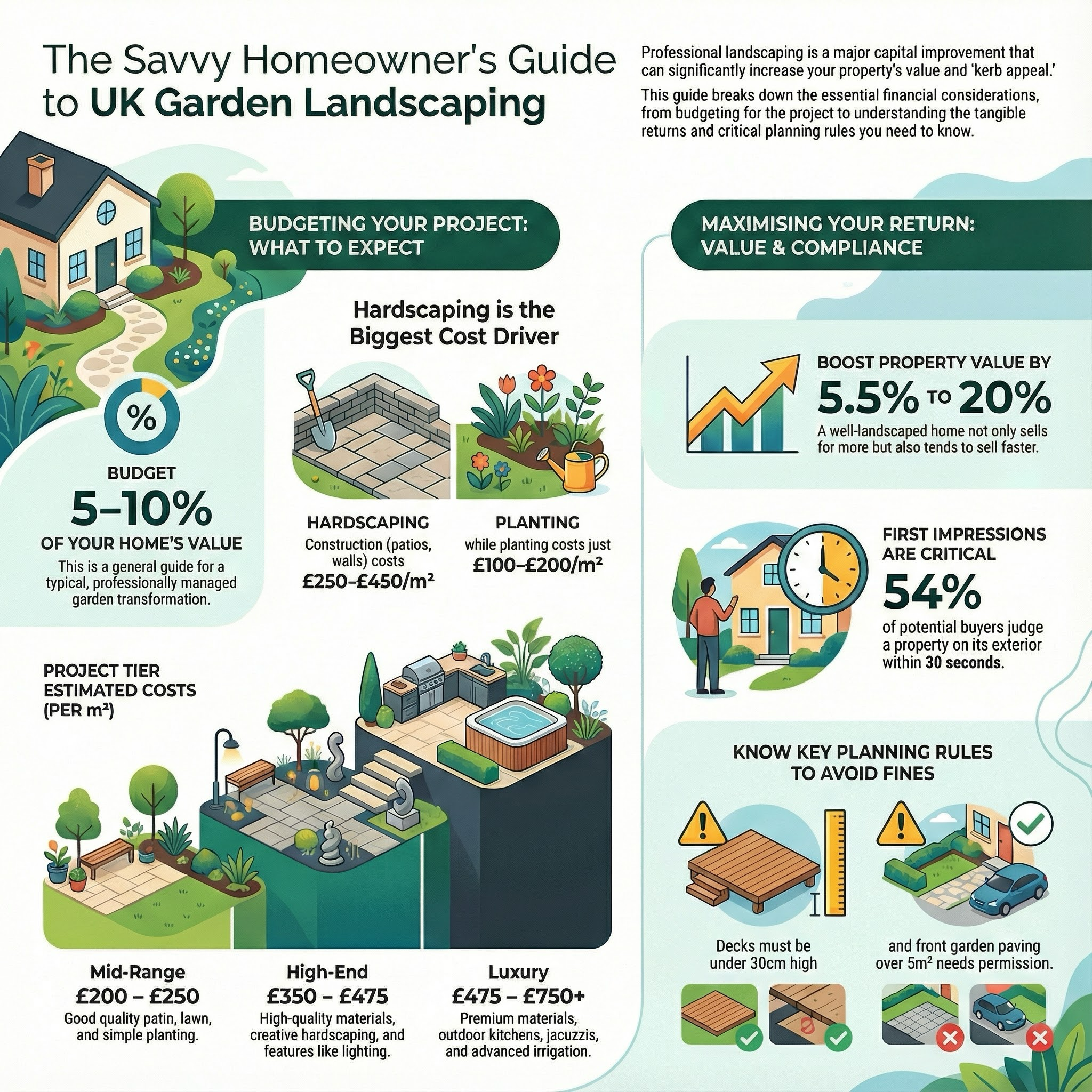
Landscaper explained
Whether you are looking for a contemporary porcelain patio, a traditional English cottage garden, or a low-maintenance family space, a structured approach is essential. This guide outlines what to expect when hiring a professional landscaper to ensure your project is completed to a high standard.
Landscaping costs vary significantly based on material choice and site access. While soft landscaping (plants and turf) is relatively affordable, hard landscaping (stone and timber) requires significant labour and material investment.
| Item / Project Scope | Low £ | High £ | Notes |
|---|---|---|---|
| Small Garden Refresh (up to 40m²) | £4,500 | £8,000 | Basic turf, simple paving, and budget planting. |
| Medium Garden Redesign (50-100m²) | £10,000 | £25,000 | Includes porcelain paving, new lawn, and fencing. |
| Large Full Landscaping (100m²+) | £30,000 | £60,000+ | Complex levels, lighting, and premium materials. |
| Labour (Per Person / Day) | £200 | £350 | Regional variations; higher in London/SE. |
| Waste Disposal (8-yard skip) | £300 | £450 | Price depends on soil/brick vs. mixed waste. |
| Design Fee (Standalone) | £500 | £2,500 | Depends on 2D vs 3D renders and garden size. |
Material prices have remained volatile in 2025. Always ensure your quote includes VAT and specifies the exact type of stone or timber being used, as "natural stone" can range from budget sandstone to premium granite.
While DIY gardening is popular, structural landscaping is best left to professionals. Incorrectly laid sub-bases lead to sinking patios, while poor drainage can cause damp issues in your home or legal disputes with neighbours over runoff.
Professional landscapers have the machinery and expertise to handle the heavy lifting and technical levels that ensure your garden lasts for decades, not just seasons.
If you are on a budget, consider a "hybrid" approach: hire a professional for the hard landscaping (paving and walls) and handle the soft landscaping (planting and mulching) yourself.
Porcelain is highly durable, slip-resistant, and requires almost no maintenance as it does not absorb water or grow algae. Natural sandstone offers a unique, traditional look but is porous and requires regular cleaning and sealing to stay at its best.
Almost certainly. Even a small patio excavation can generate several tonnes of soil and old hardcore. Your landscaper will usually arrange skip hire or a "grab lorry" for larger volumes, which is often more cost-effective than multiple skips.
Hard landscaping can be done year-round, though heavy rain or frost can cause delays. Autumn and Spring are the best times for soft landscaping, as the soil is moist and warm enough for plants and turf to establish their root systems before extreme weather hits.
A general rule of thumb is to budget 5% to 10% of your property’s value for a full professional redesign. This investment is typically recouped through the increased market value and "saleability" of the home.
Most professional landscapers work with wholesale nurseries to source high-quality specimens. They can provide a planting plan and source the plants for you, often at better prices and quality than local retail garden centres.
The sub-base is the layer of compacted stone (usually MOT Type 1) beneath your paving. It provides the structural integrity for the project; without a properly compacted sub-base of at least 100mm, your patio will eventually sink or shift.
This guide was written with AI assistance and is intended for general information only. Prices are estimates based on UK averages and may vary by region. Always get at least three quotes and consult a qualified professional before starting any work.
Ask follow-ups in plain English. The AI explains options, sequencing and what to ask the landscaper — so you walk in informed.
Professional garden design is the blueprint for a successful outdoor transformation. It bridges the gap between a vague idea and a functional, beautiful space t...
READ GUIDE →GuideA crisp, well-defined lawn edge is often the difference between a garden that looks "done" and one that looks truly professional. In the UK, our damp climate an...
READ GUIDE →GuideA level garden is the essential foundation for almost every outdoor improvement, from installing a new lawn or patio to erecting a summerhouse. Beyond aesthetic...
READ GUIDE →GuideProfessional landscaping is one of the most effective ways to increase your home’s kerb appeal and market value, often adding up to 20% to a UK property's price...
READ GUIDE →GuideRevitalising your outdoor space often starts with the basics: a lush, level lawn and a clean, stable patio. In the UK, our damp winters and variable summers tak...
READ GUIDE →GuideProfessional landscaping and garden design involve much more than just planting flowers or mowing a lawn. It is the process of modifying the visible features of...
READ GUIDE →