Instant
01 · Ask
Ask the AI a follow-up
Got more questions about garden design and tree planting? Describe the bit you're unsure about — the AI explains options, sequencing and what to ask the landscaper.

Garden design plus tree planting — selecting and planting the right trees for the right spot.
You've read the brief on garden design and tree planting. Now lean on us to find the right landscaper — and stay in control of the job.
Got more questions about garden design and tree planting? Describe the bit you're unsure about — the AI explains options, sequencing and what to ask the landscaper.
Costs, timelines, pitfalls and the right questions to ask before any landscaper starts on garden design and tree planting.
Itemised quotes from up to 3 local landscapers on garden design and tree planting — so you can compare like-for-like, not lump sums.
Ready when you are
Enter your postcode and get free quotes from local pros.
Four moves that separate a smooth job from a nightmare.
This is the most common cause of tree death. The "root flare" must be visible at the soil surface to prevent rot.
Planting a species that will eventually outgrow its space, causing light issues or root damage to foundations.
In heavy UK clay, planting pits can act like a "bathtub," drowning the roots. Professional landscapers will "mound plant" or install drainage.
New trees require consistent watering for the first two growing seasons. Many homeowners forget this once the landscaper leaves.
Indicative UK ranges and a typical week-by-week schedule.
By job type
Quote spread is typically ± 18% — always get 3 quotes.
Mid-size garden redesign · week by week
Schedule slips on dependencies — pad each phase by 10–20% for real-world delays.
Landscaper quick-view
Landscaper explained
A well-executed planting scheme considers soil health, local climate, and future growth patterns to ensure your garden thrives for decades. In the UK, where weather can be unpredictable and garden space is often at a premium, professional guidance helps avoid the costly mistake of "right tree, wrong place."
Prices for garden design and planting vary significantly based on the maturity of the trees selected. Larger specimen trees (instant impact) require more labour and specialist equipment than younger "whips" or saplings.
| Item | Low £ | High £ | Notes |
|---|---|---|---|
| Design Consultation | £150 | £500 | Basic plan vs. full CAD 3D renders. |
| Labour (Daily Rate) | £250 | £450 | Per person; usually two people for large trees. |
| Small Tree (2-3 years old) | £40 | £120 | Potted or bare-root (seasonal). |
| Specimen Tree (3m+ height) | £250 | £1,500+ | Instant impact; requires machinery to move. |
| Soil Improver & Mulch | £50 | £200 | Bulk bags of compost and bark. |
| Waste Removal | £100 | £350 | Includes "muck away" and green waste disposal. |
Factors that will increase the cost include poor site access (requiring manual handling), heavy clay soil that needs significant drainage work, and the need for specialist equipment like a HIAB crane for very large specimens.
While planting a small shrub is a manageable weekend task, larger garden design projects often require professional expertise. Professional landscapers have the machinery to move heavy root balls without damaging them and the knowledge to prevent common planting failures.
Expert Tip: If you are planting near a boundary or building, a professional can advise on root spread to prevent future structural damage or disputes with neighbours.
Furthermore, many nurseries only offer a "failure guarantee" (usually 12 months) if the tree is planted by a recognised professional. For large specimen trees costing hundreds of pounds, this insurance is invaluable.
The traditional planting season is between November and March. This is when trees are dormant and "bare-root" specimens are available, which are cheaper and often establish better. However, container-grown trees can be planted year-round, provided they are watered heavily during the summer.
This depends entirely on the species. A Rowan or Silver Birch might only need a 3-4 metre radius, whereas an Oak or Beech will eventually require 10-15 metres. Always check the "ultimate height and spread" on the plant label before committing.
Generally, no. You don't need permission to plant trees on your own land. However, you should be mindful of the "Right to Light" for neighbours and ensure the roots won't interfere with public footpaths or highways.
Mulching involves placing a 5-10cm layer of organic matter (like woodchips or bark) around the base of the tree. It suppresses weeds, retains soil moisture, and protects the roots from extreme temperature fluctuations common in the UK.
For the first two years, a new tree needs roughly 20-40 litres of water per week during the growing season (April to September). In hot UK summers, this may need to be increased to every other day.
It is highly discouraged. Tree roots are naturally drawn to the moisture in drains and can cause blockages or collapses. You should maintain a minimum distance of 3 metres from major pipes, or use root barrier membranes if space is tight.
This guide was written with AI assistance and is intended for general information only. Prices are estimates based on UK averages and may vary by region. Always get at least three quotes and consult a qualified professional before starting any work.
Ask follow-ups in plain English. The AI explains options, sequencing and what to ask the landscaper — so you walk in informed.
Professional garden design is the blueprint for a successful outdoor transformation. It bridges the gap between a vague idea and a functional, beautiful space t...
READ GUIDE →GuideA crisp, well-defined lawn edge is often the difference between a garden that looks "done" and one that looks truly professional. In the UK, our damp climate an...
READ GUIDE →GuideA level garden is the essential foundation for almost every outdoor improvement, from installing a new lawn or patio to erecting a summerhouse. Beyond aesthetic...
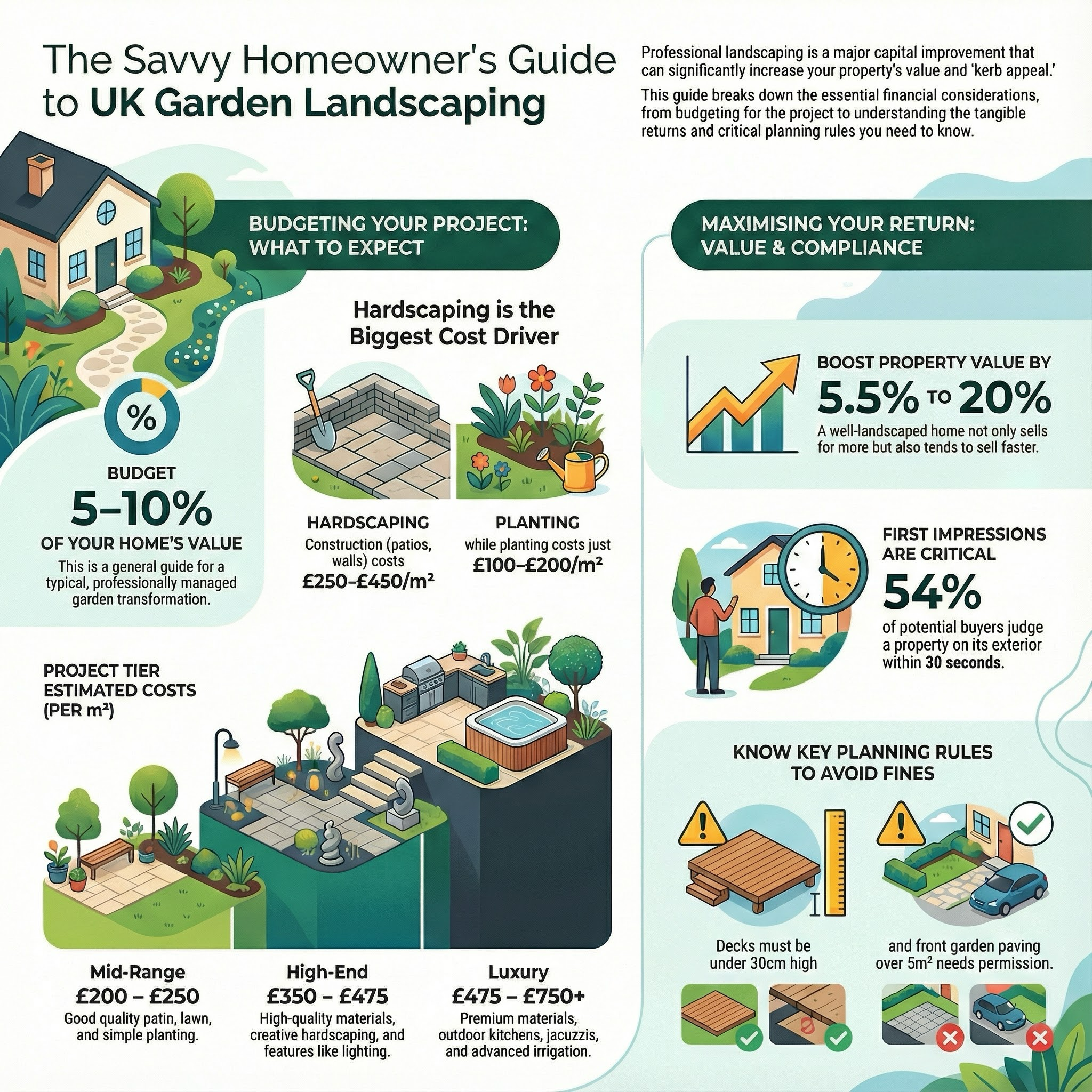
READ GUIDE →GuideProfessional landscaping is one of the most effective ways to increase your home’s kerb appeal and market value, often adding up to 20% to a UK property's price...
READ GUIDE →GuideRevitalising your outdoor space often starts with the basics: a lush, level lawn and a clean, stable patio. In the UK, our damp winters and variable summers tak...
READ GUIDE →GuideProfessional landscaping and garden design involve much more than just planting flowers or mowing a lawn. It is the process of modifying the visible features of...
READ GUIDE →