Instant
01 · Ask
Ask the AI a follow-up
Got more questions about garden preparation for shed installation? Describe the bit you're unsure about — the AI explains options, sequencing and what to ask the landscaper.

Garden cleared, level base laid and ready for shed delivery — saves the shed installer time and cost.
You've read the brief on garden preparation for shed installation. Now lean on us to find the right landscaper — and stay in control of the job.
Got more questions about garden preparation for shed installation? Describe the bit you're unsure about — the AI explains options, sequencing and what to ask the landscaper.
Costs, timelines, pitfalls and the right questions to ask before any landscaper starts on garden preparation for shed installation.
Itemised quotes from up to 3 local landscapers on garden preparation for shed installation — so you can compare like-for-like, not lump sums.
Ready when you are
Enter your postcode and get free quotes from local pros.
Four moves that separate a smooth job from a nightmare.
If the ground isn't compacted with a vibrating plate, the shed will sink unevenly over the first 12 months.
Omitting a weed membrane or DPC (Damp Proof Course) allows moisture to travel from the soil into the floor joists.
Setting a shed too low or surrounded by high grass prevents air from circulating underneath, leading to dry rot.
Hitting water pipes or electric cables during excavation. Always check "dial before you dig" or use a CAT scanner.
Indicative UK ranges and a typical week-by-week schedule.
By job type
Quote spread is typically ± 18% — always get 3 quotes.
Mid-size garden redesign · week by week
Schedule slips on dependencies — pad each phase by 10–20% for real-world delays.
Landscaper quick-view
Landscaper explained
In the UK, our heavy rainfall and varying soil types mean that simply "plonking" a shed on the grass is never an option. Professional garden preparation ensures the site is excavated correctly, protected against rising moisture, and engineered to support the specific weight of your chosen building.
Prices for garden preparation vary based on the size of the shed and the amount of "muck away" required. A sloping site will significantly increase costs due to the extra excavation and retaining work needed.
| Item | Low £ | High £ | Notes |
|---|---|---|---|
| Small Base Prep (6x4ft) | £350 | £600 | Includes basic excavation and slab laying. |
| Medium Base Prep (8x6ft) | £550 | £950 | Assuming level ground and easy access. |
| Large/Heavy Base (10x12ft+) | £1,100 | £2,500+ | Often requires a reinforced concrete slab. |
| Waste Disposal (Skip/Muck-away) | £150 | £400 | Based on volume of soil and turf removed. |
| Labour (Daily Rate) | £250 | £450 | Two-person landscaping team. |
Factors affecting the final quote include "hand-dig" vs machine access, the distance from the work area to the skip, and whether you require a concrete pour which involves higher material costs and curing time.
While clearing turf is a straightforward DIY task, achieving a perfectly level finish is harder than it looks. A 5mm error across the base can result in shed doors that won't close and a roof that doesn't sit flush, leading to leaks.
Professional landscapers have the plant machinery (like plate compactors and mini-diggers) to ensure the ground won't sink under the weight of the shed over time. If you plan to run electricity to the shed, you must use a professional to ensure the base preparation accounts for armoured cable ducting in compliance with BS 7671 (Part P) regulations.
Expert Tip: Always ask your landscaper to install the base slightly larger than the shed floor, but ensure the shed itself has a "drip edge" so rainwater doesn't sit on the base and rot the bottom timbers.
Not necessarily. For sheds up to 8x6ft, a well-laid paving slab base or a timber pressure-treated frame on "pro-base" plastic grids is often sufficient and much cheaper than concrete.
It is generally discouraged. Decking is designed for foot traffic, not the concentrated, static weight of a shed and its contents. The lack of airflow can also rot both the deck and the shed floor.
Ideally, leave at least 18 inches (450mm) of space on all sides. This allows for air circulation and gives you enough room to apply wood preservative or repair panels in the future.
Plastic and metal sheds are lightweight and prone to condensation. A solid concrete slab with an integrated damp-proof membrane is highly recommended to provide an anchor point and reduce moisture rise.
Yes, but it requires more prep. A landscaper will likely build a "cut and fill" level area using timber sleepers or a brick retaining wall to create a flat plateau for the base.
Some landscapers offer a full supply-and-fit service, but many specialise only in the groundworks. Always clarify if assembly is included or if you need to hire a separate handyman.
This guide was written with AI assistance and is intended for general information only. Prices are estimates based on UK averages and may vary by region. Always get at least three quotes and consult a qualified professional before starting any work.
Ask follow-ups in plain English. The AI explains options, sequencing and what to ask the landscaper — so you walk in informed.
Professional garden design is the blueprint for a successful outdoor transformation. It bridges the gap between a vague idea and a functional, beautiful space t...
READ GUIDE →GuideA crisp, well-defined lawn edge is often the difference between a garden that looks "done" and one that looks truly professional. In the UK, our damp climate an...
READ GUIDE →GuideA level garden is the essential foundation for almost every outdoor improvement, from installing a new lawn or patio to erecting a summerhouse. Beyond aesthetic...
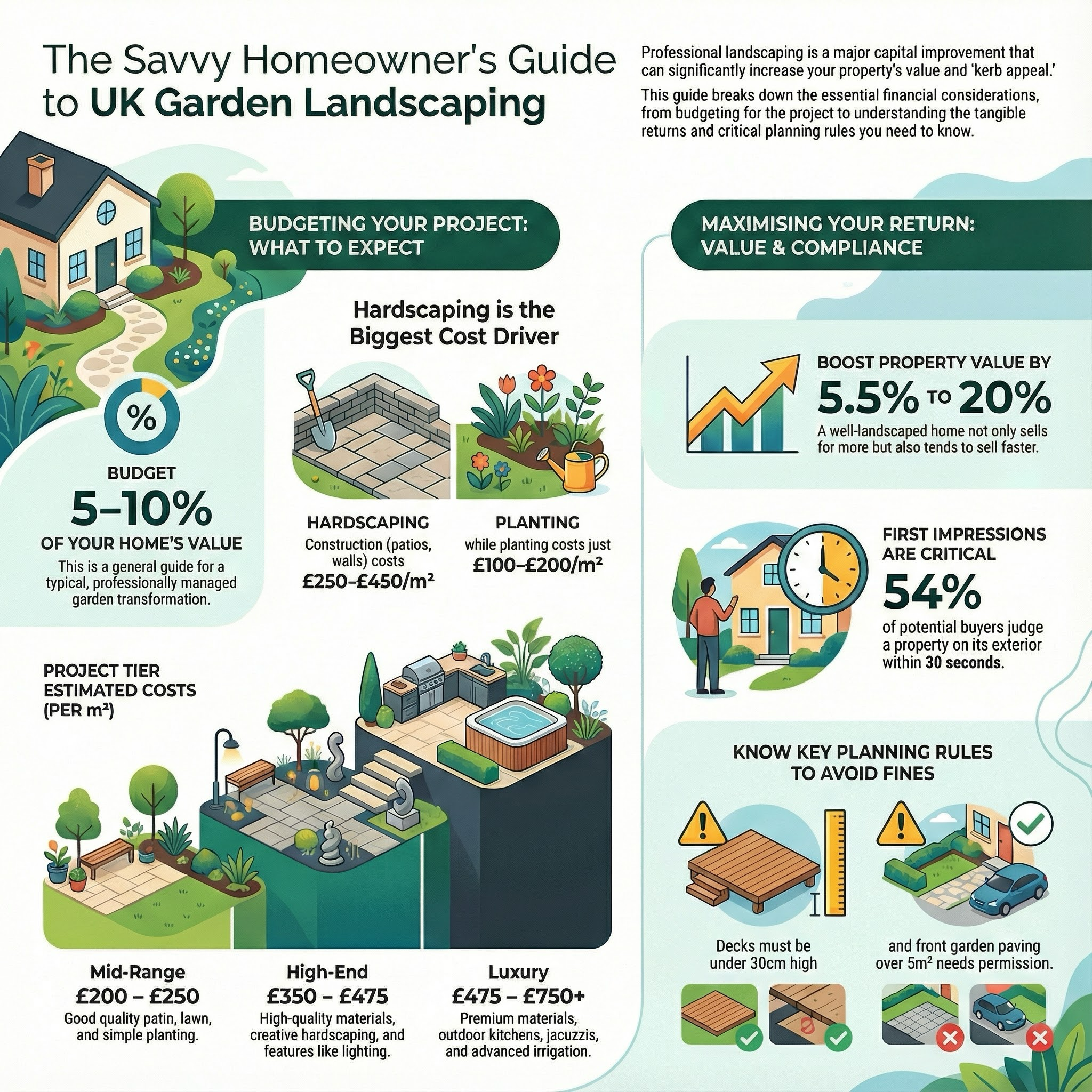
READ GUIDE →GuideProfessional landscaping is one of the most effective ways to increase your home’s kerb appeal and market value, often adding up to 20% to a UK property's price...
READ GUIDE →GuideRevitalising your outdoor space often starts with the basics: a lush, level lawn and a clean, stable patio. In the UK, our damp winters and variable summers tak...
READ GUIDE →GuideProfessional landscaping and garden design involve much more than just planting flowers or mowing a lawn. It is the process of modifying the visible features of...
READ GUIDE →