Instant
01 · Ask
Ask the AI a follow-up
Got more questions about landscape a Garden? Describe the bit you're unsure about — the AI explains options, sequencing and what to ask the landscaper.

From idea to finished garden — design, phasing, costs, contractor selection and timeline.
You've read the brief on landscape a Garden. Now lean on us to find the right landscaper — and stay in control of the job.
Got more questions about landscape a Garden? Describe the bit you're unsure about — the AI explains options, sequencing and what to ask the landscaper.
Costs, timelines, pitfalls and the right questions to ask before any landscaper starts on landscape a Garden.
Itemised quotes from up to 3 local landscapers on landscape a Garden — so you can compare like-for-like, not lump sums.
Ready when you are
Enter your postcode and get free quotes from local pros.
Four moves that separate a smooth job from a nightmare.
Puddles forming on lawns or water pooling against the house because the "fall" (slope) was calculated incorrectly.
Caused by an inadequate sub-base or using "spot bedding" (blobs of mortar) instead of a full mortar bed.
Failure to identify and professionally treat Japanese Knotweed or Horsetail before starting works.
Choosing cheap concrete slabs that lose their colour within two winters compared to natural stone or porcelain.
Indicative UK ranges and a typical week-by-week schedule.
By job type
Quote spread is typically ± 18% — always get 3 quotes.
Mid-size garden redesign · week by week
Schedule slips on dependencies — pad each phase by 10–20% for real-world delays.
Landscaper quick-view
Landscaper explained
For most British homeowners, the challenge lies in balancing aesthetics with the practicalities of our climate, such as drainage and material durability. A well-executed landscape design considers the "golden thread" of the property—ensuring the garden feels like a seamless extension of your interior living space.
| Project Component | Low £ | High £ | Notes |
|---|---|---|---|
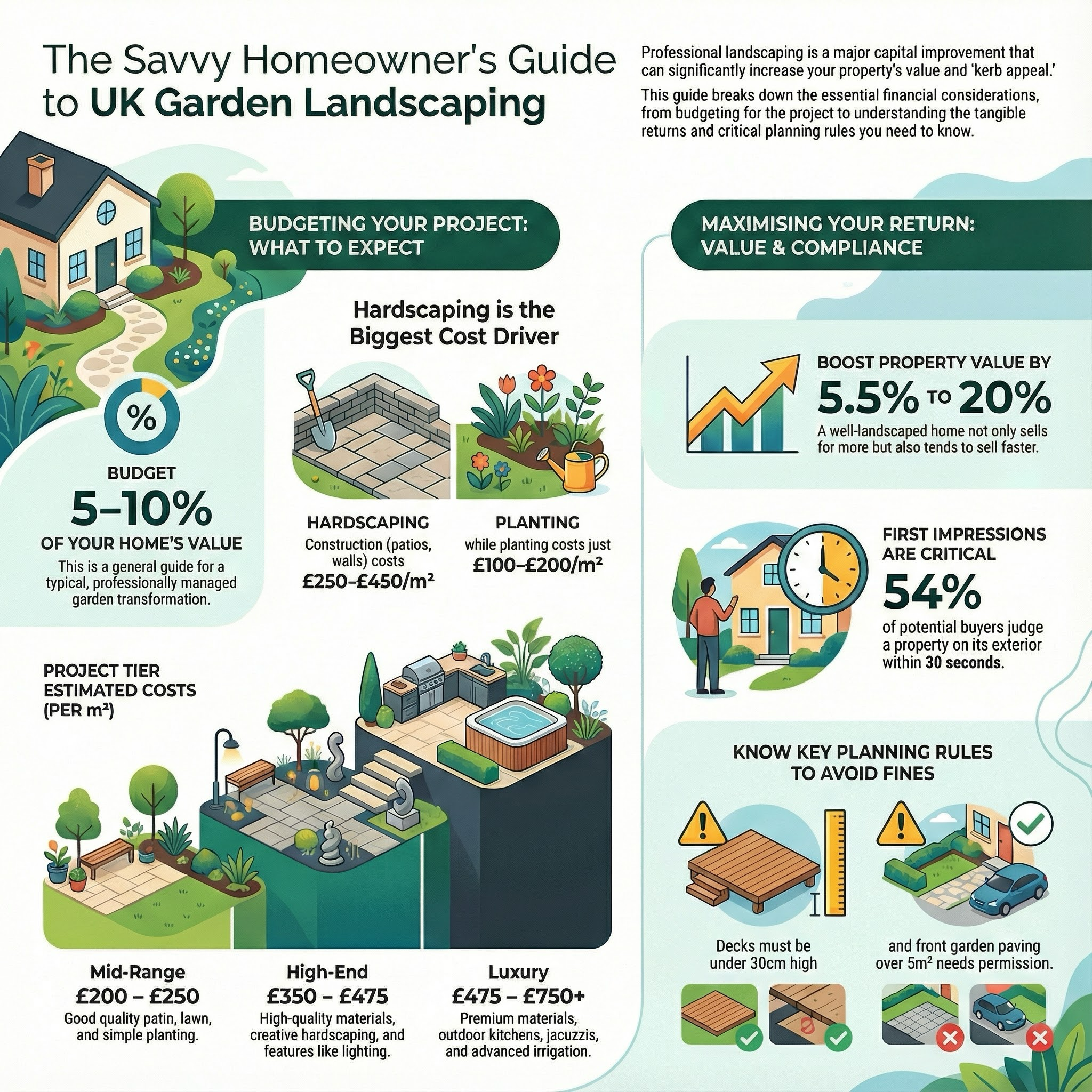
| Small Garden Makeover (20-40m²) | £3,500 | £7,500 | Basic patio, new turf, and simple planting. |
| Medium Garden Overhaul (50-100m²) | £8,000 | £18,000 | Multi-zone layout with high-quality materials. |
| Large/Complex Landscaping | £20,000 | £50,000+ | Includes levels, bespoke structures, and lighting. |
| Paving (per m²) | £120 | £250 | Includes sub-base, mortar, and premium slabs. |
| Fencing (per 6ft panel) | £90 | £180 | Supplied and fitted with concrete posts. |
| Waste Removal (6-yard skip) | £250 | £400 | Varies by region and waste type. |
The primary drivers of cost are material choice—for example, natural sandstone is often cheaper than high-end Italian porcelain—and site access. If a landscaper cannot get a mini-digger into your garden and must move tonnes of soil by hand through a house or side gate, labour costs will increase significantly.
Always ensure your quote includes VAT and waste disposal fees, as "muck-away" costs for soil and concrete can be a significant hidden expense.
While DIY is feasible for basic tasks like planting or painting fences, structural landscaping is best left to professionals. Mistakes in sub-base preparation lead to sinking patios, while poor drainage can cause damp issues for your home or disputes with neighbours.
Furthermore, any electrical work for garden lighting must comply with Part P of the Building Regulations and be signed off by a qualified electrician. If your project involves gas-fired fire pits or outdoor kitchens, a Gas Safe registered engineer is a legal requirement.
In most cases, no. However, if the patio is in your front garden and exceeds 5 square metres, it must be made of permeable material or drain to a lawn/border. If you live in a Conservation Area or a Listed Building, always check with your local planning office first.
Hard landscaping can be done year-round, though heavy rain can delay groundworks. For planting and turfing, spring (March-May) and autumn (September-November) are ideal as the soil is moist and warm, helping plants establish quickly without excessive watering.
Hard landscaping refers to the non-living elements such as brickwork, paving, decking, and fencing. Soft landscaping covers the living elements, including grass, trees, shrubs, and flowers. A balanced garden usually requires a mix of both.
Research suggests that a professionally landscaped garden can add between 5% and 15% to the value of a UK property. It also significantly increases "kerb appeal," often leading to a faster sale in a competitive market.
Factors like soil type (heavy clay is harder to excavate), waste disposal access, and the quality of the stone chosen can cause prices to vary wildly. A quote that includes a 150mm reinforced sub-base will naturally be more expensive than one that cuts corners.
This guide was written with AI assistance and is intended for general information only. Prices are estimates based on UK averages and may vary by region. Always get at least three quotes and consult a qualified professional before starting any work.
Ask follow-ups in plain English. The AI explains options, sequencing and what to ask the landscaper — so you walk in informed.
Professional garden design is the blueprint for a successful outdoor transformation. It bridges the gap between a vague idea and a functional, beautiful space t...
READ GUIDE →GuideA crisp, well-defined lawn edge is often the difference between a garden that looks "done" and one that looks truly professional. In the UK, our damp climate an...
READ GUIDE →GuideA level garden is the essential foundation for almost every outdoor improvement, from installing a new lawn or patio to erecting a summerhouse. Beyond aesthetic...
READ GUIDE →GuideProfessional landscaping is one of the most effective ways to increase your home’s kerb appeal and market value, often adding up to 20% to a UK property's price...
READ GUIDE →GuideRevitalising your outdoor space often starts with the basics: a lush, level lawn and a clean, stable patio. In the UK, our damp winters and variable summers tak...
READ GUIDE →GuideProfessional landscaping and garden design involve much more than just planting flowers or mowing a lawn. It is the process of modifying the visible features of...
READ GUIDE →