Instant
01 · Ask
Ask the AI a follow-up
Got more questions about landscape Project Management? Describe the bit you're unsure about — the AI explains options, sequencing and what to ask the landscaper.

Big landscape job — design, contractors, materials, phasing — managed by a project lead who saves you time and money.
You've read the brief on landscape Project Management. Now lean on us to find the right landscaper — and stay in control of the job.
Got more questions about landscape Project Management? Describe the bit you're unsure about — the AI explains options, sequencing and what to ask the landscaper.
Costs, timelines, pitfalls and the right questions to ask before any landscaper starts on landscape Project Management.
Itemised quotes from up to 3 local landscapers on landscape Project Management — so you can compare like-for-like, not lump sums.
Ready when you are
Enter your postcode and get free quotes from local pros.
Four moves that separate a smooth job from a nightmare.
Failing to account for water run-off can lead to waterlogged lawns or damp issues in the main house.
The "invisible" work underground often costs more than the visible finishes; a good PM will ensure the foundations are correct.
Specialist stone or mature trees can have 12-week lead times; poor management leads to contractors sitting idle.
Striking gas or water lines due to lack of site mapping can be dangerous and expensive to repair.
Indicative UK ranges and a typical week-by-week schedule.
By job type
Quote spread is typically ± 18% — always get 3 quotes.
Mid-size garden redesign · week by week
Schedule slips on dependencies — pad each phase by 10–20% for real-world delays.
Landscaper quick-view
Landscaper explained
Managing a landscape project involves juggling multiple trades, from electricians for outdoor lighting to groundwork teams and horticulturists. Without professional oversight, costs can quickly spiral due to poor sequencing or material delays, making project management a vital investment for large-scale renovations.
Landscape project management fees are typically calculated as a percentage of the total build cost (usually 10% to 15%) or as a fixed daily/hourly rate for smaller interventions. These prices reflect current 2025/26 UK market rates including VAT where applicable.
| Item | Low £ | High £ | Notes |
|---|---|---|---|
| Initial Consultation | £150 | £350 | Site visit and feasibility report. |
| Full Design Package | £800 | £3,500+ | Scales with garden size and complexity. |
| Daily Management Rate | £350 | £600 | For site visits and contractor oversight. |
| Project Management Fee | 10% | 15% | Percentage of total project build cost. |
| Topographical Survey | £450 | £900 | Required for gardens with significant slopes. |
Total costs are heavily influenced by the complexity of the site. Sloping gardens requiring significant retaining walls or sites with restricted access for machinery will demand more intensive management and higher specialist fees.
While DIY is fine for basic weeding or simple turfing, professional management is essential for projects involving structural changes. Retaining walls, complex drainage systems, and mains-wired lighting require expert knowledge to meet UK safety standards and avoid future subsidence.
Professional managers hold "Professional Indemnity" insurance, protecting you if a design flaw causes structural issues later—a safety net you don't get with a DIY approach.
3 Questions to Ask:
For a simple patio, a reputable paving contractor can usually manage the work themselves. However, if that patio involves integrated lighting, new drainage, and bespoke carpentry, a project manager ensures these different elements sync perfectly.
Late summer or autumn is often best for planning, with construction starting in late winter. This ensures the hardscaping is finished just in time for the spring planting season, allowing your garden to "bed in" before summer.
While they charge a fee, they often save money by preventing costly mistakes, negotiating trade prices on materials, and ensuring contractors work efficiently to avoid overrunning labour costs.
While not always a legal requirement (unless the Party Wall Act applies), it is highly recommended. Your project manager should handle the logistics of skip placement and delivery times to minimise disruption to the street.
Never pay the full amount upfront. A standard schedule involves a deposit (10-20%), followed by "stage payments" linked to specific milestones, with a final 5-10% "retention" held back until all snagging is completed.
This guide was written with AI assistance and is intended for general information only. Prices are estimates based on UK averages and may vary by region. Always get at least three quotes and consult a qualified professional before starting any work.
Ask follow-ups in plain English. The AI explains options, sequencing and what to ask the landscaper — so you walk in informed.
Professional garden design is the blueprint for a successful outdoor transformation. It bridges the gap between a vague idea and a functional, beautiful space t...
READ GUIDE →GuideA crisp, well-defined lawn edge is often the difference between a garden that looks "done" and one that looks truly professional. In the UK, our damp climate an...
READ GUIDE →GuideA level garden is the essential foundation for almost every outdoor improvement, from installing a new lawn or patio to erecting a summerhouse. Beyond aesthetic...
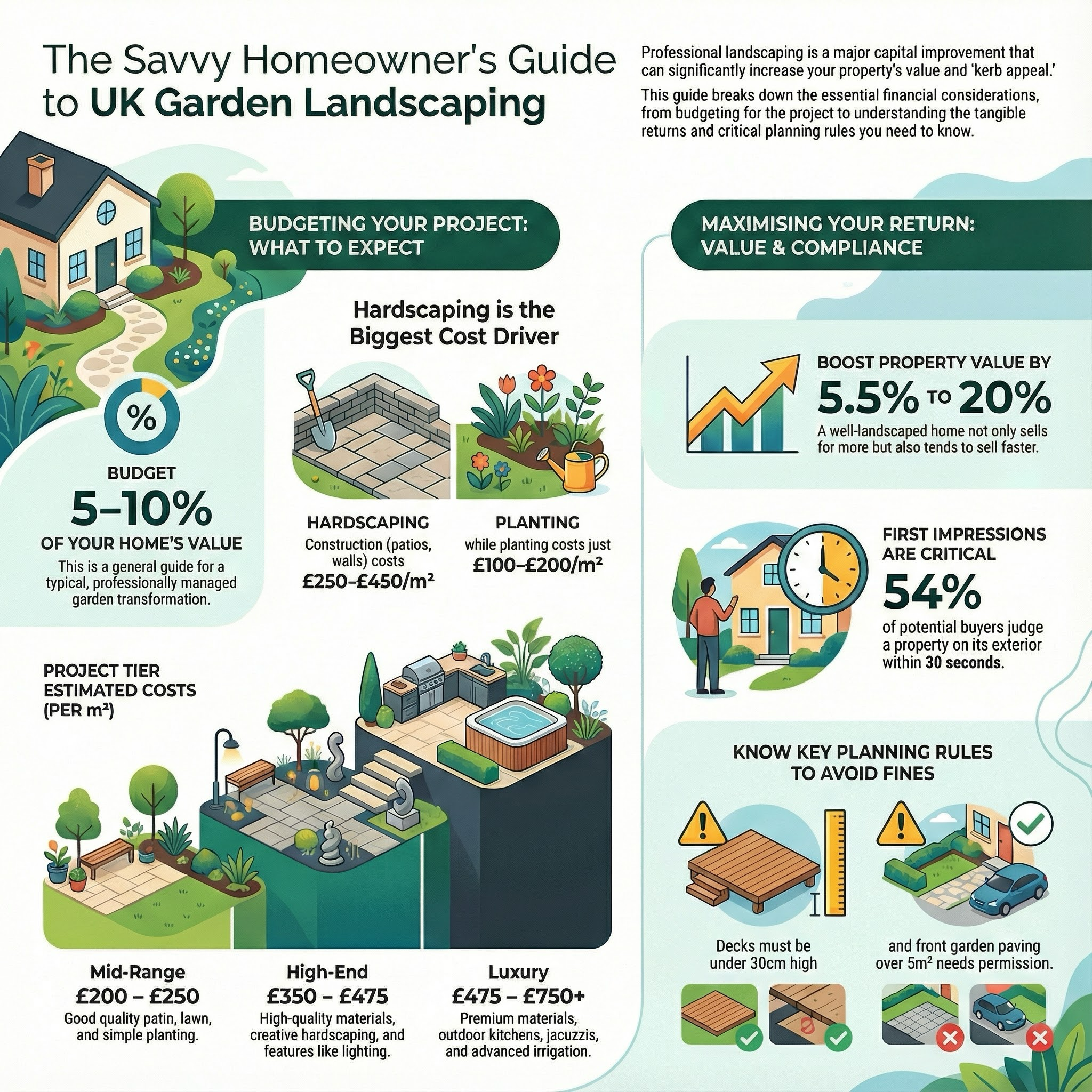
READ GUIDE →GuideProfessional landscaping is one of the most effective ways to increase your home’s kerb appeal and market value, often adding up to 20% to a UK property's price...
READ GUIDE →GuideRevitalising your outdoor space often starts with the basics: a lush, level lawn and a clean, stable patio. In the UK, our damp winters and variable summers tak...
READ GUIDE →GuideProfessional landscaping and garden design involve much more than just planting flowers or mowing a lawn. It is the process of modifying the visible features of...
READ GUIDE →