Instant
01 · Ask
Ask the AI a follow-up
Got more questions about lawn turfing and garden design? Describe the bit you're unsure about — the AI explains options, sequencing and what to ask the landscaper.

New lawn laid plus garden design — combined project for full garden refresh in 4-6 weeks.
You've read the brief on lawn turfing and garden design. Now lean on us to find the right landscaper — and stay in control of the job.
Got more questions about lawn turfing and garden design? Describe the bit you're unsure about — the AI explains options, sequencing and what to ask the landscaper.
Costs, timelines, pitfalls and the right questions to ask before any landscaper starts on lawn turfing and garden design.
Itemised quotes from up to 3 local landscapers on lawn turfing and garden design — so you can compare like-for-like, not lump sums.
Ready when you are
Enter your postcode and get free quotes from local pros.
Four moves that separate a smooth job from a nightmare.
Laying turf on hard, un-rotavated ground leads to shallow roots and a lawn that dies during the first dry spell.
If turf rolls aren't "butted" together tightly or are allowed to dry out, they shrink, leaving ugly brown gaps.
Failing to address "boggy" spots before turfing results in moss takeover and a lawn that is unusable for half the year.
Using "stadium grade" rye grass in a heavily shaded garden will result in the lawn thinning out within months.
Indicative UK ranges and a typical week-by-week schedule.
By job type
Quote spread is typically ± 18% — always get 3 quotes.
Mid-size garden redesign · week by week
Schedule slips on dependencies — pad each phase by 10–20% for real-world delays.
Landscaper quick-view
Landscaper explained
In the UK’s temperate climate, successful landscaping relies on meticulous ground preparation and choosing the right species of grass for your specific light levels. A professional landscaper ensures that the "invisible" work—such as drainage and soil nutrition—is handled correctly before a single roll of turf is laid.
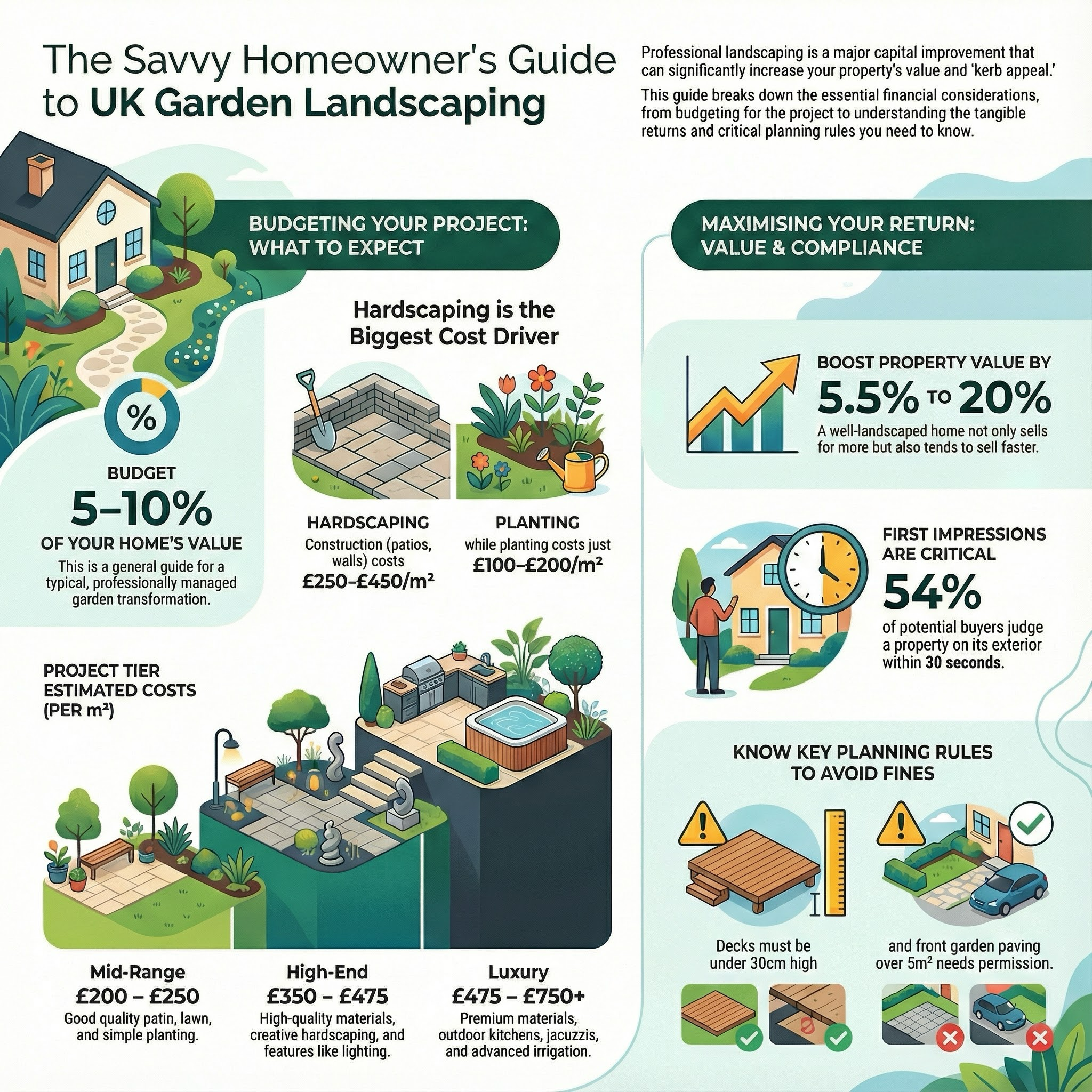
The cost of turfing and garden design varies significantly based on the quality of the turf selected and the amount of preparation required. Professional landscapers typically quote per square metre for turfing, while design fees are often a fixed project cost.
| Item | Low £ | High £ | Notes |
|---|---|---|---|
| Turfing (per m2) | £15 | £35 | Includes prep, topsoil, and labour. |
| Garden Design Fee | £350 | £2,000+ | From basic sketches to full 3D renders. |
| Topsoil (per tonne) | £50 | £95 | Screened "Grade A" soil delivered. |
| Waste Removal | £200 | £500 | Skip hire or "grab" lorry for old turf/spoil. |
| Labour (Day Rate) | £200 | £350 | Per person; higher in London/SE. |
Note: Prices usually include VAT at 20%. Factors such as poor site access (e.g., having to carry materials through a terraced house) will increase the labour costs significantly.
While laying turf is physically possible for a fit DIYer, the result often suffers from poor levelling, leading to a "lumpy" lawn that is difficult to mow. Professionals have access to heavy-duty rotavators and turf cutters that make the job more thorough. Furthermore, a professional designer understands Part M of the Building Regulations regarding access and SUDS (Sustainable Drainage Systems) to prevent garden flooding.
Professional turfing is 90% preparation and 10% laying. If the ground isn't perfectly level and nutrient-rich, even the most expensive turf will fail within a season.
Spring (March-May) and Autumn (September-November) are ideal. The soil is warm and there is usually enough rainfall to help the roots establish without the extreme heat of summer or the frost of winter.
You should water it every evening for the first 14 days, unless there is heavy rain. Ensure the water soaks through the turf into the soil beneath—check this by gently lifting a corner of a roll.
No. This is a common mistake that leads to failure. The old grass will rot down, creating an unstable base and preventing the new roots from reaching the soil. The old turf must always be removed or dug in.
This is usually a sign of "stress," most commonly caused by lack of water. However, it can also be a sign of nitrogen deficiency or poor soil contact. If it happens within days of laying, contact your landscaper immediately.
No. The initial installation cost of artificial grass is significantly higher (often £60-£100 per m2) due to the extensive sub-base preparation required. Real turf is much cheaper upfront but requires ongoing maintenance.
This guide was written with AI assistance and is intended for general information only. Prices are estimates based on UK averages and may vary by region. Always get at least three quotes and consult a qualified professional before starting any work.
Ask follow-ups in plain English. The AI explains options, sequencing and what to ask the landscaper — so you walk in informed.
Professional garden design is the blueprint for a successful outdoor transformation. It bridges the gap between a vague idea and a functional, beautiful space t...
READ GUIDE →GuideA crisp, well-defined lawn edge is often the difference between a garden that looks "done" and one that looks truly professional. In the UK, our damp climate an...
READ GUIDE →GuideA level garden is the essential foundation for almost every outdoor improvement, from installing a new lawn or patio to erecting a summerhouse. Beyond aesthetic...
READ GUIDE →GuideProfessional landscaping is one of the most effective ways to increase your home’s kerb appeal and market value, often adding up to 20% to a UK property's price...
READ GUIDE →GuideRevitalising your outdoor space often starts with the basics: a lush, level lawn and a clean, stable patio. In the UK, our damp winters and variable summers tak...
READ GUIDE →GuideProfessional landscaping and garden design involve much more than just planting flowers or mowing a lawn. It is the process of modifying the visible features of...
READ GUIDE →