Instant
01 · Ask
Ask the AI a follow-up
Got more questions about turf and shingle laying? Describe the bit you're unsure about — the AI explains options, sequencing and what to ask the landscaper.

New lawn turf plus decorative shingle area — full back-garden refresh in one project.
You've read the brief on turf and shingle laying. Now lean on us to find the right landscaper — and stay in control of the job.
Got more questions about turf and shingle laying? Describe the bit you're unsure about — the AI explains options, sequencing and what to ask the landscaper.
Costs, timelines, pitfalls and the right questions to ask before any landscaper starts on turf and shingle laying.
Itemised quotes from up to 3 local landscapers on turf and shingle laying — so you can compare like-for-like, not lump sums.
Ready when you are
Enter your postcode and get free quotes from local pros.
Four moves that separate a smooth job from a nightmare.
If turf is not "butted" tightly together or is allowed to dry out, the rolls shrink, leaving ugly brown gaps.
Using a cheap, thin membrane under shingle allows perennial weeds to push through from below.
Failure to properly compact the soil before laying turf leads to "settling," creating dips that collect water.
Without proper edging, shingle will inevitably migrate into your lawn, potentially damaging your lawnmower.
Indicative UK ranges and a typical week-by-week schedule.
By job type
Quote spread is typically ± 18% — always get 3 quotes.
Mid-size garden redesign · week by week
Schedule slips on dependencies — pad each phase by 10–20% for real-world delays.
Landscaper quick-view
Landscaper explained
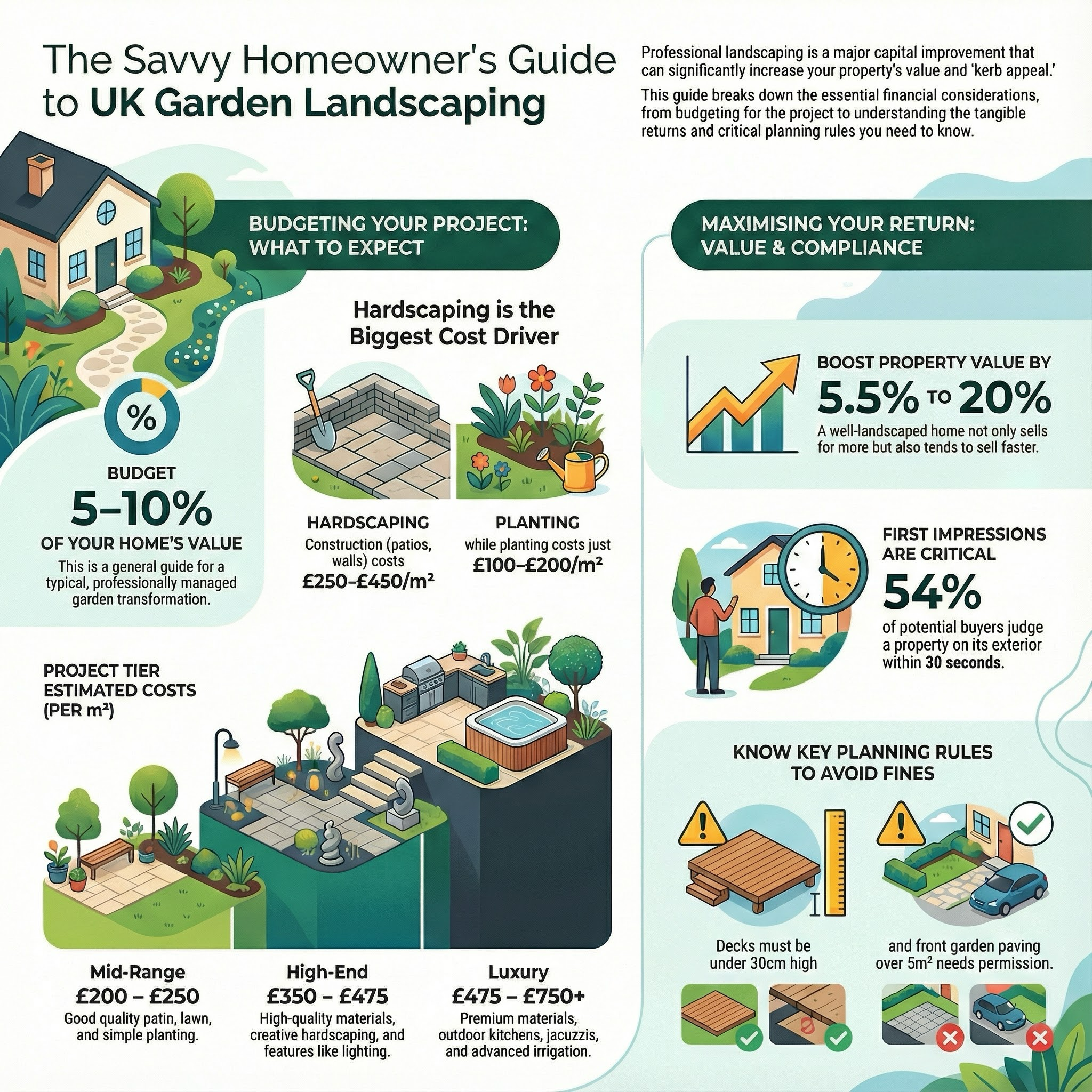
For UK homeowners, investing in professional landscaping ensures that your new lawn doesn't become a bog in winter and your shingle areas don't disappear into the mud. Whether you are refreshing a small terrace garden or overhaulng a large suburban plot, understanding the process and costs involved will help you achieve a high-end finish that adds genuine value to your property.
Prices for turf and shingle projects vary based on the quality of the turf selected and the ease of access to your garden. If materials have to be carried through a house or via a narrow side gate, labour costs will increase significantly.
| Item / Service | Low £ | High £ | Notes |
|---|---|---|---|
| Turf Supply & Lay (per m²) | £18 | £30 | Includes basic prep and premium cultivated turf. |
| Shingle Supply & Lay (per m²) | £20 | £45 | Price varies by stone type (e.g., flint vs. slate). |
| Topsoil (per bulk bag) | £60 | £95 | Screened BS3882 compliant soil. |
| Waste Removal (Skip Hire) | £220 | £380 | 6-yard or 8-yard skip for soil and turf. |
| Day Rate (Landscaper) | £250 | £450 | Per person; often works in teams of two. |
| Project Total (Small Garden 30m²) | £850 | £1,500 | Total cost including all materials and waste. |
Note: Prices include VAT at 20%. The "High" end of the scale typically accounts for gardens with poor access, significant levelling requirements, or high-end decorative aggregates like Scottish Pebbles or Blue Slate.
Laying shingle is a manageable DIY task for those with a strong back, provided the weed membrane is installed correctly. However, turfing is much more deceptively difficult. Turf is a living product that begins to degrade within 24 hours of being cut; if your preparation isn't finished when the pallets arrive, the lawn is likely to fail.
Professional landscapers use heavy-duty rotovators and specialized leveling tools to ensure the lawn is perfectly flat. A DIY lawn often ends up "lumpy," which makes mowing difficult and leads to scalping.
Spring (March to May) and Autumn (September to November) are ideal. The weather is generally moist and mild, which helps the roots establish quickly without the stress of extreme heat or frost.
You should avoid walking on new turf for at least 2 to 3 weeks. Wait until the roots have firmly knitted into the soil; you can check this by gently trying to lift a corner of a roll.
No. The old grass will rot, creating a barrier that prevents new roots from reaching the soil. It also causes uneven settling and likely drainage failure. Always strip the old lawn first.
For decorative borders and paths, a depth of 40mm to 50mm is standard. Any deeper and it becomes difficult to walk through; any shallower and the weed membrane might become visible.
In the first two weeks, you must water it every evening (and sometimes morning) until the water soaks through to the soil beneath. If the turf feels "spongy" to walk on, it is sufficiently hydrated.
This is usually due to algae or silt buildup. Using a permeable membrane and ensuring good light levels helps, but shingle in shaded, damp areas will require an occasional wash or treatment with a pet-safe patio cleaner.
This guide was written with AI assistance and is intended for general information only. Prices are estimates based on UK averages and may vary by region. Always get at least three quotes and consult a qualified professional before starting any work.
Ask follow-ups in plain English. The AI explains options, sequencing and what to ask the landscaper — so you walk in informed.
Professional garden design is the blueprint for a successful outdoor transformation. It bridges the gap between a vague idea and a functional, beautiful space t...
READ GUIDE →GuideA crisp, well-defined lawn edge is often the difference between a garden that looks "done" and one that looks truly professional. In the UK, our damp climate an...
READ GUIDE →GuideA level garden is the essential foundation for almost every outdoor improvement, from installing a new lawn or patio to erecting a summerhouse. Beyond aesthetic...
READ GUIDE →GuideProfessional landscaping is one of the most effective ways to increase your home’s kerb appeal and market value, often adding up to 20% to a UK property's price...
READ GUIDE →GuideRevitalising your outdoor space often starts with the basics: a lush, level lawn and a clean, stable patio. In the UK, our damp winters and variable summers tak...
READ GUIDE →GuideProfessional landscaping and garden design involve much more than just planting flowers or mowing a lawn. It is the process of modifying the visible features of...
READ GUIDE →