Instant
01 · Ask
Ask the AI a follow-up
Got more questions about water Feature Design? Describe the bit you're unsure about — the AI explains options, sequencing and what to ask the landscaper.

Garden water feature — rill, pond or sculpture — designed and installed with pump, light and planting.
You've read the brief on water Feature Design. Now lean on us to find the right landscaper — and stay in control of the job.
Got more questions about water Feature Design? Describe the bit you're unsure about — the AI explains options, sequencing and what to ask the landscaper.
Costs, timelines, pitfalls and the right questions to ask before any landscaper starts on water Feature Design.
Itemised quotes from up to 3 local landscapers on water Feature Design — so you can compare like-for-like, not lump sums.
Ready when you are
Enter your postcode and get free quotes from local pros.
Four moves that separate a smooth job from a nightmare.
Many homeowners underestimate how much water is lost in summer; without an auto-fill, pumps can burn out if they run dry.
Placing a feature in direct sunlight without a UV clarifier or adequate planting will result in "pea soup" green water.
Heavy stone features can sink or tilt over time if the sub-base isn't properly compacted, leading to uneven water flow.
Splashing water can be surprisingly loud at night; ensure your design includes a silencer or a timer for the pump.
Indicative UK ranges and a typical week-by-week schedule.
By job type
Quote spread is typically ± 18% — always get 3 quotes.
Mid-size garden redesign · week by week
Schedule slips on dependencies — pad each phase by 10–20% for real-world delays.
Landscaper quick-view
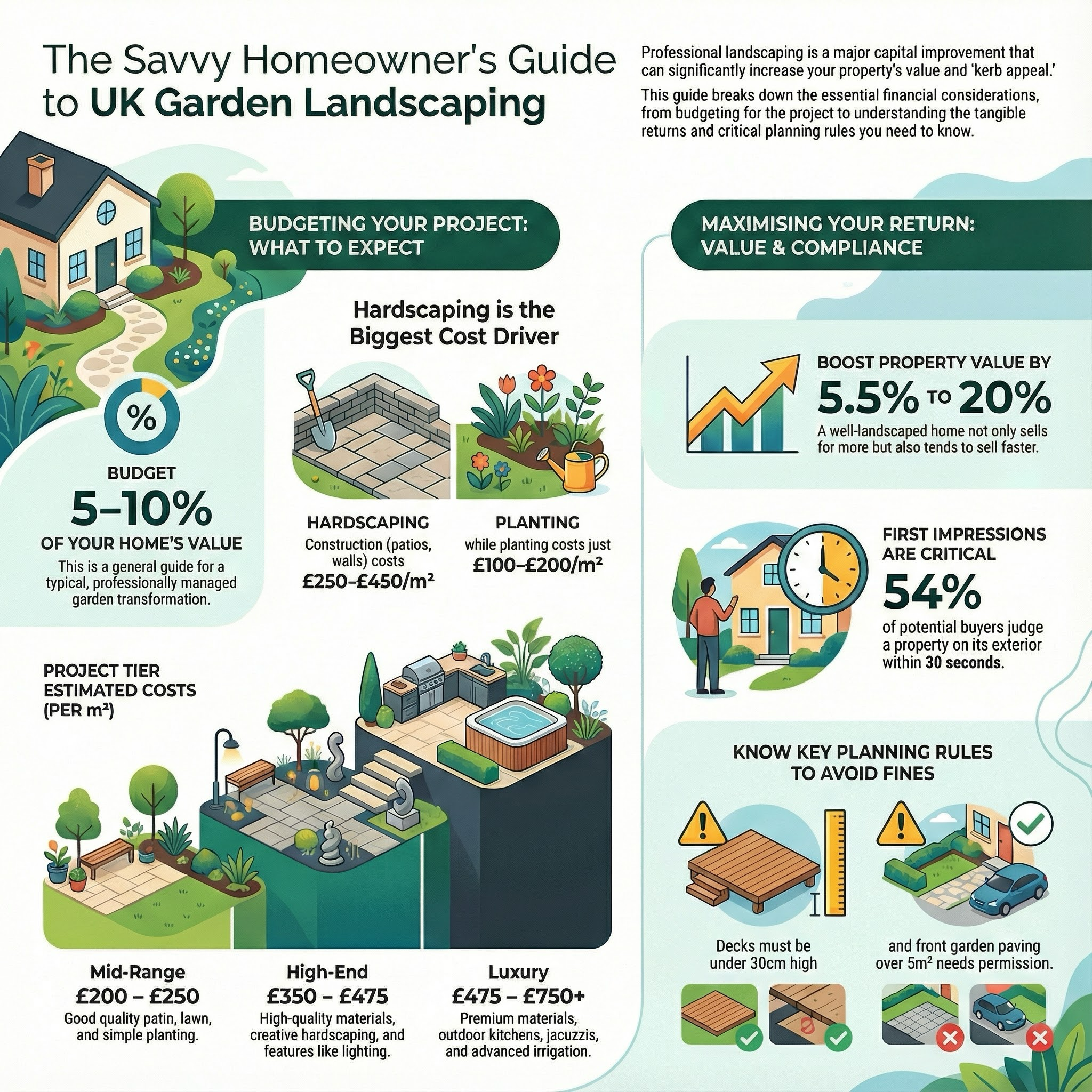
Landscaper explained
Whether you are considering a contemporary stainless steel blade, a traditional tiered fountain, or a natural wildlife pond, professional design is essential. A well-planned feature ensures the system is easy to maintain, safe for the family, and integrated seamlessly into your existing landscape.
| Feature Type | Low £ | High £ | Notes |
|---|---|---|---|
| Plug-and-Play Kit | £450 | £1,200 | Self-contained units with basic installation. |
| Wildlife Pond (Medium) | £1,800 | £4,500 | Includes liner, planting, and basic filtration. |
| Bespoke Stone Waterfall | £3,500 | £8,000 | Custom masonry and high-capacity pumps. |
| Contemporary Rill/Wall | £4,000 | £10,000+ | Architectural finishes and complex plumbing. |
| Daily Labour Rate | £250 | £450 | Per person, depending on location and expertise. |
The total cost is heavily influenced by the distance from your home's consumer unit, as armoured cabling for electricity can be expensive to run over long distances. High-end materials like granite or bespoke stainless steel will also significantly increase the initial investment compared to resin or GRP alternatives.
While a "plug-and-play" solar fountain is a simple DIY task, any feature requiring mains electricity or significant excavation should be handled by a professional. In the UK, outdoor electrical work must comply with Part P Building Regulations, usually requiring a certified electrician to sign off the installation.
Professional landscapers have the expertise to ensure your pond liner doesn't puncture and that your pump is correctly sized for the "head height" of your waterfall, preventing costly mechanical failures.
Questions to ask your designer:
Most modern features use a recirculating system with a hidden reservoir, meaning they don't need a permanent mains connection. However, you will need to top them up occasionally due to evaporation, unless you install an automatic top-off valve connected to your mains.
A standard 50W pump running 24/7 will cost approximately £100–£150 per year based on current UK energy tariffs. Using timers or solar-hybrid pumps can significantly reduce these costs.
Any standing water poses a risk. For households with young children, "pondless" features (where water disappears into a bed of gravel) or wall-mounted blades are much safer alternatives to open ponds.
Only if the feature is designed for them. Fish require specific depths (at least 60cm-1m for overwintering in the UK), sophisticated filtration systems, and oxygenation that standard decorative fountains don't provide.
In the UK, freezing temperatures can crack stone basins or damage pumps. You should usually turn off the pump, drain the lines, and either remove the pump to a bucket of water indoors or ensure it is deep enough in a pond to stay below the frost line.
A combination of mechanical filtration (to catch debris), biological filtration (to break down waste), and a UV clarifier (to kill algae) is the most effective method. Adding aquatic plants also helps by competing with algae for nutrients.
This guide was written with AI assistance and is intended for general information only. Prices are estimates based on UK averages and may vary by region. Always get at least three quotes and consult a qualified professional before starting any work.
Ask follow-ups in plain English. The AI explains options, sequencing and what to ask the landscaper — so you walk in informed.
Professional garden design is the blueprint for a successful outdoor transformation. It bridges the gap between a vague idea and a functional, beautiful space t...
READ GUIDE →GuideA crisp, well-defined lawn edge is often the difference between a garden that looks "done" and one that looks truly professional. In the UK, our damp climate an...
READ GUIDE →GuideA level garden is the essential foundation for almost every outdoor improvement, from installing a new lawn or patio to erecting a summerhouse. Beyond aesthetic...
READ GUIDE →GuideProfessional landscaping is one of the most effective ways to increase your home’s kerb appeal and market value, often adding up to 20% to a UK property's price...
READ GUIDE →GuideRevitalising your outdoor space often starts with the basics: a lush, level lawn and a clean, stable patio. In the UK, our damp winters and variable summers tak...
READ GUIDE →GuideProfessional landscaping and garden design involve much more than just planting flowers or mowing a lawn. It is the process of modifying the visible features of...
READ GUIDE →