Instant
01 · Ask
Ask the AI a follow-up
Got more questions about loft ladder fitting? Describe the bit you're unsure about — the AI explains options, sequencing and what to ask the loft conversions.

Concertina, sliding or telescopic loft ladder — sized to opening, fitted with grab rail and platform.
You've read the brief on loft ladder fitting. Now lean on us to find the right loft conversions — and stay in control of the job.
Got more questions about loft ladder fitting? Describe the bit you're unsure about — the AI explains options, sequencing and what to ask the loft conversions.
Costs, timelines, pitfalls and the right questions to ask before any loft conversions starts on loft ladder fitting.
Itemised quotes from up to 3 local loft conversionss on loft ladder fitting — so you can compare like-for-like, not lump sums.
Ready when you are
Enter your postcode and get free quotes from local pros.
Four moves that separate a smooth job from a nightmare.
Forgetting to measure the "swing" space in the loft or the landing, resulting in a ladder that hits a wall or roof rafter when unfolding.
Installing a non-insulated hatch that creates a "cold bridge," leading to condensation and mould growth on the ceiling.
Cutting a timber ladder too short or leaving it too long, which puts immense stress on the hinges and can cause the unit to collapse.
Using standard screws instead of the heavy-duty coach bolts required to hold the weight of a person on a pivoting frame.
Indicative UK ranges and a typical week-by-week schedule.
By job type
Quote spread is typically ± 18% — always get 3 quotes.
Dormer loft conversion · week by week
Schedule slips on dependencies — pad each phase by 10–20% for real-world delays.
Loft Conversions quick-view
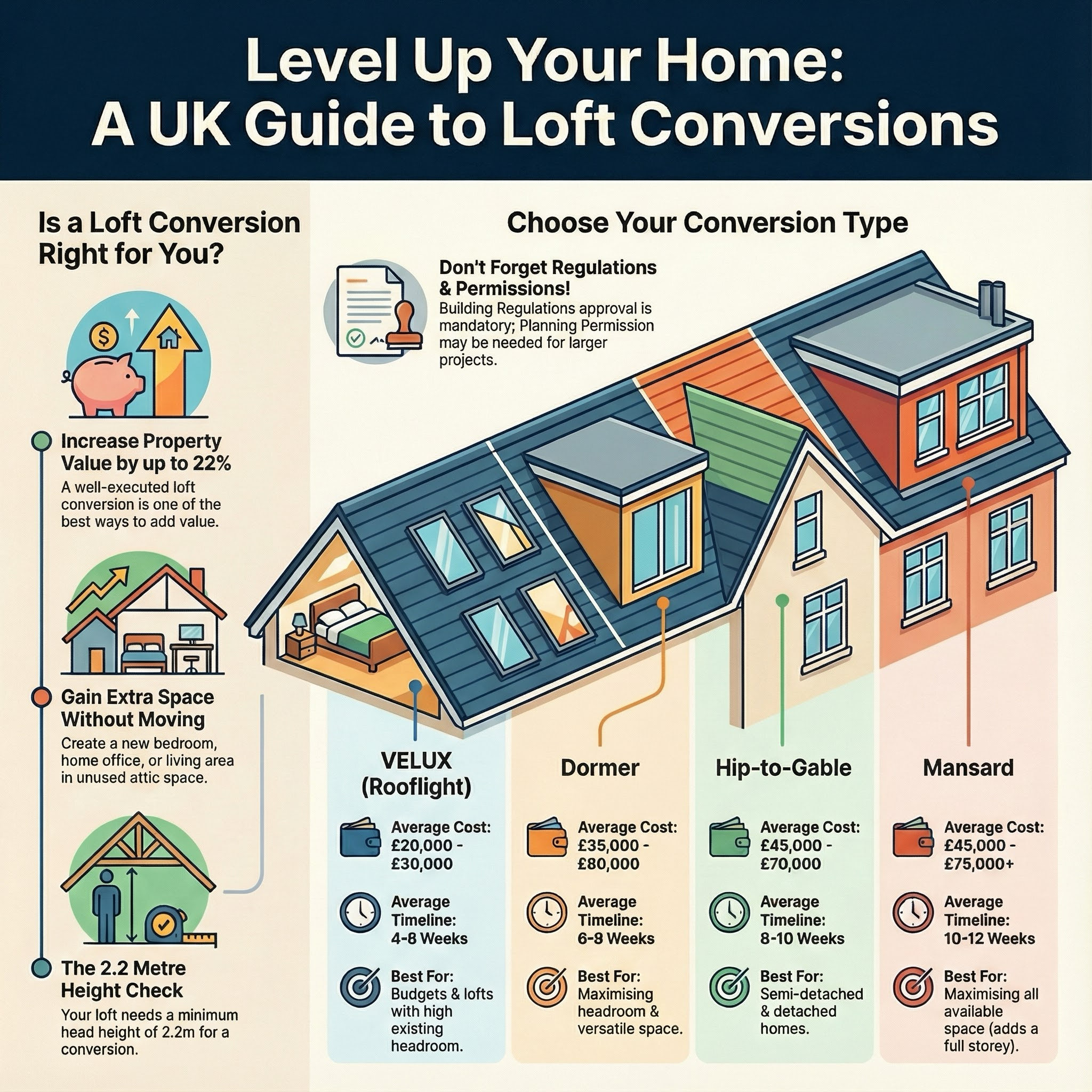
Loft Conversions explained
For many homeowners, the transition from a precarious stepladder to a fixed, folding, or telescopic unit significantly reduces the risk of accidents. Whether you are looking for a simple aluminium slider or a premium wooden folding kit, getting the installation right is essential for long-term safety.
The cost of fitting a loft ladder depends heavily on whether you are replacing an old unit in an existing hole or creating a brand-new access point. Prices below include professional labour and VAT at 20%.
| Item | Low £ | High £ | Notes |
|---|---|---|---|
| Basic Aluminium (Ladder only) | £250 | £450 | Fits to existing hatch; 2-section slider. |
| Timber Folding Kit | £480 | £850 | Includes insulated hatch and frame. |
| Telescopic Ladder | £380 | £650 | Ideal for very tight spaces or small landings. |
| Electric/Motorised Ladder | £1,200 | £2,500+ | Includes remote operation and heavy-duty build. |
| Hatch Enlargement/Relocation | £150 | £400 | Additional labour for structural alterations. |
Material quality is the primary price driver; premium timber ladders offer better insulation and a higher weight capacity than budget aluminium models. If your joists need significant structural reinforcement to accommodate a larger hatch, expect labour costs to increase by £200–£300.
While a confident DIYer can fit a basic "bolt-on" aluminium ladder, enlarging a hatch involves cutting through structural ceiling joists. This carries significant risk; if done incorrectly, it can cause the ceiling to sag or crack.
Professional installers understand how to "double up" joists to maintain structural integrity and ensure the hatch meets Part L of the Building Regulations regarding thermal insulation.
Ask your installer these questions:
Yes, it is often possible to relocate a hatch to a landing or hallway for better access. This involves cutting a new opening, reinforcing the joists, and professionally boarding over the old hole.
Timber ladders are generally sturdier, feel more like real stairs, and come with integrated insulated hatches. Aluminium ladders are cheaper and better suited for very occasional use where space is at a premium.
Most domestic loft ladders are rated for a maximum load of 150kg (approx. 23.5 stone). This must include both the person and any heavy boxes they are carrying.
No, planning permission is not required for a standard loft ladder. However, if you are in a listed building, you should check with your local authority before making structural changes to the ceiling.
Not if fitted correctly. A modern, "Part L" compliant hatch is thick, insulated, and features rubber seals to prevent draughts, often making the home warmer than an old, thin plywood hatch.
This guide was written with AI assistance and is intended for general information only. Prices are estimates based on UK averages and may vary by region. Always get at least three quotes and consult a qualified professional before starting any work.
Ask follow-ups in plain English. The AI explains options, sequencing and what to ask the loft conversions — so you walk in informed.
Installing a loft ladder is one of the most cost-effective ways to unlock hidden storage space in your UK home. Beyond convenience, a professionally fitted ladd...
READ GUIDE →GuideMaintaining the floor boarding in your loft is essential for both safe storage and the structural integrity of your home. Over time, older chipboard can bow, cr...
READ GUIDE →GuideBoarding out your loft is one of the most cost-effective ways to increase your home's storage capacity without the expense of a full conversion. In the UK, wher...
READ GUIDE →GuideInstalling a professional loft ladder is one of the most cost-effective ways to add value and functionality to your UK home. Rather than struggling with a preca...
READ GUIDE →GuideConverting a dusty attic into functional storage is one of the most cost-effective ways to add value and space to a UK home. By utilising the "dead space" above...
READ GUIDE →GuideA faulty loft hatch is more than just a minor inconvenience; it is a primary source of heat loss and a potential safety hazard. In the UK, where energy efficien...
READ GUIDE →