Instant
01 · Ask
Ask the AI a follow-up
Got more questions about loft Storage Project? Describe the bit you're unsure about — the AI explains options, sequencing and what to ask the loft conversions.

Design, board, light and ladder — full loft-as-storage project in 1-2 days.
You've read the brief on loft Storage Project. Now lean on us to find the right loft conversions — and stay in control of the job.
Got more questions about loft Storage Project? Describe the bit you're unsure about — the AI explains options, sequencing and what to ask the loft conversions.
Costs, timelines, pitfalls and the right questions to ask before any loft conversions starts on loft Storage Project.
Itemised quotes from up to 3 local loft conversionss on loft Storage Project — so you can compare like-for-like, not lump sums.
Ready when you are
Enter your postcode and get free quotes from local pros.
Four moves that separate a smooth job from a nightmare.
Using boards directly on joists causes "thermal bridging" and significantly increases heating bills.
Blocking the "soffit vents" at the edge of the roof prevents airflow, leading to damp, mould, and wood rot.
Storing heavy furniture on standard joists can cause cracks in the plasterboard of the rooms below.
Installing a ladder that is too short or steep for the hatch height, making it dangerous to carry items up and down.
Indicative UK ranges and a typical week-by-week schedule.
By job type
Quote spread is typically ± 18% — always get 3 quotes.
Dormer loft conversion · week by week
Schedule slips on dependencies — pad each phase by 10–20% for real-world delays.
Loft Conversions quick-view
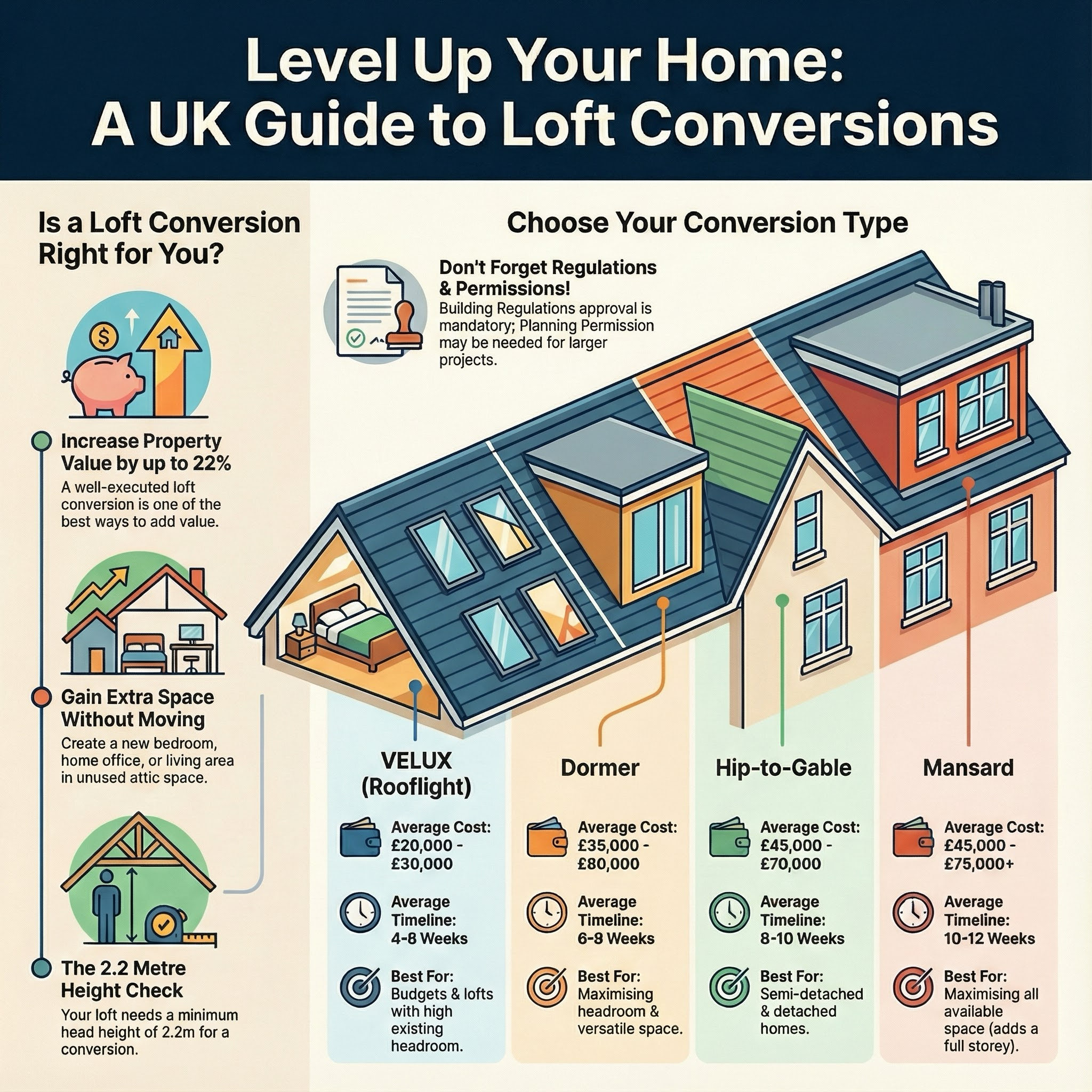
Loft Conversions explained
A professional loft storage installation ensures that your ceiling joists aren't overloaded and your insulation remains effective. In modern UK homes, this typically involves installing raised boarding systems that "hover" above thick insulation to prevent damp and heat loss.
| Item | Low £ | High £ | Notes |
|---|---|---|---|
| Aluminium Ladder & Hatch | £250 | £450 | Basic 2 or 3-section ladder inc. installation. |
| Timber Folding Ladder | £550 | £850 | Premium feel, includes insulated hatch. |
| Raised Boarding (per m²) | £55 | £85 | Includes materials and "loft leg" sub-frame. |
| LED Loft Lighting | £150 | £250 | Includes wiring to a dedicated switch. |
| Loft Hatch Enlargement | £150 | £300 | Labour and materials to resize the opening. |
Prices in 2025/26 are influenced primarily by the type of boarding system used. Raised systems are slightly more expensive than traditional boarding but are essential for maintaining your home's EPC rating and preventing condensation.
While basic boarding is a common DIY task, it is physically demanding and carries significant risks. Stepping off a joist can result in a fall through the ceiling, and cutting joists to enlarge a hatch without proper bracing can compromise the structural integrity of your roof.
Professional installers use specialist raised systems that preserve your 270mm insulation layer. DIYers often make the mistake of "squashing" insulation with boards, which reduces its thermal efficiency by up to 50% and can lead to structural timber rot through trapped moisture.
If you use a raised boarding system that doesn't compromise the insulation or airflow, it generally does not void warranties. However, always check with your developer first, as traditional "boards-to-joists" methods often violate their structural and thermal guidelines.
No. Boarding for storage is purely for keeping belongings. A "habitable" room requires a full loft conversion, which involves structural floor reinforcements, fire doors, permanent stairs, and Building Regulations approval.
Most modern loft storage systems are designed to hold roughly 25kg to 50kg per square metre. This is sufficient for suitcases, Christmas decorations, and clothes, but not for heavy machinery or large furniture collections.
If your insulation is below 270mm, it is highly recommended to top it up before boarding. A professional installer can usually do this for a small additional fee, and it is the most cost-effective time to do so.
Aluminium ladders are budget-friendly and lightweight. Timber ladders are sturdier, feel more like a permanent staircase, and usually come with better-insulated hatches, making them the preferred choice for frequent use.
This guide was written with AI assistance and is intended for general information only. Prices are estimates based on UK averages and may vary by region. Always get at least three quotes and consult a qualified professional before starting any work.
Ask follow-ups in plain English. The AI explains options, sequencing and what to ask the loft conversions — so you walk in informed.
Installing a loft ladder is one of the most cost-effective ways to unlock hidden storage space in your UK home. Beyond convenience, a professionally fitted ladd...
READ GUIDE →GuideMaintaining the floor boarding in your loft is essential for both safe storage and the structural integrity of your home. Over time, older chipboard can bow, cr...
READ GUIDE →GuideBoarding out your loft is one of the most cost-effective ways to increase your home's storage capacity without the expense of a full conversion. In the UK, wher...
READ GUIDE →GuideInstalling a professional loft ladder is one of the most cost-effective ways to add value and functionality to your UK home. Rather than struggling with a preca...
READ GUIDE →GuideConverting a dusty attic into functional storage is one of the most cost-effective ways to add value and space to a UK home. By utilising the "dead space" above...
READ GUIDE →GuideA faulty loft hatch is more than just a minor inconvenience; it is a primary source of heat loss and a potential safety hazard. In the UK, where energy efficien...
READ GUIDE →