Instant
01 · Ask
Ask the AI a follow-up
Got more questions about anti Vandal Coating Process? Describe the bit you're unsure about — the AI explains options, sequencing and what to ask the painter / decorator.

Anti-graffiti or anti-fly-poster coatings on walls, doors and signage — protects and lets graffiti wash off.
You've read the brief on anti Vandal Coating Process. Now lean on us to find the right painter / decorator — and stay in control of the job.
Got more questions about anti Vandal Coating Process? Describe the bit you're unsure about — the AI explains options, sequencing and what to ask the painter / decorator.
Costs, timelines, pitfalls and the right questions to ask before any painter / decorator starts on anti Vandal Coating Process.
Itemised quotes from up to 3 local painter / decorators on anti Vandal Coating Process — so you can compare like-for-like, not lump sums.
Ready when you are
Enter your postcode and get free quotes from local pros.
Four moves that separate a smooth job from a nightmare.
If graffiti isn't 100% removed before coating, a "shadow" will remain visible under the new clear coat.
Applying the coating to a damp wall traps moisture, causing a cloudy, white appearance known as efflorescence.
Failing to degrease the surface (especially near busy roads) causes the coating to peel within months.
Applying a permanent coating over an old sacrificial wax layer will cause the new paint to slide off.
Indicative UK ranges and what affects price.
By job type
Quote spread is typically ± 18% — always get 3 quotes.
Painter / Decorator quick-view
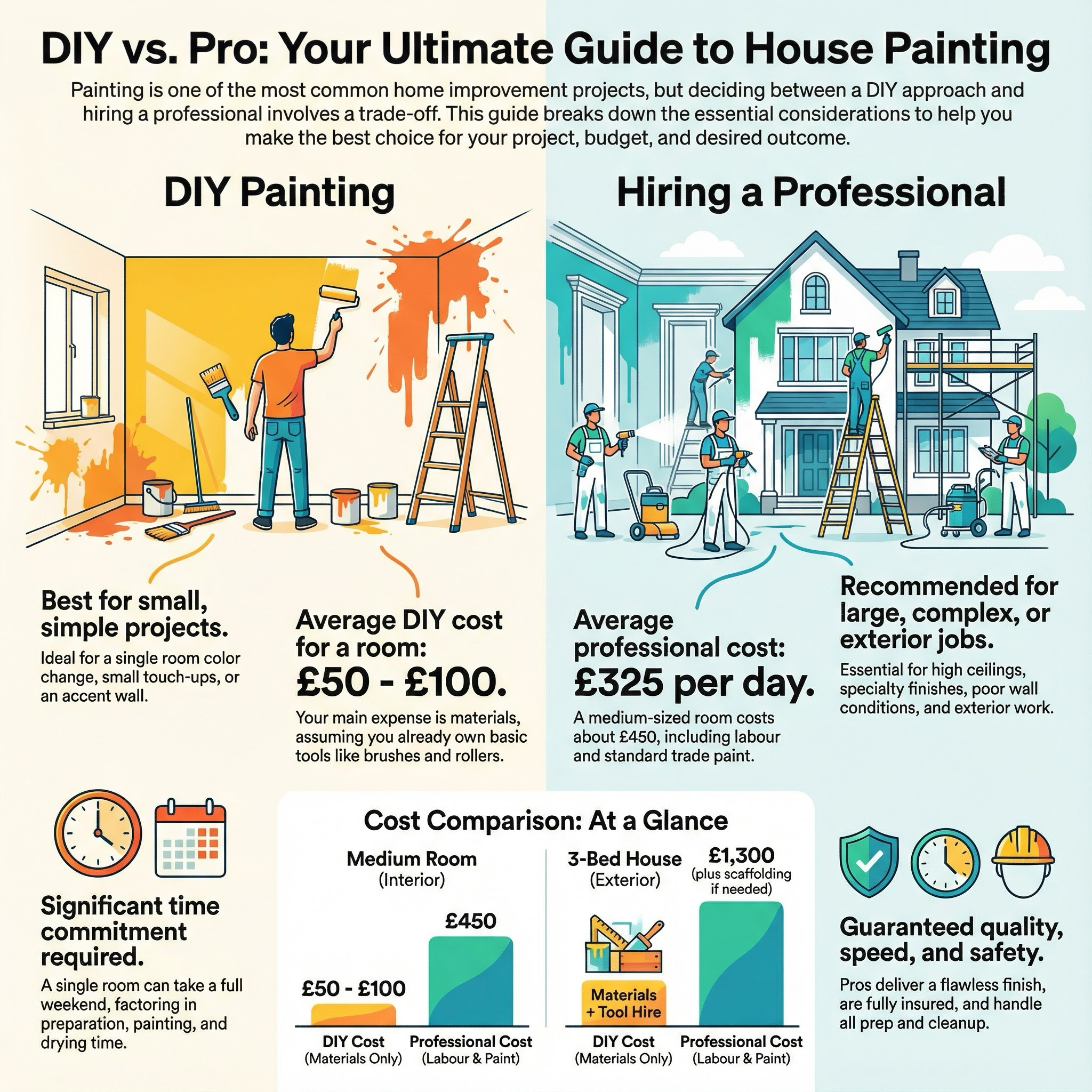
Painter / Decorator explained
Whether you are protecting a garden wall, a garage door, or a street-facing facade, choosing the right coating is essential. In the UK, where damp weather can affect adhesion, a professional application ensures your property remains pristine without compromising the breathability of the underlying materials.
| Item | Low £ | High £ | Notes |
|---|---|---|---|
| Sacrificial Coating (per m²) | £15 | £25 | Needs re-application after cleaning. |
| Permanent Coating (per m²) | £35 | £55 | Withstands multiple cleanings; higher material cost. |
| Surface Preparation/Cleaning | £150 | £350 | Flat rate based on equipment and grime levels. |
| Minimum Call-out Fee | £150 | £250 | Covers travel and initial setup for small jobs. |
Prices vary based on the height of the wall (scaffolding requirements), the porosity of the brickwork, and whether you choose a "sacrificial" wax-based system or a "permanent" cross-linking polymer system. Most UK residential jobs for a standard garden wall range between £400 and £850 including VAT and materials.
While DIY kits are available for small fences, professional application is highly recommended for masonry and street-facing walls. Anti-vandal coatings are technically "non-breathable" if applied incorrectly, which can trap moisture inside your bricks and lead to spalling or damp issues inside the home.
Professional decorators have access to industrial-grade hydrophobic coatings that protect against graffiti while still allowing the building to "breathe," preventing long-term structural damage.
Sacrificial coatings are wax-based; when graffiti occurs, you wash the wall with hot water, and the coating melts away along with the paint, requiring re-application. Permanent coatings are chemically resistant glazes that allow you to wipe away graffiti with a solvent without removing the protective layer itself.
Most modern professional coatings are available in "Matt" or "Invisible" finishes. However, some cheaper permanent systems can leave a slight "wet look" or "satin" sheen on the surface.
Yes, there are specific timber-grade coatings. These are particularly useful for preventing "fly-posting" (illegal posters), as the adhesive cannot stick to the treated wood.
For sacrificial coatings, a simple power wash with hot water usually does the trick. For permanent coatings, you typically use a mild biodegradable cleaner and a soft brush or cloth.
A high-quality permanent coating can last up to 10–15 years if the surface is well-maintained. Sacrificial coatings generally need refreshing every 2–3 years, or immediately after a graffiti incident.
This guide was written with AI assistance and is intended for general information only. Prices are estimates based on UK averages and may vary by region. Always get at least three quotes and consult a qualified professional before starting any work.
Ask follow-ups in plain English. The AI explains options, sequencing and what to ask the painter / decorator — so you walk in informed.
Professional decorating is about far more than simply changing a room's colour. It is a critical maintenance task that protects your home’s internal surfaces, i...
READ GUIDE →GuideA damaged or sagging ceiling is more than just an eyesore; it can be a safety risk and a sign of underlying issues like leaks or structural movement. Whether yo...
READ GUIDE →GuideTimber windows are a hallmark of British architecture, offering a level of character and aesthetic warmth that modern uPVC struggles to replicate. However, the ...
READ GUIDE →GuideProfessional paint spraying has become the gold standard for UK homeowners seeking a flawless, factory-grade finish. Unlike traditional brushing or rolling, spr...
READ GUIDE →GuideRefreshing your home’s exterior is about more than just curb appeal; it is the primary defence against the British weather. A high-quality exterior paint job se...
READ GUIDE →GuideRefreshing your living room is one of the most impactful home improvements you can undertake. As the heart of the British home, this space endures significant f...
READ GUIDE →