Instant
01 · Ask
Ask the AI a follow-up
Got more questions about decorating service? Describe the bit you're unsure about — the AI explains options, sequencing and what to ask the painter / decorator.

Interior or exterior — single room, whole house or repaint after building work. By a painter and decorator.
You've read the brief on decorating service. Now lean on us to find the right painter / decorator — and stay in control of the job.
Got more questions about decorating service? Describe the bit you're unsure about — the AI explains options, sequencing and what to ask the painter / decorator.
Costs, timelines, pitfalls and the right questions to ask before any painter / decorator starts on decorating service.
Itemised quotes from up to 3 local painter / decorators on decorating service — so you can compare like-for-like, not lump sums.
Ready when you are
Enter your postcode and get free quotes from local pros.
Four moves that separate a smooth job from a nightmare.
This occurs when the paint has an uneven shimmer, usually caused by failing to prime porous surfaces or "lapping" wet paint over dry edges.
When the old colour shows through the new one. This happens when the paint is over-thinned or an insufficient number of coats are applied.
Usually the result of painting over old oil-based gloss with modern water-based paint without using a "bridge" primer.
Paint bubbling or flaking off new plaster because a "mist coat" (thinned paint) wasn't applied first to seal the surface.
Indicative UK ranges and what affects price.
By job type
Quote spread is typically ± 18% — always get 3 quotes.
Painter / Decorator quick-view
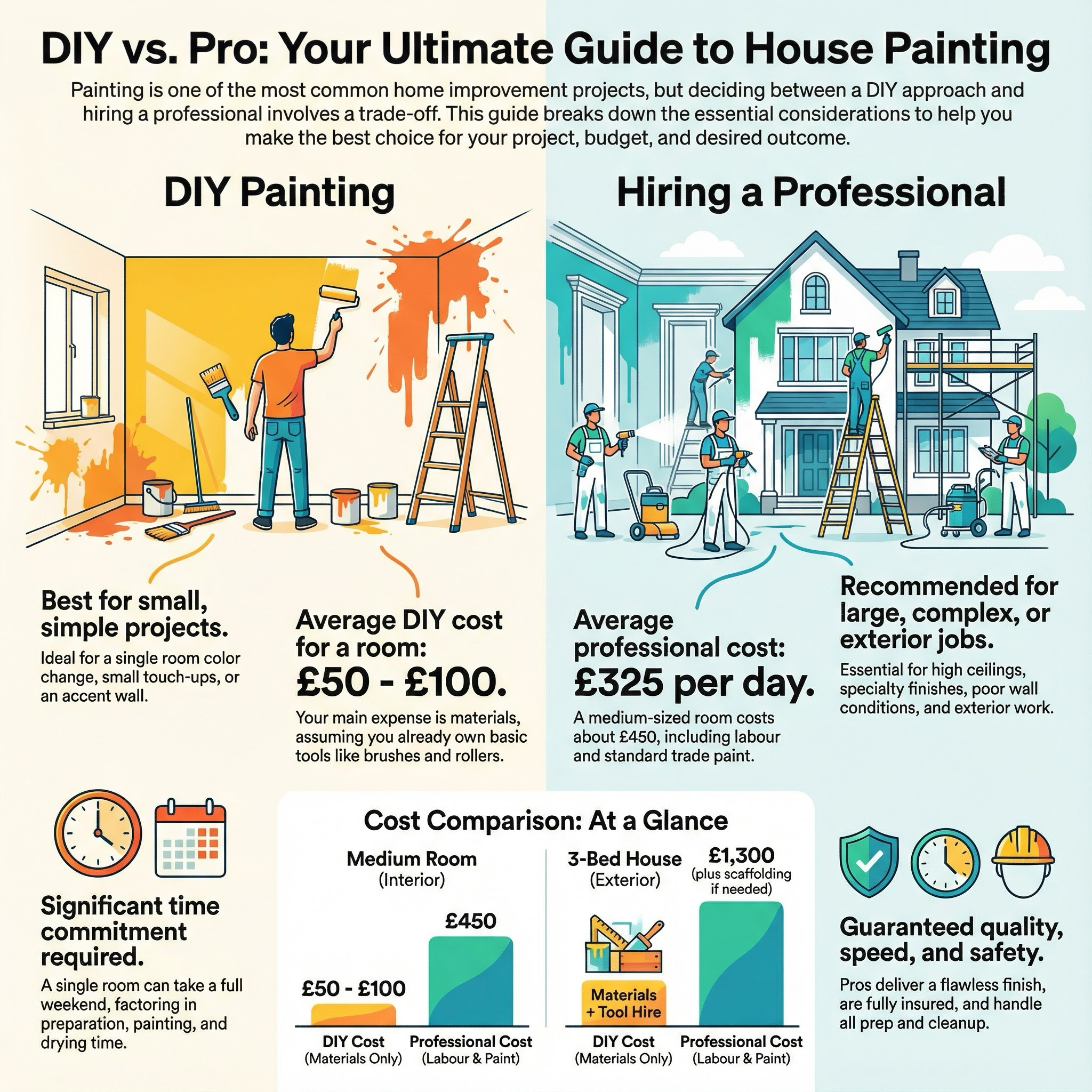
Painter / Decorator explained
Whether you are refreshing a single bedroom or renovating a period property, hiring a skilled decorator ensures a "trade finish" — characterised by sharp lines, smooth woodwork, and uniform coverage that DIY attempts rarely achieve. This guide outlines the processes, realistic 2025/26 costs, and essential regulations for decorating projects in the UK.
Decorating costs in the UK vary based on your location (with London and the South East carrying a 20-30% premium) and the condition of your walls. Prices below include labour and standard trade-grade materials like Dulux Trade, Crown, or Johnstones.
| Service Type | Low £ | High £ | Notes |
|---|---|---|---|
| Daily Labour Rate | £250 | £450 | Per decorator; higher in London/SE. |
| Small Room (e.g. Box Room) | £350 | £600 | Walls, ceiling, and basic woodwork. |
| Medium Room (e.g. Double Bed) | £500 | £850 | Includes minor filling and prep work. |
| Hall, Stairs & Landing | £850 | £1,800 | Depends on number of doors and height. |
| Wallpapering (per drop) | £30 | £60 | Excludes the cost of the wallpaper itself. |
| External Windows/Doors | £200 | £500 | Per item; requires weather-specific paint. |
Note: Premium "designer" paints like Farrow & Ball, Little Greene, or Edward Bulmer can add £100–£300 to the total material cost of a standard room due to the higher price per litre and the occasional need for three coats to achieve full opacity.
While painting is a popular DIY task, the results often differ significantly from a professional's work. A professional decorator possesses the skill to "cut in" perfectly straight lines without tape and understands which primers will prevent "flashing" or peeling in the future.
Professional decorators spend 70% of their time on preparation. If you aren't prepared to spend hours sanding and filling, the final finish will likely disappoint.
For high-traffic areas or period properties with lime plaster, a professional is essential. Furthermore, working at height in stairwells carries significant risk; professionals use specialized ladders and "ladder helpers" to ensure safety and compliance with UK health and safety guidelines.
Questions to ask:
Most decorators expect the room to be clear of small items and electronics. Large furniture can usually be moved to the centre of the room and covered by the decorator, but you should confirm this during the quoting process.
Trade paint is more expensive but contains higher quality pigments and binders. It offers better "opacity" (coverage) and "scrubbability," meaning it lasts longer and requires fewer coats than the retail versions found in DIY sheds.
While possible, it is rarely recommended. The moisture in the paint can cause the wallpaper glue to fail, leading to bubbling or peeling. For a professional finish, wallpaper should be stripped and the walls "made good" first.
This is usually due to "moisture entrapment" or using the wrong finish. Bathrooms require moisture-resistant paint (soft sheen or specialized eggshell) and the surface must be completely dry and free of mould before application.
Most water-based paints are touch-dry in 1–2 hours and ready for a second coat in 4 hours. However, it can take up to 30 days to "fully cure," meaning you should avoid scrubbing the walls or leaning furniture against them for a few weeks.
Rollers are standard for walls to provide a slight texture that hides imperfections. Brushes are used for "cutting in" and woodwork. Spraying is faster and provides a perfectly flat finish, but requires extensive masking and is usually reserved for empty properties or new builds.
This guide was written with AI assistance and is intended for general information only. Prices are estimates based on UK averages and may vary by region. Always get at least three quotes and consult a qualified professional before starting any work.
Ask follow-ups in plain English. The AI explains options, sequencing and what to ask the painter / decorator — so you walk in informed.
A damaged or sagging ceiling is more than just an eyesore; it can be a safety risk and a sign of underlying issues like leaks or structural movement. Whether yo...
READ GUIDE →GuideTimber windows are a hallmark of British architecture, offering a level of character and aesthetic warmth that modern uPVC struggles to replicate. However, the ...
READ GUIDE →GuideProfessional paint spraying has become the gold standard for UK homeowners seeking a flawless, factory-grade finish. Unlike traditional brushing or rolling, spr...
READ GUIDE →GuideRefreshing your home’s exterior is about more than just curb appeal; it is the primary defence against the British weather. A high-quality exterior paint job se...
READ GUIDE →GuideRefreshing your living room is one of the most impactful home improvements you can undertake. As the heart of the British home, this space endures significant f...
READ GUIDE →GuideFront‑Door Painting Costs Guide Scope of Works Mask & protect surrounding brickwork, floor and hardware. Remove or mask door furniture , letterbox and seals...
READ GUIDE →