Instant
01 · Ask
Ask the AI a follow-up
Got more questions about paint Sprayer Job? Describe the bit you're unsure about — the AI explains options, sequencing and what to ask the painter / decorator.

Spray-painted kitchens, doors, ceilings or rooms — airless spray for a factory-smooth finish.
You've read the brief on paint Sprayer Job. Now lean on us to find the right painter / decorator — and stay in control of the job.
Got more questions about paint Sprayer Job? Describe the bit you're unsure about — the AI explains options, sequencing and what to ask the painter / decorator.
Costs, timelines, pitfalls and the right questions to ask before any painter / decorator starts on paint Sprayer Job.
Itemised quotes from up to 3 local painter / decorators on paint Sprayer Job — so you can compare like-for-like, not lump sums.
Ready when you are
Enter your postcode and get free quotes from local pros.
Four moves that separate a smooth job from a nightmare.
Fine paint mist can travel through gaps in doors or windows; ensure the contractor uses high-quality masking tape and "zip-wall" barriers.
If the surface isn't degreased (especially in kitchens), the spray will "fish-eye" or peel away shortly after drying.
Caused by incorrect pressure settings or paint that is too thick, resulting in a bumpy, pitted finish.
Visible lines in the finish caused by a clogged spray tip or inconsistent pressure.
Indicative UK ranges and what affects price.
By job type
Quote spread is typically ± 18% — always get 3 quotes.
Painter / Decorator quick-view
Painter / Decorator explained
While the application itself is rapid, the success of a spray job relies heavily on meticulous preparation and specialist equipment. This guide outlines what to expect when hiring a professional spray technician and the realistic costs involved for high-end results.
| Item | Low £ | High £ | Notes |
|---|---|---|---|
| Daily Labour Rate | £250 | £450 | Higher in London and SE; includes equipment wear. |
| Kitchen Cabinet Spray | £700 | £1,800 | Depends on number of units and level of repair. |
| Internal Room (Walls/Ceiling) | £350 | £600 | Assuming the room is empty and requires masking. |
| UPVC Window/Door Spray | £150 | £250 | Price per standard window unit; includes specialist paint. |
| Materials (Paint & Masking) | £80 | £300 | Specialist spray paints (e.g., Tikkurila) are premium. |
The primary factor affecting the price is the level of masking required. An empty house is significantly cheaper to spray than a furnished one, as the technician spends less time protecting items and more time applying paint.
Pro Tip: Always ask if the quote includes "back-rolling." For internal walls, some pros spray and then lightly roll to provide a subtle texture that is easier to touch up later.
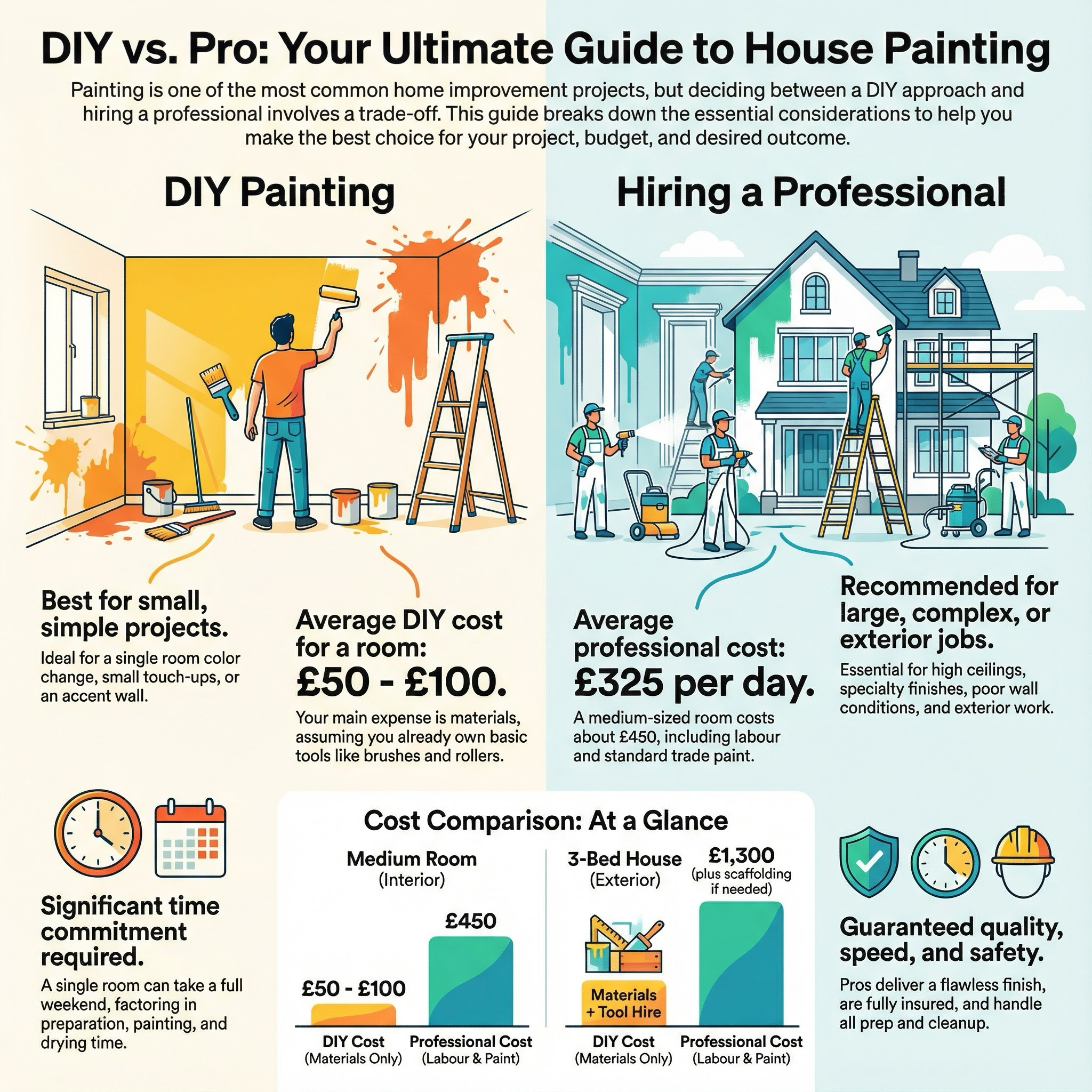
While you can rent a spray gun, the learning curve is steep. Professional-grade finishes require expensive pumps (often costing £2,000+) that atomise paint more finely than DIY models. Without the correct technique, DIYers often face "orange peel" textures, heavy runs, or significant overspray damage to furniture and flooring. For kitchen cabinets or UPVC, a professional is essential to ensure the paint doesn't peel within months.
Yes, spraying typically uses 20% to 30% more paint. This is due to "transfer efficiency"—some paint is lost as mist in the air, and the sprayer applies a thicker, more consistent coat than a brush.
Absolutely. It is the most common way to modernise a kitchen. As long as the cabinets are cleaned with sugar soap and a specialist primer is used, the finish is incredibly durable and looks brand new.
Yes, paint mist contains particulates that should not be inhaled. Professionals wear respirators (P2 or P3 grade) and use extraction fans. Homeowners and pets should stay out of the immediate area until the mist has settled.
Sprayed finishes are harder to touch up than rolled ones because a brush mark will stand out against the perfectly smooth surface. It is best to keep a small amount of the original paint and use a fine artist's brush or a mini-foam roller for repairs.
No. Even a light breeze can carry paint mist onto neighbours' cars or windows. Professional sprayers will only work on calm days or will use extensive screening to contain the spray.
This guide was written with AI assistance and is intended for general information only. Prices are estimates based on UK averages and may vary by region. Always get at least three quotes and consult a qualified professional before starting any work.
Ask follow-ups in plain English. The AI explains options, sequencing and what to ask the painter / decorator — so you walk in informed.
Professional decorating is about far more than simply changing a room's colour. It is a critical maintenance task that protects your home’s internal surfaces, i...
READ GUIDE →GuideA damaged or sagging ceiling is more than just an eyesore; it can be a safety risk and a sign of underlying issues like leaks or structural movement. Whether yo...
READ GUIDE →GuideTimber windows are a hallmark of British architecture, offering a level of character and aesthetic warmth that modern uPVC struggles to replicate. However, the ...
READ GUIDE →GuideRefreshing your home’s exterior is about more than just curb appeal; it is the primary defence against the British weather. A high-quality exterior paint job se...
READ GUIDE →GuideRefreshing your living room is one of the most impactful home improvements you can undertake. As the heart of the British home, this space endures significant f...
READ GUIDE →GuideFront‑Door Painting Costs Guide Scope of Works Mask & protect surrounding brickwork, floor and hardware. Remove or mask door furniture , letterbox and seals...
READ GUIDE →