Instant
01 · Ask
Ask the AI a follow-up
Got more questions about living room painting? Describe the bit you're unsure about — the AI explains options, sequencing and what to ask the painter / decorator.

Walls, ceiling and woodwork — prep, fill, prime and 2-coat finish in a clean, neutral palette.
You've read the brief on living room painting. Now lean on us to find the right painter / decorator — and stay in control of the job.
Got more questions about living room painting? Describe the bit you're unsure about — the AI explains options, sequencing and what to ask the painter / decorator.
Costs, timelines, pitfalls and the right questions to ask before any painter / decorator starts on living room painting.
Itemised quotes from up to 3 local painter / decorators on living room painting — so you can compare like-for-like, not lump sums.
Ready when you are
Enter your postcode and get free quotes from local pros.
Four moves that separate a smooth job from a nightmare.
Occurs when paint is applied unevenly or "wet edges" aren't maintained. Professionals avoid this by working quickly and using high-quality rollers.
Usually caused by painting over damp walls or failing to use a "mist coat" on new plaster.
Common on woodwork when using cheap brushes or poor-quality gloss paint.
Stains from water leaks or nicotine seeping through new paint; this requires a specialist "stain-blocking" primer before the topcoat.
Indicative UK ranges and what affects price.
By job type
Quote spread is typically ± 18% — always get 3 quotes.
Painter / Decorator quick-view
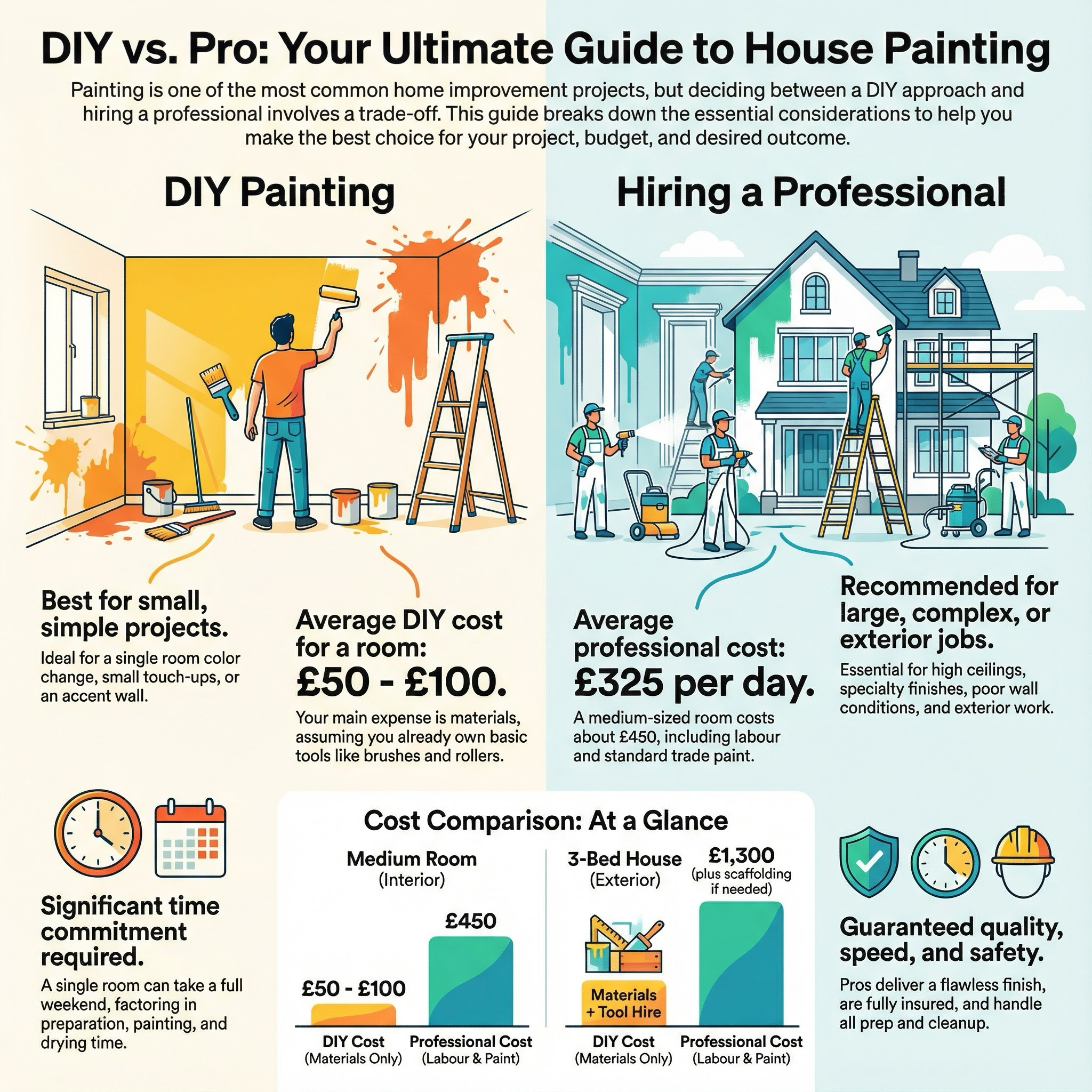
Painter / Decorator explained
While many homeowners consider painting a simple DIY task, achieving a flawless, "edge-to-edge" finish requires meticulous preparation and professional-grade materials. A high-quality paint job can transform a tired room, improve light levels, and even add tangible value to your property.
Prices for living room painting vary based on the room dimensions, the condition of the walls, and your choice of paint brand. In 2025/26, expect to pay more for "designer" brands like Farrow & Ball or Little Greene due to higher material costs and specific application requirements.
| Item | Low £ | High £ | Notes |
|---|---|---|---|
| Small Living Room (Walls Only) | £400 | £650 | Includes basic prep and trade-grade paint. |
| Medium Living Room (Walls & Ceiling) | £700 | £1,100 | Standard 4m x 4m room in good condition. |
| Large Living Room (Inc. Woodwork) | £1,200 | £2,200 | Includes doors, skirtings, and window frames. |
| Wallpaper Removal | £200 | £500 | Per room; price increases with multiple layers. |
| Feature Wall (Labour only) | £150 | £250 | Assuming main walls are already finished. |
Labour typically accounts for 70-80% of the total quote. Costs in London and the South East are generally 20-30% higher than the UK national average.
While painting is a popular DIY project, the difference between an amateur and professional finish is usually found in the preparation. Professionals use dustless sanding systems, which keep your home clean, and have the "cutting in" skills to produce perfectly straight lines without messy tape bleed.
If your living room has high ceilings, ornate cornicing, or requires significant plaster repair, hiring a professional is highly recommended to avoid a patchy or "orange peel" finish.
Note: If your home was built before 1960, be aware of lead-based paint. Professionals are trained to handle this safely; DIY sanding of lead paint can pose significant health risks.
Most decorators expect the room to be reasonably clear. While they will help with heavy items like sofas, you should remove small ornaments, electronics, and wall art before they arrive to avoid delays and potential damage.
Yes. Trade paint has a higher pigment concentration and better opacity. This means it covers better in fewer coats and is significantly more scrubbable and durable than standard "retail" paint found in DIY sheds.
It is possible if the paper is in excellent condition, but it is rarely recommended. The moisture in the paint can cause the wallpaper glue to fail, leading to bubbling and peeling. For a professional result, the paper should be stripped.
While paint may feel "dry to the touch" in 2-4 hours, it can take up to 30 days to fully "cure" (harden). Avoid pushing furniture tight against the walls for at least 24-48 hours to prevent sticking or marking.
A mist coat is a thinned-down layer of emulsion applied to fresh, new plaster. It acts as a primer, soaking into the plaster to create a bond. Without it, the topcoat will sit on the surface and eventually peel off in sheets.
This guide was written with AI assistance and is intended for general information only. Prices are estimates based on UK averages and may vary by region. Always get at least three quotes and consult a qualified professional before starting any work.
Ask follow-ups in plain English. The AI explains options, sequencing and what to ask the painter / decorator — so you walk in informed.
Professional decorating is about far more than simply changing a room's colour. It is a critical maintenance task that protects your home’s internal surfaces, i...
READ GUIDE →GuideA damaged or sagging ceiling is more than just an eyesore; it can be a safety risk and a sign of underlying issues like leaks or structural movement. Whether yo...
READ GUIDE →GuideTimber windows are a hallmark of British architecture, offering a level of character and aesthetic warmth that modern uPVC struggles to replicate. However, the ...
READ GUIDE →GuideProfessional paint spraying has become the gold standard for UK homeowners seeking a flawless, factory-grade finish. Unlike traditional brushing or rolling, spr...
READ GUIDE →GuideRefreshing your home’s exterior is about more than just curb appeal; it is the primary defence against the British weather. A high-quality exterior paint job se...
READ GUIDE →GuideFront‑Door Painting Costs Guide Scope of Works Mask & protect surrounding brickwork, floor and hardware. Remove or mask door furniture , letterbox and seals...
READ GUIDE →