Instant
01 · Ask
Ask the AI a follow-up
Got more questions about wooden Window Restoration? Describe the bit you're unsure about — the AI explains options, sequencing and what to ask the painter / decorator.

Period timber windows restored — sashes serviced, glazing reputtied, frames painted to last another 30 years.
You've read the brief on wooden Window Restoration. Now lean on us to find the right painter / decorator — and stay in control of the job.
Got more questions about wooden Window Restoration? Describe the bit you're unsure about — the AI explains options, sequencing and what to ask the painter / decorator.
Costs, timelines, pitfalls and the right questions to ask before any painter / decorator starts on wooden Window Restoration.
Itemised quotes from up to 3 local painter / decorators on wooden Window Restoration — so you can compare like-for-like, not lump sums.
Ready when you are
Enter your postcode and get free quotes from local pros.
Four moves that separate a smooth job from a nightmare.
This happens when paint is applied too thickly to the "runs" or beads. A pro will move the sash frequently during the drying process.
Standard poly-filler absorbs water and will pop out within a year. Only high-performance epoxy resins should be used for external timber.
Painting over damp wood is the most common cause of premature failure. Timber must have a moisture content below 18% before painting.
New putty needs time to "skin over" (usually 7-14 days for traditional linseed oil putty) before it can be painted, otherwise the paint will crack.
Indicative UK ranges and what affects price.
By job type
Quote spread is typically ± 18% — always get 3 quotes.
Painter / Decorator quick-view
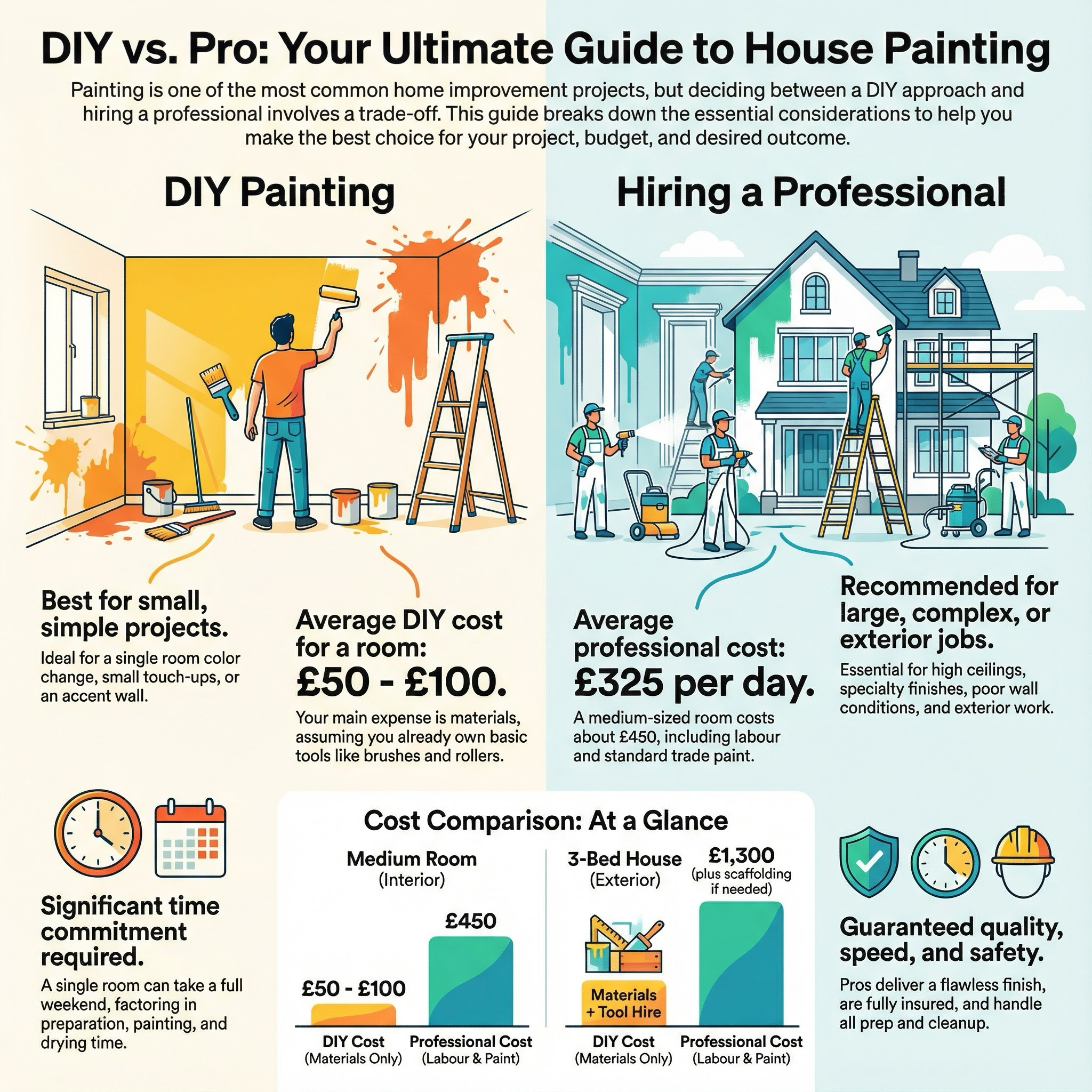
Painter / Decorator explained
Restoring your wooden windows is a sustainable, cost-effective alternative to full replacement. Not only does it preserve the historical integrity of your home, but it also significantly improves thermal efficiency and property value when executed by a skilled decorator or joiner.
| Item | Low £ | High £ | Notes |
|---|---|---|---|
| Small Casement Window (Restoration) | £250 | £450 | Includes minor rot repair and full repaint. |
| Standard Sash Window (Full Overhaul) | £450 | £950 | Includes cord replacement and resin repairs. |
| Timber Sill Replacement | £150 | £300 | Per linear metre, depending on wood type. |
| Scaffolding (Small Frontage) | £600 | £1,200 | Required for safe access to upper floors. |
| Daily Labour Rate | £250 | £400 | Per specialist decorator/joiner. |
Prices vary based on the extent of the rot and the type of timber. Hardwoods like Oak or Teak are more expensive to work with than common softwoods, and windows at height will require scaffolding, which can significantly increase the total project cost.
Pro Tip: Always ask if the quote includes "burning off" old paint. Removing thick layers of old gloss is essential for a professional finish but is labour-intensive.
Cosmetic painting is a manageable DIY task, but structural restoration requires specialist knowledge. Working with epoxy resins, replacing sills, or rehanging sash weights is complex and physically demanding.
Professionals have the tools to remove lead paint safely and the skills to ensure the window remains functional (not painted shut). If your home is a Listed Building, you may be legally required to use specific traditional materials and methods, making a professional essential.
Repair is almost always better for period properties. It preserves original features and is typically 50-70% cheaper than high-quality timber replacements. Modern resin repairs are incredibly durable and can extend the life of a window by decades.
In many cases, yes. Specialists can "retro-fit" slimline double-glazing units into existing timber sashes, provided the frame is in good condition and can support the extra weight. This often requires re-balancing the sash weights.
The ideal window is between April and September. Timber must be dry for repairs to take, and many external paints cannot be applied in temperatures below 5°C or in high humidity.
In the UK, south-facing windows usually need attention every 5-7 years due to UV damage. North-facing windows may last 8-10 years. Regular cleaning and touching up small cracks can extend these intervals.
This is usually due to poor surface preparation or moisture trapped in the wood. If the timber wasn't sanded back to a sound surface or if a non-microporous paint was used over damp wood, the finish will fail rapidly.
This guide was written with AI assistance and is intended for general information only. Prices are estimates based on UK averages and may vary by region. Always get at least three quotes and consult a qualified professional before starting any work.
Ask follow-ups in plain English. The AI explains options, sequencing and what to ask the painter / decorator — so you walk in informed.
Professional decorating is about far more than simply changing a room's colour. It is a critical maintenance task that protects your home’s internal surfaces, i...
READ GUIDE →GuideA damaged or sagging ceiling is more than just an eyesore; it can be a safety risk and a sign of underlying issues like leaks or structural movement. Whether yo...
READ GUIDE →GuideProfessional paint spraying has become the gold standard for UK homeowners seeking a flawless, factory-grade finish. Unlike traditional brushing or rolling, spr...
READ GUIDE →GuideRefreshing your home’s exterior is about more than just curb appeal; it is the primary defence against the British weather. A high-quality exterior paint job se...
READ GUIDE →GuideRefreshing your living room is one of the most impactful home improvements you can undertake. As the heart of the British home, this space endures significant f...
READ GUIDE →GuideFront‑Door Painting Costs Guide Scope of Works Mask & protect surrounding brickwork, floor and hardware. Remove or mask door furniture , letterbox and seals...
READ GUIDE →