Instant
01 · Ask
Ask the AI a follow-up
Got more questions about bathroom painting? Describe the bit you're unsure about — the AI explains options, sequencing and what to ask the painter / decorator.

Moisture-tolerant paint, sealed surfaces and proper prep — bathroom decorated for the wettest room in the house.
You've read the brief on bathroom painting. Now lean on us to find the right painter / decorator — and stay in control of the job.
Got more questions about bathroom painting? Describe the bit you're unsure about — the AI explains options, sequencing and what to ask the painter / decorator.
Costs, timelines, pitfalls and the right questions to ask before any painter / decorator starts on bathroom painting.
Itemised quotes from up to 3 local painter / decorators on bathroom painting — so you can compare like-for-like, not lump sums.
Ready when you are
Enter your postcode and get free quotes from local pros.
Four moves that separate a smooth job from a nightmare.
Paint will not stick to silicone sealant. Old sealant should be removed and replaced after painting is complete.
In very warm bathrooms, paint can dry too quickly, leaving visible brush marks and "lap lines."
If you use the shower too soon after painting (usually within 24–48 hours), the steam will penetrate the curing paint, causing it to bubble.
Any residue of bath oil or soap on the walls will cause the new paint to "fish-eye" or fail to adhere.
Indicative UK ranges and what affects price.
By job type
Quote spread is typically ± 18% — always get 3 quotes.
Painter / Decorator quick-view
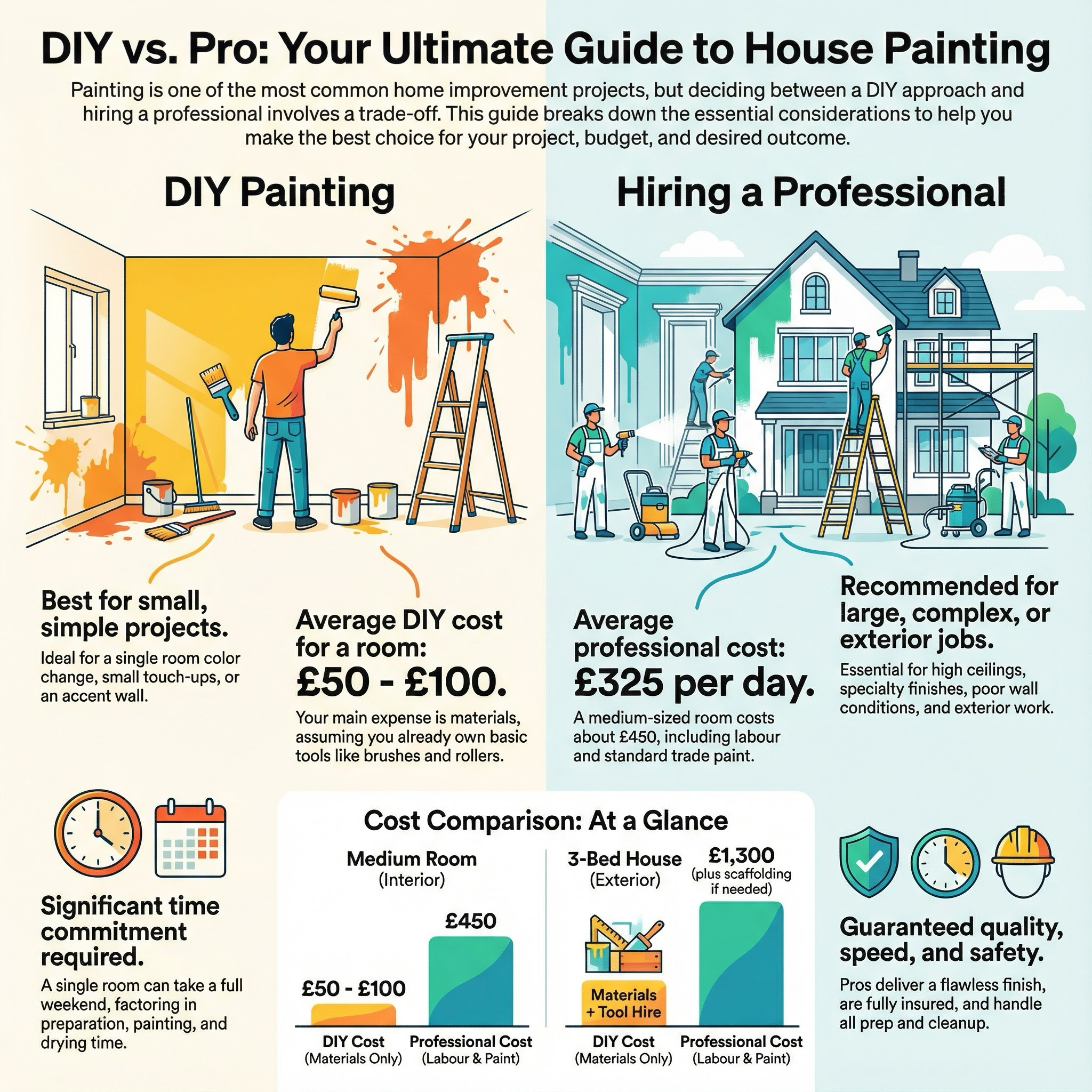
Painter / Decorator explained
For UK homeowners, a professional finish isn't just about aesthetics; it is about creating a moisture-resistant barrier that prevents peeling, bubbling, and the growth of hazardous black mould. Investing in the correct preparation and specialist materials now will save you the cost of a full strip-back and repaint in just a few years.
The cost of bathroom painting in the UK depends heavily on the size of the room and the amount of "cutting in" required around tiles and fixtures. Prices below include VAT and assume standard professional-grade materials.
| Item | Low £ | High £ | Notes |
|---|---|---|---|
| Small Cloakroom/WC | £250 | £400 | Minimal prep; 1 day of labour. |
| Standard Family Bathroom | £450 | £750 | Includes ceiling, walls, and woodwork. |
| Large En-suite/Luxury Bathroom | £750 | £1,200 | Extensive masking and high-end finishes. |
| Day Rate (Labour) | £200 | £350 | Varies by region (London/SE is higher). |
| Specialist Materials | £60 | £150 | Anti-mould paint and high-grip primers. |
Expect to pay a premium for bathrooms with significant mould issues, as these require specialist fungicidal washes and longer drying times between treatments. If your bathroom is fully tiled, the cost will be lower as there is less wall surface to cover, though the precision required for "cutting in" remains high.
While painting a bedroom is a common DIY task, bathrooms are notoriously difficult for amateurs. The proximity of water means any mistake in preparation—such as painting over a damp patch or failing to degrease properly—will lead to the paint peeling off in sheets within months.
A professional decorator has the tools to "cut in" perfectly around awkward pipework and toilet cisterns without getting paint on your expensive tiles. Furthermore, they will know which specific primers (such as Zinsser B-I-N or Bulls Eye 1-2-3) are needed to bond to tricky surfaces like old gloss or damp-prone plaster.
Top Tip: Ask your decorator if they intend to remove the sealant before painting. Painting over silicone sealant is a common mistake; the paint will crack and peel almost immediately.
No. Standard matt emulsion is porous and will absorb moisture, leading to mould growth and peeling. Always use a specialist "Kitchen & Bathroom" paint or a high-quality "Trade" eggshell finish which contains fungicides and a water-resistant binder.
Most professionals recommend waiting at least 24 hours, but 48 hours is safer. Even if the paint feels dry to the touch, it takes several days to "cure" fully and reach its maximum moisture resistance.
Usually, no. Decorators are skilled at painting around fixtures. However, if you are planning to replace your suite, it is much more cost-effective to have the room painted while the old suite is out and before the new one is installed.
Paint is a deterrent, not a cure. Ensure your extractor fan is working correctly and clean it of dust. A professional can apply a fungicidal wash before painting to kill any spores deep within the plaster.
This is usually due to "inter-coat adhesion failure." It happens if the previous surface was too glossy and wasn't sanded, or if there was moisture trapped in the plaster before the paint was applied.
This guide was written with AI assistance and is intended for general information only. Prices are estimates based on UK averages and may vary by region. Always get at least three quotes and consult a qualified professional before starting any work.
Ask follow-ups in plain English. The AI explains options, sequencing and what to ask the painter / decorator — so you walk in informed.
Professional decorating is about far more than simply changing a room's colour. It is a critical maintenance task that protects your home’s internal surfaces, i...
READ GUIDE →GuideA damaged or sagging ceiling is more than just an eyesore; it can be a safety risk and a sign of underlying issues like leaks or structural movement. Whether yo...
READ GUIDE →GuideTimber windows are a hallmark of British architecture, offering a level of character and aesthetic warmth that modern uPVC struggles to replicate. However, the ...
READ GUIDE →GuideProfessional paint spraying has become the gold standard for UK homeowners seeking a flawless, factory-grade finish. Unlike traditional brushing or rolling, spr...
READ GUIDE →GuideRefreshing your home’s exterior is about more than just curb appeal; it is the primary defence against the British weather. A high-quality exterior paint job se...
READ GUIDE →GuideRefreshing your living room is one of the most impactful home improvements you can undertake. As the heart of the British home, this space endures significant f...
READ GUIDE →