Instant
01 · Ask
Ask the AI a follow-up
Got more questions about ceiling painting? Describe the bit you're unsure about — the AI explains options, sequencing and what to ask the painter / decorator.

Mist coat, full coat or stain-block — cracks filled, lights masked, clean line to the cornice.
You've read the brief on ceiling painting. Now lean on us to find the right painter / decorator — and stay in control of the job.
Got more questions about ceiling painting? Describe the bit you're unsure about — the AI explains options, sequencing and what to ask the painter / decorator.
Costs, timelines, pitfalls and the right questions to ask before any painter / decorator starts on ceiling painting.
Itemised quotes from up to 3 local painter / decorators on ceiling painting — so you can compare like-for-like, not lump sums.
Ready when you are
Enter your postcode and get free quotes from local pros.
Four moves that separate a smooth job from a nightmare.
Usually caused by painting over distemper (common in Victorian homes) or moisture trapped in the plaster.
Visible lines where the paint has dried too quickly before the next "pass" of the roller, often caused by poor temperature control.
Water or nicotine stains reappearing through new paint because a specialist oil-based primer wasn't used.
When patches of the ceiling look shinier or duller than others, often due to uneven suction in the plaster or poor mixing of the paint.
Indicative UK ranges and what affects price.
By job type
Quote spread is typically ± 18% — always get 3 quotes.
Painter / Decorator quick-view
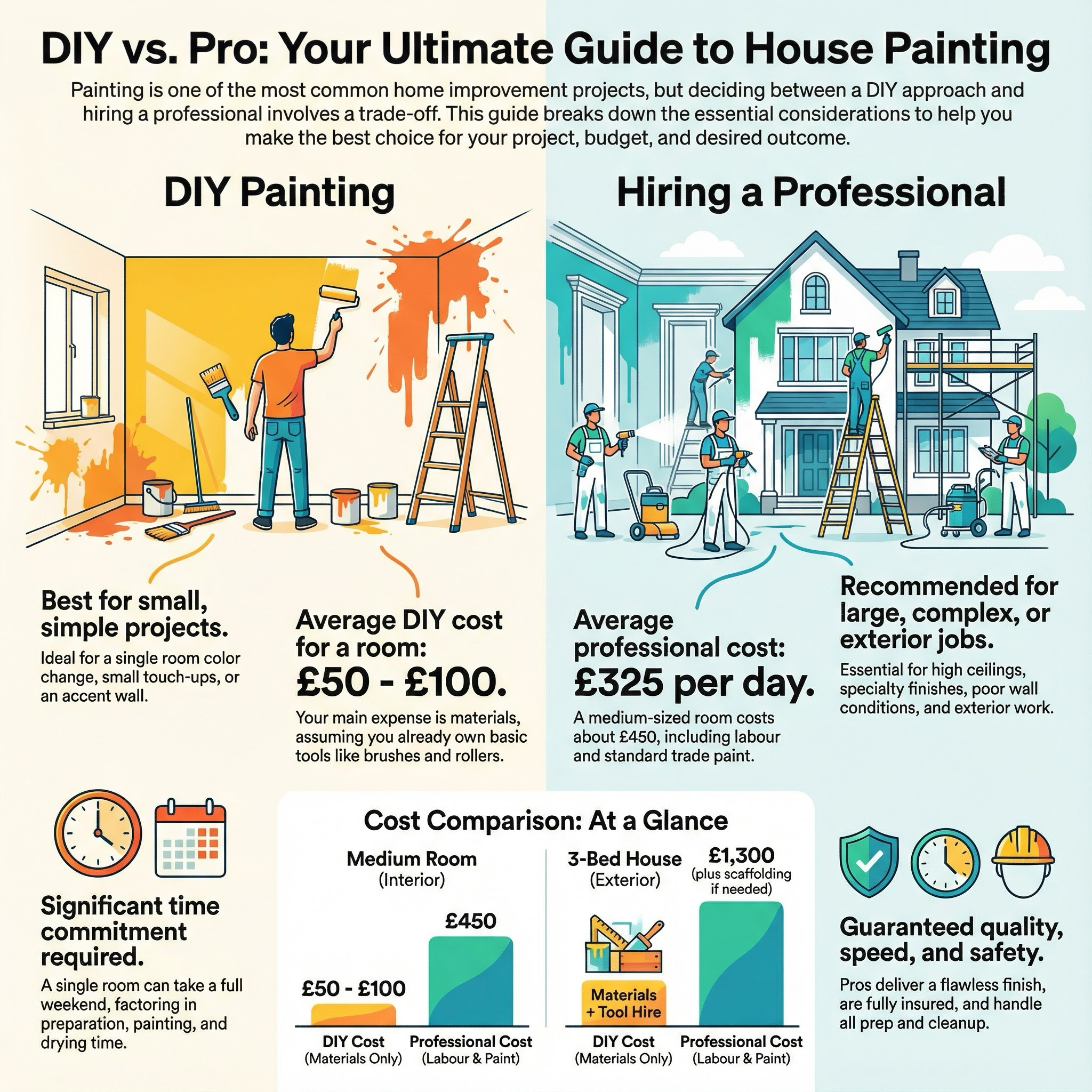
Painter / Decorator explained
While it may seem like a straightforward task, painting overhead is physically demanding and requires meticulous preparation. In the UK, many older homes also present challenges like nicotine staining or textured Artex that may contain hazardous materials, making professional expertise invaluable.
| Item | Low £ | High £ | Notes |
|---|---|---|---|
| Small Room (e.g., Bedroom) | £180 | £300 | Includes minor filling and two coats of paint. |
| Large Room / Open Plan | £350 | £650 | Higher cost for multiple light fittings and larger surface area. |
| Day Rate (Per Decorator) | £200 | £350 | Varies by region; London and South East are typically higher. |
| Materials (Paint & Sundries) | £40 | £120 | Premium brands or specialist anti-mould paints cost more. |
| Access Equipment Hire | £80 | £250 | Required for high vaulted ceilings or stairwells. |
Costs are primarily driven by the condition of the surface and the height of the room. A ceiling requiring extensive crack repairs or "stain-blocking" for old leaks will take significantly longer, increasing the labour charge. Prices usually include VAT unless the tradesperson is a small sole trader below the VAT threshold.
Painting a ceiling is one of the most physically taxing DIY jobs, often leading to neck and shoulder strain. While a DIYer can achieve a decent result, professionals use trade-grade paints with higher opacity and extension poles that ensure a streak-free finish.
If your home was built before 2000 and has textured (Artex) ceilings, do not sand or scrape them yourself. They may contain asbestos, which requires professional testing and specialist handling.
While not strictly necessary, removing small items and breakables is highly recommended. Professionals will usually move and cover large furniture, but the clearer the floor, the faster the job will go.
You must find and fix the leak first. Once dry, a specialist stain-blocking primer (like Zinsser B-I-N) must be applied, or the stain will travel through the new emulsion within weeks.
This "crazing" often happens if a new coat is applied over a surface that is still damp, or if you are painting over a very old, chalky surface like distemper without a stabilizing primer.
No. Bathrooms require specialist "Kitchen & Bathroom" paint which contains fungicides to prevent mould growth and is designed to withstand high humidity without peeling.
No, painting will only refresh the colour. To flatten it, you would need a plasterer to "skim" the ceiling or a decorator to apply several layers of a heavy-duty smoothing compound.
This guide was written with AI assistance and is intended for general information only. Prices are estimates based on UK averages and may vary by region. Always get at least three quotes and consult a qualified professional before starting any work.
Ask follow-ups in plain English. The AI explains options, sequencing and what to ask the painter / decorator — so you walk in informed.
Professional decorating is about far more than simply changing a room's colour. It is a critical maintenance task that protects your home’s internal surfaces, i...
READ GUIDE →GuideA damaged or sagging ceiling is more than just an eyesore; it can be a safety risk and a sign of underlying issues like leaks or structural movement. Whether yo...
READ GUIDE →GuideTimber windows are a hallmark of British architecture, offering a level of character and aesthetic warmth that modern uPVC struggles to replicate. However, the ...
READ GUIDE →GuideProfessional paint spraying has become the gold standard for UK homeowners seeking a flawless, factory-grade finish. Unlike traditional brushing or rolling, spr...
READ GUIDE →GuideRefreshing your home’s exterior is about more than just curb appeal; it is the primary defence against the British weather. A high-quality exterior paint job se...
READ GUIDE →GuideRefreshing your living room is one of the most impactful home improvements you can undertake. As the heart of the British home, this space endures significant f...
READ GUIDE →