Instant
01 · Ask
One room or whole house?
Describe the scope and the AI tells you whether it's a day-rate job, a fixed-price quote, or a multi-week exterior project.

What it costs to repaint or restore a UK front door in 2026 — by door type and finish.
From a single feature wall to a full exterior — read the brief on prep, paint and finishes, then let Three local decorators quote.
Describe the scope and the AI tells you whether it's a day-rate job, a fixed-price quote, or a multi-week exterior project.
Trade emulsion vs contract emulsion, sheen levels, primer rules, when masonry needs a stabilising solution. Know what good looks like.
Three local decorators come back with paint specs, coat counts and prep details — so the cheapest isn't the one cutting corners.
Ready when you are
Enter your postcode and get free quotes from local pros.
Four moves that separate a smooth job from a nightmare.
Primer + two top coats is the minimum on bare or repaired plaster. Two coats only is a corner being cut — and shows through in two years.
Trade emulsion, mid-sheen, eggshell — wildly different durabilities. Ask for the brand, finish and number of coats per surface, on the quote.
Roller marks, holidays and patchy coverage hide under artificial light. Walk every room in daylight before the final invoice goes through.
Good prep takes more time than painting. A decorator who tapes everything in 20 minutes will leave you scraping paint off skirting for weeks.
Indicative UK ranges and what affects price.
By job type
Quote spread is typically ± 18% — always get 3 quotes.
Painter / Decorator quick-view
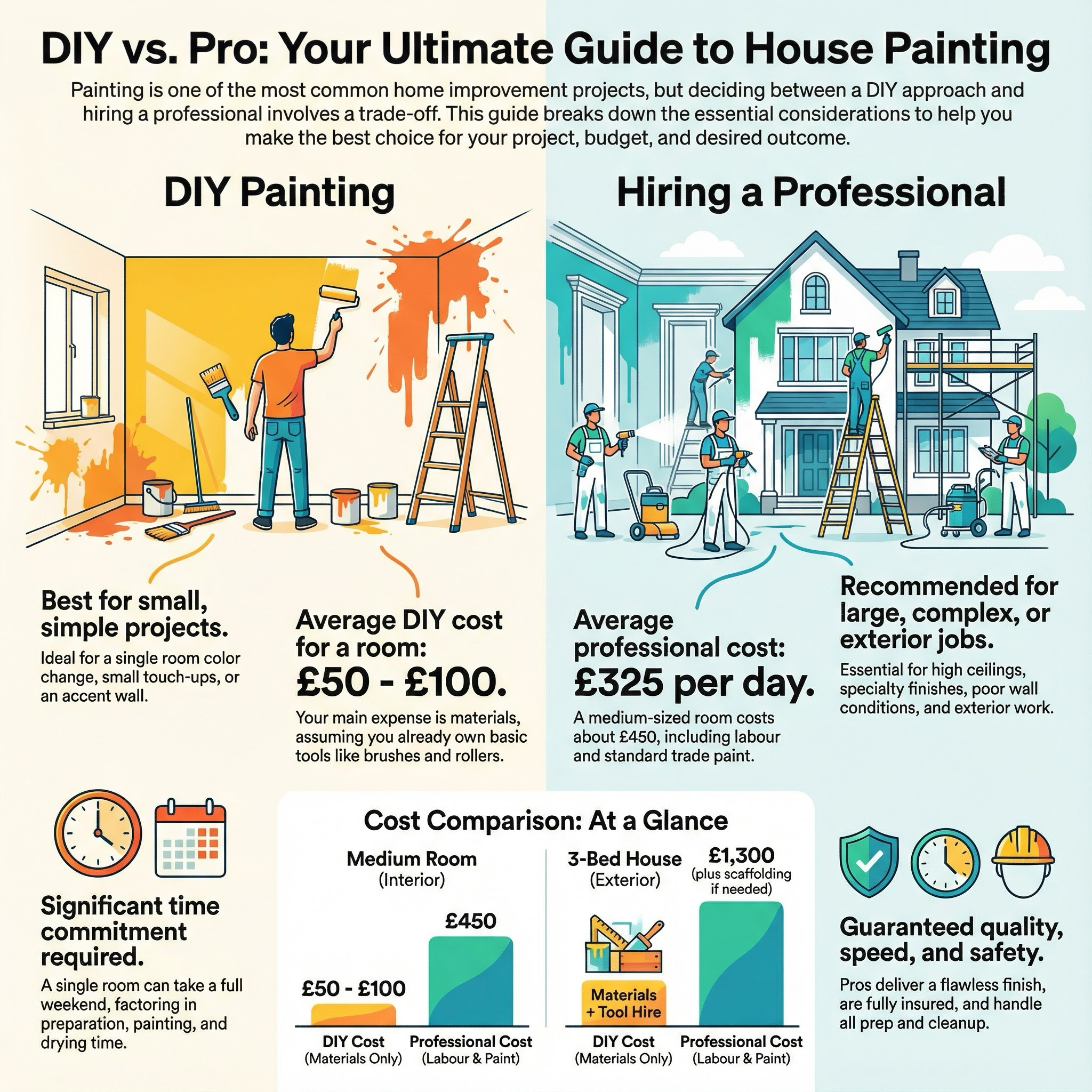
Painter / Decorator explained
Front door painting in the UK typically costs £150–£500 for a professional job, depending on door material, condition, and number of coats. A like-for-like repaint of a sound timber front door runs £150-£280; restoration of a peeling or weathered door (with stripping, filling, priming, multiple coats) is £280-£500.
The front door is the highest-impact paint job on most UK houses — it's the first thing visitors see and the most-photographed part of an estate-agent listing. Cheap repainting often shows; the £100-£200 premium for a quality job pays back in kerb appeal.
| Job | Typical price |
|---|---|
| Like-for-like repaint (sound door, 1-2 coats) | £150–£280 |
| Strip + fill + prime + paint (poor condition) | £280–£500 |
| Colour change repaint (full process) | £250–£450 |
| Front door + frame | £200–£400 |
| Front door + frame + porch | £350–£700 |
| UPVC / composite door re-spray | £300–£600 |
| Period door restoration (Victorian / Edwardian) | £400–£800 |
Total time: typically 2-3 days due to drying. Doors can be hung again the same day as final coat in some cases.
2-3 days from start to finish, due to drying time between coats. Most painters do prep day 1, first coat day 2, second coat day 3. The door can usually be used (closed and locked) overnight between coats.
Yes, with specialist UPVC primer and paint (Zinsser Bullseye 1-2-3, Dulux Trade Weathershield). Cost £300-£600 fitted. Less durable than original UPVC factory finish; expect to re-paint every 4-6 years.
Timber doors with full gloss: 4-6 years before showing wear. Eggshell finishes: 3-5 years. South / west facing doors: shorter intervals due to UV damage. North / east: longer.
If the existing paint is sound (no peeling, no excessive thickness): no, just sand and overcoat. If peeling, blistering, or has 5+ layers built up: yes, strip back to wood for a quality finish. Adds £100-£250 to the job.
For a sound door with simple paint colour change: yes, achievable DIY job over a weekend. For period doors, restoration jobs, or where high-quality finish matters (pre-sale): a specialist's £200-£400 is worth the difference.
Specialist exterior door paints (Farrow & Ball Modern Exterior Eggshell, Dulux Trade Weathershield Gloss, Sandtex Trade) all perform well. £35-£70 per litre for a quality finish; £15-£30 for budget options that need more frequent re-application.
Want a local pro to handle this? A painter and decorator with exterior experience will deliver a finished front door that lasts 5-7 years. £200-£400 well-spent given the kerb appeal value of a smart front door.
This guide was written with AI assistance and is intended for general information only. Prices are estimates based on UK averages and may vary by region. Always get at least three quotes and consult a qualified professional before starting any work.
Ask follow-ups in plain English. The AI explains options, sequencing and what to ask the painter / decorator — so you walk in informed.
Professional decorating is about far more than simply changing a room's colour. It is a critical maintenance task that protects your home’s internal surfaces, i...
READ GUIDE →GuideA damaged or sagging ceiling is more than just an eyesore; it can be a safety risk and a sign of underlying issues like leaks or structural movement. Whether yo...
READ GUIDE →GuideTimber windows are a hallmark of British architecture, offering a level of character and aesthetic warmth that modern uPVC struggles to replicate. However, the ...
READ GUIDE →GuideProfessional paint spraying has become the gold standard for UK homeowners seeking a flawless, factory-grade finish. Unlike traditional brushing or rolling, spr...
READ GUIDE →GuideRefreshing your home’s exterior is about more than just curb appeal; it is the primary defence against the British weather. A high-quality exterior paint job se...
READ GUIDE →GuideRefreshing your living room is one of the most impactful home improvements you can undertake. As the heart of the British home, this space endures significant f...
READ GUIDE →