Instant
01 · Ask
Ask the AI a follow-up
Got more questions about decorative Texture Application? Describe the bit you're unsure about — the AI explains options, sequencing and what to ask the painter / decorator.

Textured paint or wall finish — Tadelakt, Venetian plaster, limewash or knock-down texture.
You've read the brief on decorative Texture Application. Now lean on us to find the right painter / decorator — and stay in control of the job.
Got more questions about decorative Texture Application? Describe the bit you're unsure about — the AI explains options, sequencing and what to ask the painter / decorator.
Costs, timelines, pitfalls and the right questions to ask before any painter / decorator starts on decorative Texture Application.
Itemised quotes from up to 3 local painter / decorators on decorative Texture Application — so you can compare like-for-like, not lump sums.
Ready when you are
Enter your postcode and get free quotes from local pros.
Four moves that separate a smooth job from a nightmare.
This happens when the "wet edge" isn't maintained, leaving a visible line where two sections of texture meet.
If the wall wasn't primed correctly, the underlying substrate may absorb moisture unevenly, causing patchy colour.
Applying texture too thickly in a single coat can lead to "mud cracking" as the material shrinks while drying.
If applied over old silk paint without proper sanding or a grip primer, the texture may flake off over time.
Indicative UK ranges and what affects price.
By job type
Quote spread is typically ± 18% — always get 3 quotes.
Painter / Decorator quick-view
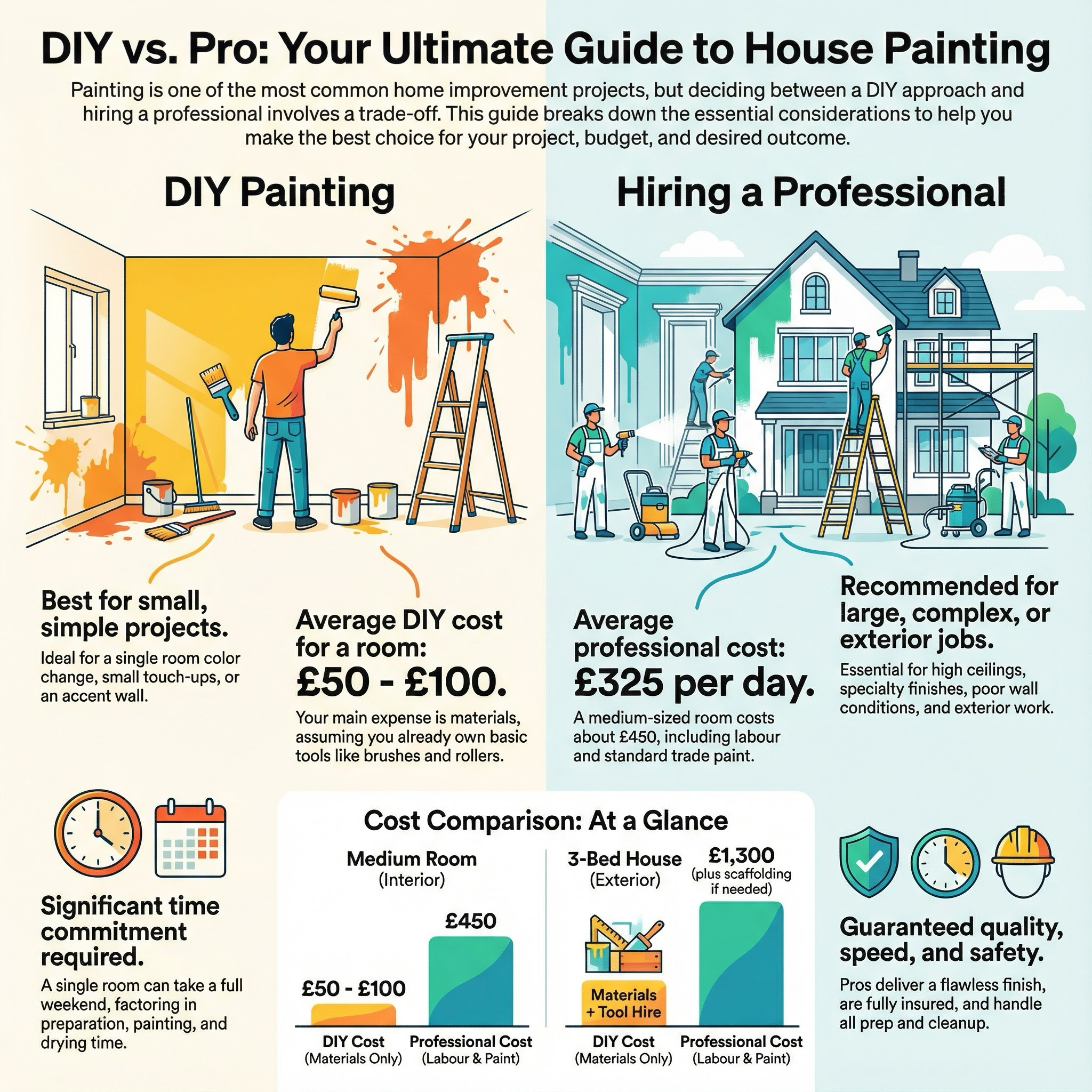
Painter / Decorator explained
For UK homeowners, these finishes offer a durable, high-end alternative to wallpaper or standard emulsion. Whether you are looking to hide minor surface imperfections or create a striking feature wall, professional texture application adds significant character and value to your property.
The cost of decorative texturing varies significantly based on the complexity of the finish. High-end polished plasters require more labour and expensive raw materials than standard textured masonry or sand paints.
| Item / Project Type | Low £ | High £ | Notes |
|---|---|---|---|
| Small Feature Wall (Labour) | £250 | £550 | Simple texture or sand finish. |
| Venetian Plaster (per m²) | £90 | £180 | Includes materials and multi-stage burnishing. |
| Standard Texture (per m²) | £25 | £50 | Textured paint or basic heavy-roll finish. |
| Specialist Materials | £40 | £120 | Per 5L tin of bespoke metallic or lime plaster. |
| Minimum Call-out Fee | £150 | £250 | Covers setup, protection, and small repairs. |
Prices generally include VAT and basic sundries. Costs will rise if the specialist needs to strip old wallpaper or perform extensive "making good" to the original plasterwork before they can begin the decorative layers.
While basic textured paints can be applied by a confident DIYer, specialist finishes like Venetian plaster or bespoke dragging require a "hand" that only comes with years of experience. Errors in texture are incredibly difficult to sand back or hide, often requiring the entire wall to be skim-coated if the result is poor.
Professional decorators have the muscle memory to ensure a consistent pattern across a large surface area, avoiding "lap marks" where one section dries faster than the next.
It depends on the depth. Light textures can be sanded and painted, but heavy textures or waxed plasters usually require a professional skim coat of plaster to return the wall to a flat finish.
Yes, provided it is sealed correctly. Specialist waxes and waterproof glazes can make many textures wipeable and resistant to steam, though direct contact with shower water should be avoided.
Textured finishes are excellent at disguising minor hairline cracks and unevenness. However, they will not hide structural damp or major bulges; these must be repaired before the decorative work begins.
Venetian plaster is a lime-based material applied with a trowel in thin layers to create a stone-like finish. Textured paint is a standard emulsion mixed with sand or additives applied via a roller or brush.
Most modern finishes are sealed with wax or varnish. Use a soft, damp microfibre cloth and avoid harsh chemical cleaners which can strip the protective topcoat and dull the finish.
This guide was written with AI assistance and is intended for general information only. Prices are estimates based on UK averages and may vary by region. Always get at least three quotes and consult a qualified professional before starting any work.
Ask follow-ups in plain English. The AI explains options, sequencing and what to ask the painter / decorator — so you walk in informed.
Professional decorating is about far more than simply changing a room's colour. It is a critical maintenance task that protects your home’s internal surfaces, i...
READ GUIDE →GuideA damaged or sagging ceiling is more than just an eyesore; it can be a safety risk and a sign of underlying issues like leaks or structural movement. Whether yo...
READ GUIDE →GuideTimber windows are a hallmark of British architecture, offering a level of character and aesthetic warmth that modern uPVC struggles to replicate. However, the ...
READ GUIDE →GuideProfessional paint spraying has become the gold standard for UK homeowners seeking a flawless, factory-grade finish. Unlike traditional brushing or rolling, spr...
READ GUIDE →GuideRefreshing your home’s exterior is about more than just curb appeal; it is the primary defence against the British weather. A high-quality exterior paint job se...
READ GUIDE →GuideRefreshing your living room is one of the most impactful home improvements you can undertake. As the heart of the British home, this space endures significant f...
READ GUIDE →