Instant
01 · Ask
Ask the AI a follow-up
Got more questions about exterior Painting Cost & Work? Describe the bit you're unsure about — the AI explains options, sequencing and what to ask the painter / decorator.

What exterior house painting really costs — by render type, height and access. Includes scaffold or tower.
You've read the brief on exterior Painting Cost & Work. Now lean on us to find the right painter / decorator — and stay in control of the job.
Got more questions about exterior Painting Cost & Work? Describe the bit you're unsure about — the AI explains options, sequencing and what to ask the painter / decorator.
Costs, timelines, pitfalls and the right questions to ask before any painter / decorator starts on exterior Painting Cost & Work.
Itemised quotes from up to 3 local painter / decorators on exterior Painting Cost & Work — so you can compare like-for-like, not lump sums.
Ready when you are
Enter your postcode and get free quotes from local pros.
Four moves that separate a smooth job from a nightmare.
Applying paint to wet walls traps moisture, leading to bubbling, peeling, and eventually damp inside the home.
Skipping the cleaning or sanding stage means the new paint will fail to bond, often peeling within 12 months.
Using non-breathable paint on lime-rendered traditional buildings can cause serious structural damp issues.
Painting too late in the autumn when temperatures drop below 5°C prevents the paint from curing properly.
Indicative UK ranges and what affects price.
By job type
Quote spread is typically ± 18% — always get 3 quotes.
Painter / Decorator quick-view
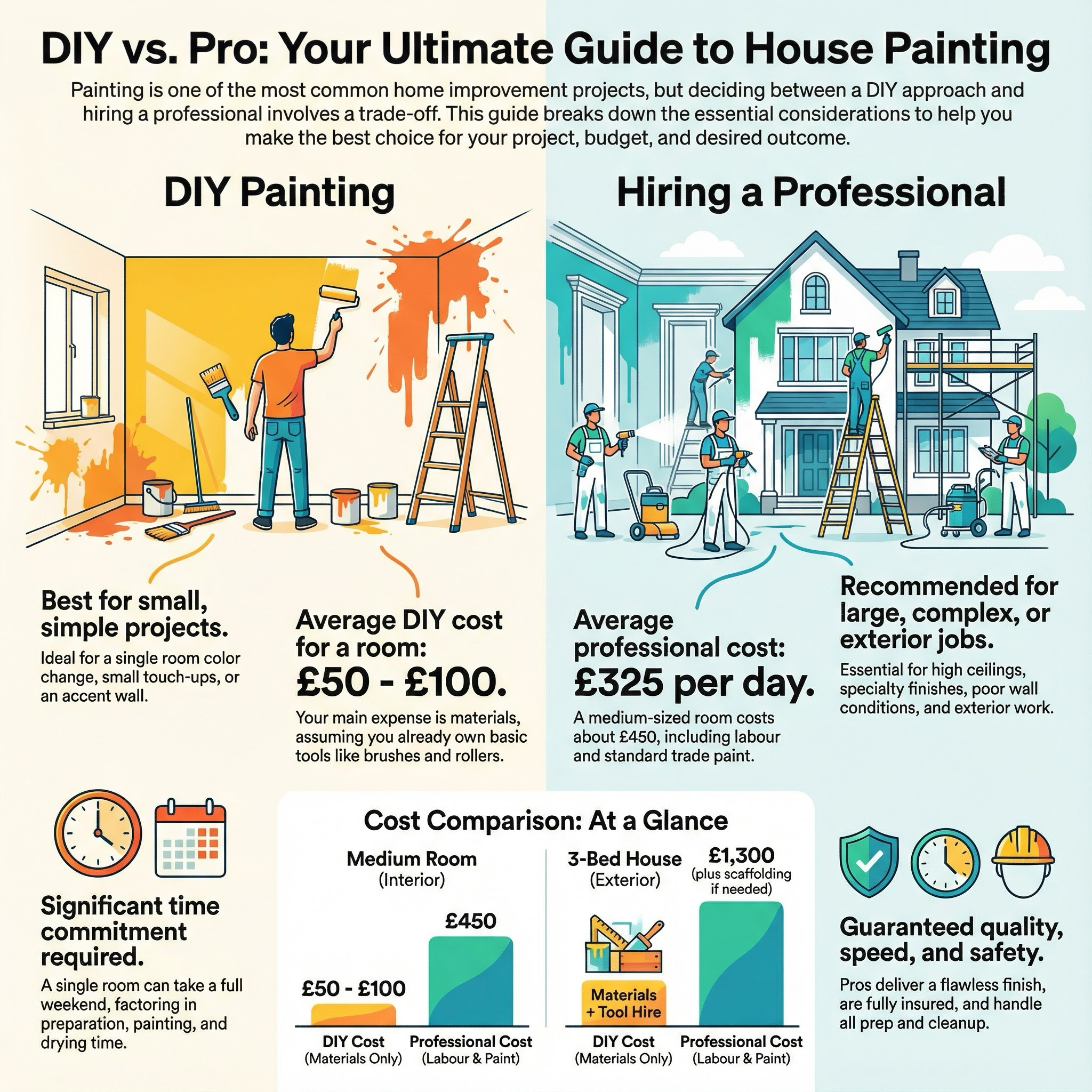
Painter / Decorator explained
For UK homeowners, timing is everything. A professional exterior paint job not only breathes new life into a tired facade but also preserves the structural integrity of your windows, doors, and walls for years to come.
Exterior painting costs vary significantly based on the size of your property and the amount of scaffolding required. Prices below include labour, materials, and VAT at 20%.
| Project Type | Low £ | High £ | Notes |
|---|---|---|---|
| Small Terraced (Front Only) | £800 | £1,500 | Includes minor prep and materials. |
| 3-Bed Semi-Detached | £2,500 | £4,500 | Includes full scaffolding and masonry paint. |
| 4-Bed Detached House | £4,500 | £8,500 | Extensive prep and multiple elevations. |
| External Door & Frame | £150 | £350 | Sanding, priming, and high-gloss finish. |
| Scaffolding Hire (per week) | £600 | £1,200 | Essential for safety on most two-storey homes. |
The main cost drivers are the condition of the existing surfaces and accessibility. If your render is "blown" (detached from the wall) or your woodwork is rotten, repair costs will be added to the painting quote.
While painting a ground-floor wall is a manageable DIY task, painting a whole house involves significant safety risks. Working at height requires stable scaffolding or towers, which are expensive to hire and difficult to erect safely without training.
Expert Tip: Professional painters have access to trade-grade paints that offer superior UV protection and breathability compared to standard DIY store brands.
Hiring a pro ensures the "prep work"—which accounts for 70% of a long-lasting finish—is done correctly. Professionals will also be aware of Part L of the Building Regulations if you are replacing more than 50% of a surface's finish on a thermal element.
In the UK, the ideal window is between late April and September. You need dry days with temperatures consistently above 10°C and low humidity for the paint to bond and dry correctly.
A high-quality professional job using premium masonry paint should last between 10 and 15 years. Woodwork usually requires maintenance every 4–6 years to prevent rot.
For most two-storey homes, yes. It is significantly safer and allows the painter to reach every corner for a consistent finish. It also provides a platform for necessary repairs that can't be done safely from a ladder.
Usually, yes, under Permitted Development rights. However, if your home is Listed or in a Conservation Area, you must check with your local planning office first, as colour restrictions often apply.
Breathable paint allows moisture vapour to escape from the walls. It is essential for older properties (pre-1920s) built with solid walls and lime mortar to prevent internal damp and "spalling" masonry.
This guide was written with AI assistance and is intended for general information only. Prices are estimates based on UK averages and may vary by region. Always get at least three quotes and consult a qualified professional before starting any work.
Ask follow-ups in plain English. The AI explains options, sequencing and what to ask the painter / decorator — so you walk in informed.
Professional decorating is about far more than simply changing a room's colour. It is a critical maintenance task that protects your home’s internal surfaces, i...
READ GUIDE →GuideA damaged or sagging ceiling is more than just an eyesore; it can be a safety risk and a sign of underlying issues like leaks or structural movement. Whether yo...
READ GUIDE →GuideTimber windows are a hallmark of British architecture, offering a level of character and aesthetic warmth that modern uPVC struggles to replicate. However, the ...
READ GUIDE →GuideProfessional paint spraying has become the gold standard for UK homeowners seeking a flawless, factory-grade finish. Unlike traditional brushing or rolling, spr...
READ GUIDE →GuideRefreshing your home’s exterior is about more than just curb appeal; it is the primary defence against the British weather. A high-quality exterior paint job se...
READ GUIDE →GuideRefreshing your living room is one of the most impactful home improvements you can undertake. As the heart of the British home, this space endures significant f...
READ GUIDE →