Instant
01 · Ask
Ask the AI a follow-up
Got more questions about living room and passage decoration? Describe the bit you're unsure about — the AI explains options, sequencing and what to ask the painter / decorator.

Living room and hallway/passage walls, ceilings and woodwork — by one painter team.
You've read the brief on living room and passage decoration. Now lean on us to find the right painter / decorator — and stay in control of the job.
Got more questions about living room and passage decoration? Describe the bit you're unsure about — the AI explains options, sequencing and what to ask the painter / decorator.
Costs, timelines, pitfalls and the right questions to ask before any painter / decorator starts on living room and passage decoration.
Itemised quotes from up to 3 local painter / decorators on living room and passage decoration — so you can compare like-for-like, not lump sums.
Ready when you are
Enter your postcode and get free quotes from local pros.
Four moves that separate a smooth job from a nightmare.
This occurs when paint is applied unevenly, causing shiny or dull patches. It is usually caused by poor technique or failing to maintain a "wet edge."
Bubbles forming in the paint, often caused by applying oil-based paint over damp surfaces or in humid conditions.
Paint peeling off in sheets, typically because the surface wasn't cleaned of grease or a mist coat wasn't applied to bare plaster.
Stains from old water leaks or smoke showing through new paint. These require a specialist "stain-block" primer before the topcoat.
Indicative UK ranges and what affects price.
By job type
Quote spread is typically ± 18% — always get 3 quotes.
Painter / Decorator quick-view
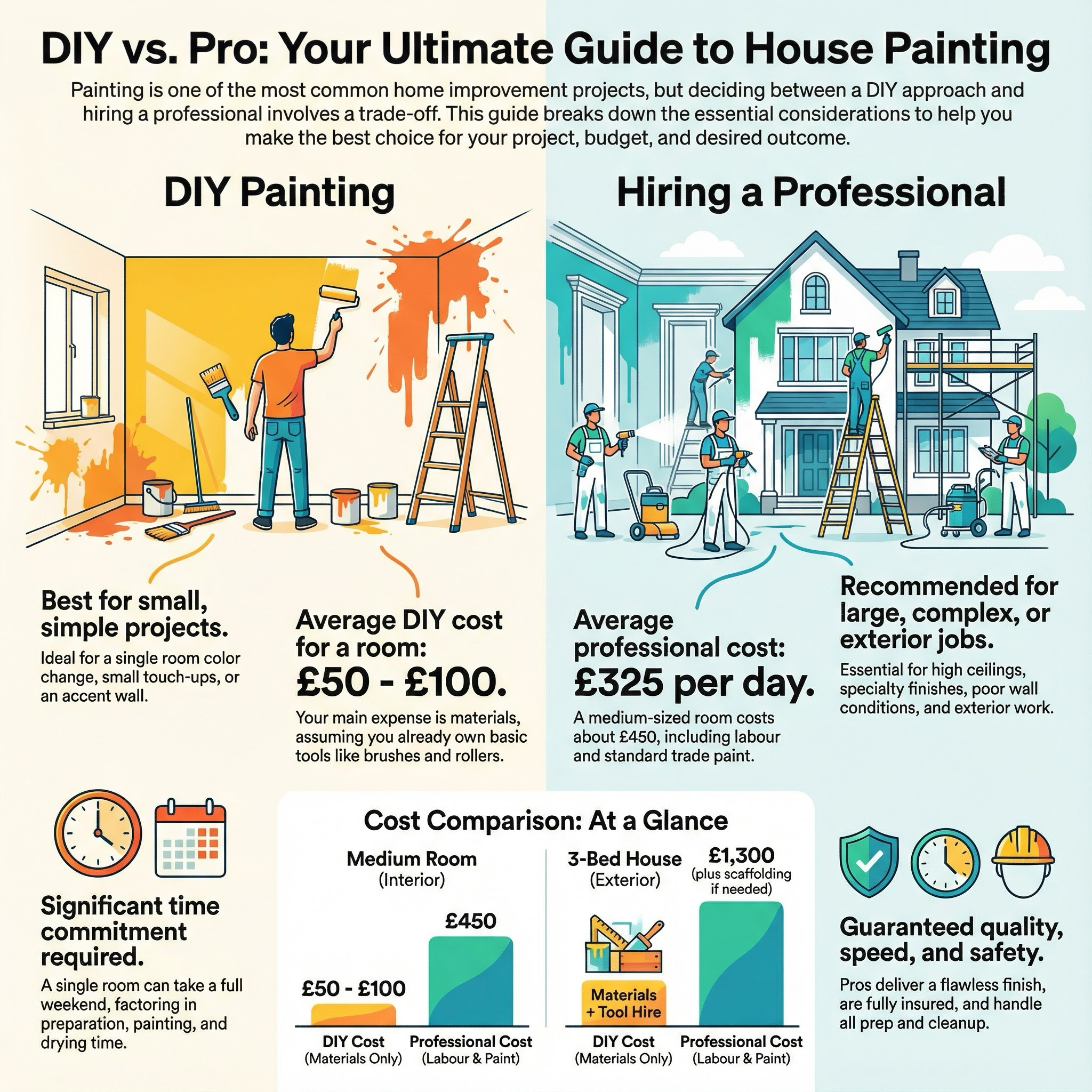
Painter / Decorator explained
A professional decoration job goes far beyond simply rolling paint onto walls. It involves meticulous surface preparation, repairing minor structural imperfections, and applying specialist finishes to woodwork and masonry to ensure a long-lasting, premium result.
Pricing for UK decoration varies based on the size of the rooms, the condition of the existing plaster, and your choice of materials. High-end designer paints (e.g., Farrow & Ball or Little Greene) will increase material costs compared to trade-standard emulsions.
| Item / Service | Low £ | High £ | Notes |
|---|---|---|---|
| Daily Labour Rate (per person) | £200 | £350 | Higher in London and the SE. |
| Materials (Paint & Consumables) | £150 | £450 | Includes primer, emulsion, and gloss. |
| Wallpapering (per roll) | £35 | £75 | Labour only; excludes paper cost. |
| Hallway Stairwell Access | £80 | £200 | Specialist ladders or scaffolding. |
| Full Room + Passage (Total) | £750 | £1,850 | Based on average 3-bed semi-detached. |
The condition of your walls is the biggest price driver. If the plaster is "blown" or heavily cracked, you may need a plasterer to skim the walls before the decorator can begin, which can add £400–£700 to the total project cost.
While many UK homeowners tackle painting as a DIY task, the difference in finish is often stark. Professionals have the tools to achieve perfectly flat finishes on woodwork and razor-sharp lines at the ceiling edge.
Expert Tip: Hallway stairwells present a significant health and safety risk. Working at height on stairs requires specialist "ladder stay" equipment or internal scaffolding, making it a job best left to professionals.
If your home was built before 1960, be aware of Lead Paint. Sanding old layers can release toxic dust, requiring professional abatement and HEPA-filtered extraction which DIYers rarely possess.
Most decorators prefer the room to be as empty as possible, but they can usually work around large items moved to the centre of the room and covered with plastic sheeting. Always agree on who is responsible for moving heavy furniture before the job starts.
Modern water-based emulsions are touch-dry in 1-2 hours but require 4 hours between coats. In winter, you must keep the heating on at a low, steady temperature (around 15-18°C) to ensure the paint cures correctly without cracking.
Decorators can fix "settlement" cracks using flexible fillers and scrim tape. However, if the crack is wider than a 50p piece or the plaster feels "bouncy" to the touch, you may need a plasterer to replace the board or reskim the area first.
Modern water-based "satinwood" is now preferred by most UK decorators. Unlike traditional oil-based gloss, it does not yellow over time, has very little odour, and dries much faster, allowing for two coats in a single day.
Generally, no. Professionals usually get trade discounts at merchants like Brewers or Dulux Decorator Centres. Furthermore, they know which specific products work best for your wall type. If you buy the wrong finish, you may end up paying more in labour for extra coats.
This guide was written with AI assistance and is intended for general information only. Prices are estimates based on UK averages and may vary by region. Always get at least three quotes and consult a qualified professional before starting any work.
Ask follow-ups in plain English. The AI explains options, sequencing and what to ask the painter / decorator — so you walk in informed.
Professional decorating is about far more than simply changing a room's colour. It is a critical maintenance task that protects your home’s internal surfaces, i...
READ GUIDE →GuideA damaged or sagging ceiling is more than just an eyesore; it can be a safety risk and a sign of underlying issues like leaks or structural movement. Whether yo...
READ GUIDE →GuideTimber windows are a hallmark of British architecture, offering a level of character and aesthetic warmth that modern uPVC struggles to replicate. However, the ...
READ GUIDE →GuideProfessional paint spraying has become the gold standard for UK homeowners seeking a flawless, factory-grade finish. Unlike traditional brushing or rolling, spr...
READ GUIDE →GuideRefreshing your home’s exterior is about more than just curb appeal; it is the primary defence against the British weather. A high-quality exterior paint job se...
READ GUIDE →GuideRefreshing your living room is one of the most impactful home improvements you can undertake. As the heart of the British home, this space endures significant f...
READ GUIDE →