Instant
01 · Ask
Ask the AI a follow-up
Got more questions about painter and Decorator? Describe the bit you're unsure about — the AI explains options, sequencing and what to ask the painter / decorator.

What painters charge in 2026 — day rate vs quote, what's included, how to compare estimates.
You've read the brief on painter and Decorator. Now lean on us to find the right painter / decorator — and stay in control of the job.
Got more questions about painter and Decorator? Describe the bit you're unsure about — the AI explains options, sequencing and what to ask the painter / decorator.
Costs, timelines, pitfalls and the right questions to ask before any painter / decorator starts on painter and Decorator.
Itemised quotes from up to 3 local painter / decorators on painter and Decorator — so you can compare like-for-like, not lump sums.
Ready when you are
Enter your postcode and get free quotes from local pros.
Four moves that separate a smooth job from a nightmare.
Often caused by using poor quality brushes or working too slowly in warm conditions, causing the paint to "drag."
Usually a sign of poor preparation or painting over damp or greasy surfaces without a primer.
Stains from water damage or knots in wood appearing through the topcoat because a stain-blocking primer wasn't used.
Resulting from walls that aren't "plumb" or failing to use a plumb line for the first drop.
Indicative UK ranges and what affects price.
By job type
Quote spread is typically ± 18% — always get 3 quotes.
Painter / Decorator quick-view
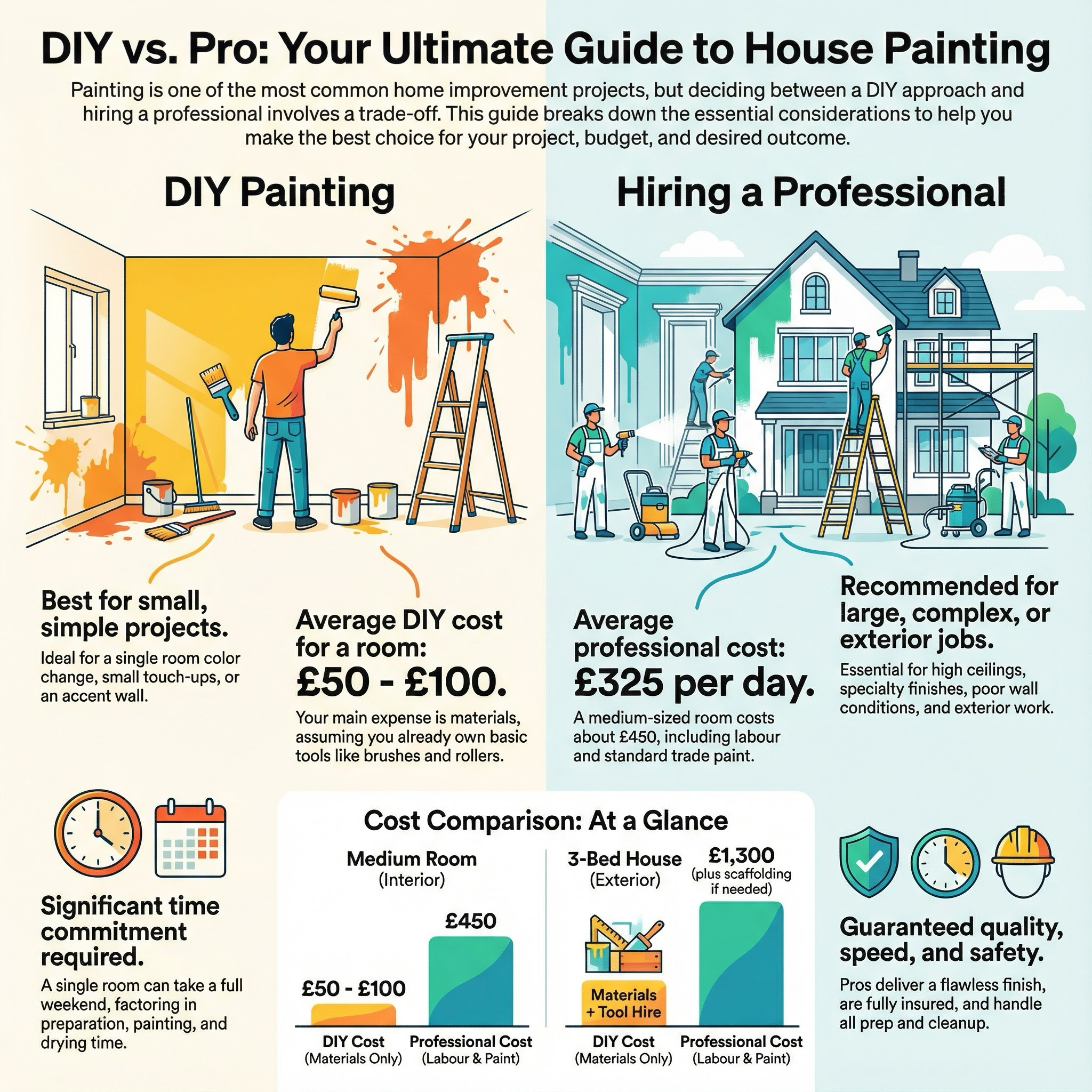
Painter / Decorator explained
While many homeowners attempt to paint themselves, a professional brings the technical skill required for flawless "cutting in," smooth wallpaper hanging, and the rigorous preparation work that ensures the finish lasts for years rather than months.
| Item | Low £ | High £ | Notes |
|---|---|---|---|
| Daily Labour Rate | £200 | £350 | Higher rates in London and the South East. |
| Small Bedroom (Labour only) | £350 | £550 | Assuming 2 days of work for walls and trim. |
| Medium Room (Labour only) | £500 | £850 | Includes ceiling, walls, and woodwork. |
| Hall, Stairs & Landing | £800 | £1,800 | Complexity of height and multiple doors adds cost. |
| Paint & Materials | £50 | £250 | Depends on brand (e.g., trade vs. designer labels). |
| Wallpapering (per wall) | £120 | £250 | Excludes the cost of the wallpaper itself. |
Several factors will influence your final quote, including the condition of the existing surfaces, the height of the ceilings, and the quality of the paint selected. If the decorator needs to move heavy furniture or strip multiple layers of woodchip wallpaper, expect the labour costs to rise significantly.
Painting is a popular DIY task, but the difference between an amateur and a professional finish is usually found in the preparation. Professionals have the tools and patience to sand and fill surfaces perfectly, which accounts for roughly 70% of the total job time.
For high-ceiling areas, stairwells, or hanging expensive patterned wallpaper, hiring a professional is highly recommended to avoid safety risks and costly material wastage. Professionals also have access to "trade" paints, which typically offer better coverage and durability than retail versions.
Always ask: "How many coats of paint are included in this quote, and what brand of paint do you intend to use?"
Most decorators prefer to supply the paint as they can access high-quality trade versions and ensure the correct finish is used. However, if you have already purchased specific designer paint, most will be happy to use it, though they may charge a slightly higher labour rate to compensate for lost trade discounts.
Yes, it is best to move small items and breakables out of the room entirely. Large furniture should be moved to the centre of the room and covered; decorators will usually help with heavy items if agreed in advance, but it may add to the labour time.
Modern water-based emulsions are usually touch-dry in 1-2 hours and can be recoated in 4 hours. Low-VOC paints have very little odour, which typically dissipates within 24 hours with good ventilation.
Trade paint is generally more expensive but contains higher levels of pigment and binders. This results in better opacity (fewer coats needed) and a more durable finish compared to standard retail paint found in DIY sheds.
While possible, it is rarely recommended for a professional finish. Painting can cause the wallpaper adhesive to fail, leading to bubbling or peeling; it also makes the wallpaper significantly harder to remove in the future.
A decorator can treat the *symptoms* of damp by using stain-blocking primers and anti-mould paint. However, they are not damp-proofing specialists; the underlying cause (such as a leak or rising damp) must be fixed before decorating begins.
This guide was written with AI assistance and is intended for general information only. Prices are estimates based on UK averages and may vary by region. Always get at least three quotes and consult a qualified professional before starting any work.
Ask follow-ups in plain English. The AI explains options, sequencing and what to ask the painter / decorator — so you walk in informed.
Professional decorating is about far more than simply changing a room's colour. It is a critical maintenance task that protects your home’s internal surfaces, i...
READ GUIDE →GuideA damaged or sagging ceiling is more than just an eyesore; it can be a safety risk and a sign of underlying issues like leaks or structural movement. Whether yo...
READ GUIDE →GuideTimber windows are a hallmark of British architecture, offering a level of character and aesthetic warmth that modern uPVC struggles to replicate. However, the ...
READ GUIDE →GuideProfessional paint spraying has become the gold standard for UK homeowners seeking a flawless, factory-grade finish. Unlike traditional brushing or rolling, spr...
READ GUIDE →GuideRefreshing your home’s exterior is about more than just curb appeal; it is the primary defence against the British weather. A high-quality exterior paint job se...
READ GUIDE →GuideRefreshing your living room is one of the most impactful home improvements you can undertake. As the heart of the British home, this space endures significant f...
READ GUIDE →