Instant
01 · Ask
Ask the AI a follow-up
Got more questions about pub painting touch-ups? Describe the bit you're unsure about — the AI explains options, sequencing and what to ask the painter / decorator.

Quick refresh of pub or restaurant interior — walls, woodwork and trim repainted between bookings or out of hours.
You've read the brief on pub painting touch-ups. Now lean on us to find the right painter / decorator — and stay in control of the job.
Got more questions about pub painting touch-ups? Describe the bit you're unsure about — the AI explains options, sequencing and what to ask the painter / decorator.
Costs, timelines, pitfalls and the right questions to ask before any painter / decorator starts on pub painting touch-ups.
Itemised quotes from up to 3 local painter / decorators on pub painting touch-ups — so you can compare like-for-like, not lump sums.
Ready when you are
Enter your postcode and get free quotes from local pros.
Four moves that separate a smooth job from a nightmare.
If the surface isn't properly degreased (removing years of beer and wax), the new paint will peel within weeks.
Failing to "feather" or sand the edges of a chip results in a visible "patch" that looks worse than the original damage.
Using oil-based gloss in a poorly ventilated bar can lead to customer complaints and even taint open food or drink.
Miscalculating drying times can lead to customers leaning on wet paint or dust settling in the finish.
Indicative UK ranges and what affects price.
By job type
Quote spread is typically ± 18% — always get 3 quotes.
Painter / Decorator quick-view
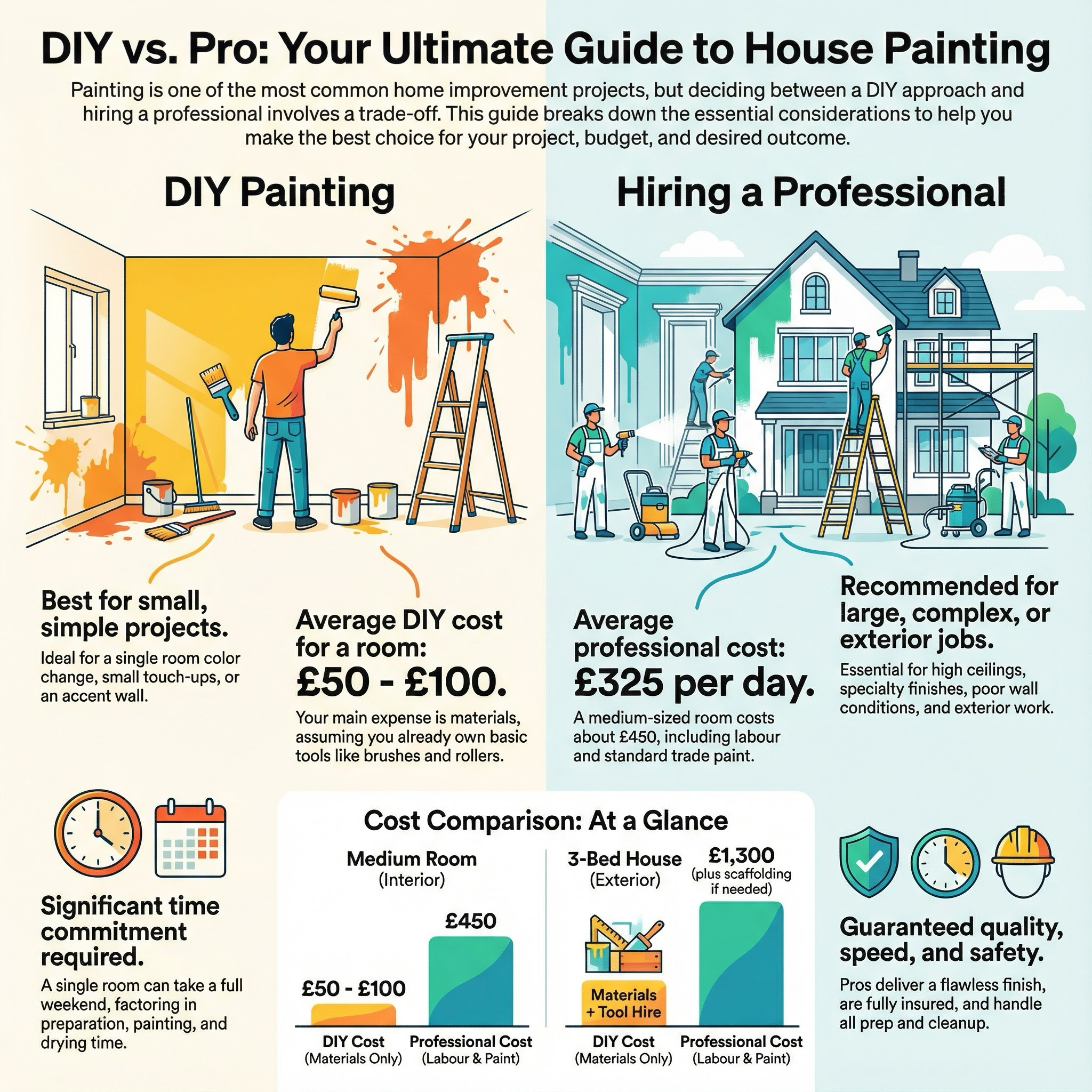
Painter / Decorator explained
Professional touch-ups are a cost-effective way to extend the life of your existing decor. By targeting high-traffic areas like bar fronts, skirtings, and door frames, you can keep the premises looking sharp without the disruption or expense of a full-scale refurbishment.
Pricing for pub touch-ups often depends on whether the work is done during standard hours or "out-of-hours" (OOH) to avoid closing the business. Most decorators will charge a minimum call-out fee for small maintenance jobs.
| Item | Low £ | High £ | Notes |
|---|---|---|---|
| Minimum Call-out Fee | £90 | £160 | Covers travel and first hour of work. |
| Labour (Hourly Rate) | £40 | £75 | Higher rates apply for London or night shifts. |
| Materials & Sundries | £30 | £150 | Includes specialist primers, fillers, and matched paint. |
| Out-of-Hours Uplift | +25% | +50% | Applied for overnight or Sunday work. |
| Full Bar Front Refresh | £350 | £850 | Deep clean, sand, fill, and full recoat of the main bar. |
Factors such as the height of the work (requiring scaffolding), the need for specialist anti-graffiti coatings, or the use of fast-drying "scuff-resistant" paints will influence the final quote.
While DIY touch-ups are tempting for small scuffs, professional decorators bring two essential skills to a pub environment: colour matching and durability. Commercial premises require hard-wearing, scrubbable finishes that DIY-grade paints rarely provide.
Furthermore, professionals are well-versed in COSHH (Control of Substances Hazardous to Health) regulations, ensuring that the products used are safe for areas where food and drink are served. They also possess the public liability insurance necessary for working in a commercial space.
Yes. Most professionals use portable spectrophotometers (digital scanners) to sample the existing colour and mix a matching shade on-site or at a trade counter.
Usually not. Most decorators can work in sections during quiet periods or overnight. Using quick-dry acrylic-based paints allows surfaces to be touch-dry in under an hour.
A professional will use a specialist degreaser like Krud Kutter or sugar soap, followed by a "stain-blocking" primer to prevent oils from bleeding through the new paint.
Scuff-resistant matt or eggshell finishes (such as Dulux Diamond or Crown Clean Extreme) are preferred for walls, while water-based satinwood or specialist lacquers are best for timber.
By using modern water-based, low-VOC (Volatile Organic Compound) paints, the odour is minimal and usually dissipates within a few hours, making it safe for evening service.
Pro Tip: Always keep a small pot of the matched paint and a list of the colour codes used. This makes future "emergency" touch-ups much faster and cheaper.
This guide was written with AI assistance and is intended for general information only. Prices are estimates based on UK averages and may vary by region. Always get at least three quotes and consult a qualified professional before starting any work.
Ask follow-ups in plain English. The AI explains options, sequencing and what to ask the painter / decorator — so you walk in informed.
Professional decorating is about far more than simply changing a room's colour. It is a critical maintenance task that protects your home’s internal surfaces, i...
READ GUIDE →GuideA damaged or sagging ceiling is more than just an eyesore; it can be a safety risk and a sign of underlying issues like leaks or structural movement. Whether yo...
READ GUIDE →GuideTimber windows are a hallmark of British architecture, offering a level of character and aesthetic warmth that modern uPVC struggles to replicate. However, the ...
READ GUIDE →GuideProfessional paint spraying has become the gold standard for UK homeowners seeking a flawless, factory-grade finish. Unlike traditional brushing or rolling, spr...
READ GUIDE →GuideRefreshing your home’s exterior is about more than just curb appeal; it is the primary defence against the British weather. A high-quality exterior paint job se...
READ GUIDE →GuideRefreshing your living room is one of the most impactful home improvements you can undertake. As the heart of the British home, this space endures significant f...
READ GUIDE →