Instant
01 · Ask
Ask the AI a follow-up
Got more questions about timber Surface Repair? Describe the bit you're unsure about — the AI explains options, sequencing and what to ask the painter / decorator.

Window sill, skirting or panel — defective timber repaired with resin filler, sanded and finished.
You've read the brief on timber Surface Repair. Now lean on us to find the right painter / decorator — and stay in control of the job.
Got more questions about timber Surface Repair? Describe the bit you're unsure about — the AI explains options, sequencing and what to ask the painter / decorator.
Costs, timelines, pitfalls and the right questions to ask before any painter / decorator starts on timber Surface Repair.
Itemised quotes from up to 3 local painter / decorators on timber Surface Repair — so you can compare like-for-like, not lump sums.
Ready when you are
Enter your postcode and get free quotes from local pros.
Four moves that separate a smooth job from a nightmare.
Repairing wood with a moisture content over 18% will cause the resin to fail and the rot to continue.
Leaving even a small amount of "soft" wood behind is like leaving a physical infection; the rot will spread under the new repair.
2-part resins must be mixed to the exact ratio; failure to do so results in "tacky" patches that never fully harden.
Applying resin in high humidity or temperatures below 5°C can prevent the chemical bond from forming correctly.
Indicative UK ranges and what affects price.
By job type
Quote spread is typically ± 18% — always get 3 quotes.
Painter / Decorator quick-view
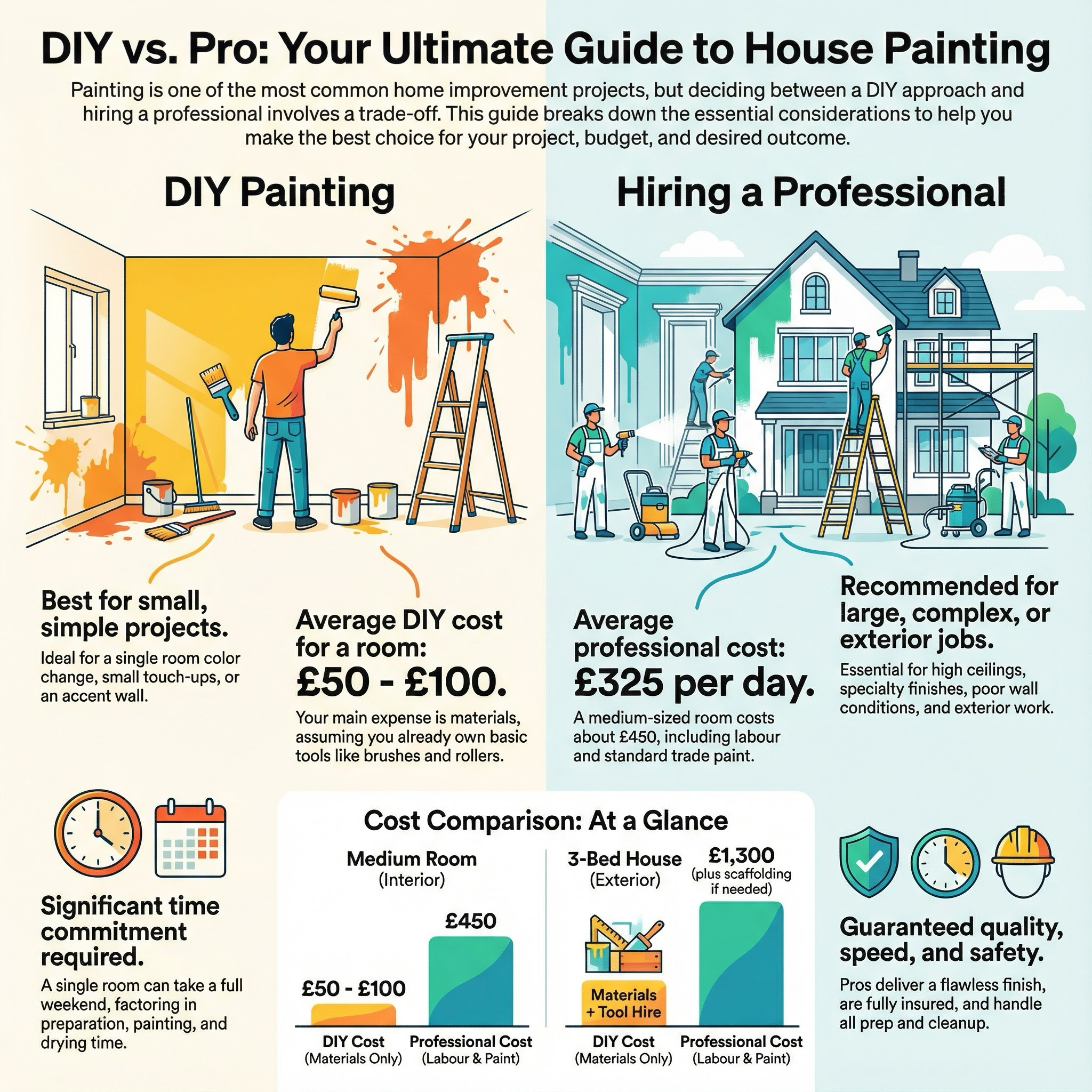
Painter / Decorator explained
Repairing timber using modern resin systems is a cost-effective alternative to full replacement. This guide explains how professional decorators restore damaged wood to a "good as new" finish, saving you thousands on joinery costs.
Prices for timber repair vary based on the severity of the rot and the height of the work (e.g., ground floor vs. second-storey windows). Most specialists charge a premium for resin repairs compared to standard filling because the materials are significantly more durable and expensive.
| Item | Low £ | High £ | Notes |
|---|---|---|---|
| Minor Surface Repair (e.g., small crack/dent) | £180 | £300 | Includes materials and finishing. |
| Sash Window Sill Restoration | £350 | £650 | Per window; assumes significant rot removal. |
| External Door Frame Repair | £250 | £450 | Lower sections typically require deep resin work. |
| Day Rate for Specialist Decorator | £250 | £400 | Excludes specialist resin kits. |
| Specialist Resin Kit (e.g., Repair Care) | £60 | £120 | Professional-grade 2-part systems. |
Note: Prices include VAT at 20%. If your property is a "protected" building, costs may rise due to the specific materials and techniques required by local authorities.
Professional timber resin repairs are designed to move with the wood. Unlike cheap "plastic" fillers, these repairs won't pop out when the temperature changes.
While DIY kits are available at major retailers, they are often polyester-based, which can become brittle and fail within a few seasons. Professional decorators use epoxy-resin systems (like Repair Care or Timbabuild) that remain flexible and chemically bond to the wood fibres.
If the damage is structural—such as a load-bearing beam or a heavily decayed window hinge point—you must hire a professional. Incorrectly applied filler can actually trap moisture, accelerating rot behind the repair.
No. The timber must be dried out first. A professional will use a moisture meter to ensure the wood is below 18% moisture content. If it's too wet, the resin will not bond, and the repair will fail within months.
When performed correctly with professional epoxy systems, a repair can last as long as the surrounding wood—often 10 to 20 years. Most specialists offer a 10-year guarantee on the bond itself.
Rarely. A new high-quality timber sash window can cost £1,500–£2,500 per unit. A comprehensive resin repair typically costs between £300 and £600, representing a significant saving.
Most professional resins are "paint-ready" within 2 to 4 hours. However, you must use a high-quality primer-undercoat designed for non-porous surfaces to ensure the paint adheres to the resin.
Usually, no. Most timber repairs are carried out in situ. This avoids the mess and cost of removing internal architraves and potentially damaging the surrounding plasterwork.
This guide was written with AI assistance and is intended for general information only. Prices are estimates based on UK averages and may vary by region. Always get at least three quotes and consult a qualified professional before starting any work.
Ask follow-ups in plain English. The AI explains options, sequencing and what to ask the painter / decorator — so you walk in informed.
Professional decorating is about far more than simply changing a room's colour. It is a critical maintenance task that protects your home’s internal surfaces, i...
READ GUIDE →GuideA damaged or sagging ceiling is more than just an eyesore; it can be a safety risk and a sign of underlying issues like leaks or structural movement. Whether yo...
READ GUIDE →GuideTimber windows are a hallmark of British architecture, offering a level of character and aesthetic warmth that modern uPVC struggles to replicate. However, the ...
READ GUIDE →GuideProfessional paint spraying has become the gold standard for UK homeowners seeking a flawless, factory-grade finish. Unlike traditional brushing or rolling, spr...
READ GUIDE →GuideRefreshing your home’s exterior is about more than just curb appeal; it is the primary defence against the British weather. A high-quality exterior paint job se...
READ GUIDE →GuideRefreshing your living room is one of the most impactful home improvements you can undertake. As the heart of the British home, this space endures significant f...
READ GUIDE →