Instant
01 · Ask
Ask the AI a follow-up
Got more questions about wall crack filling and painting? Describe the bit you're unsure about — the AI explains options, sequencing and what to ask the painter / decorator.

Cracked walls filled, sanded, primed and painted — finish ready in 1-2 days.
You've read the brief on wall crack filling and painting. Now lean on us to find the right painter / decorator — and stay in control of the job.
Got more questions about wall crack filling and painting? Describe the bit you're unsure about — the AI explains options, sequencing and what to ask the painter / decorator.
Costs, timelines, pitfalls and the right questions to ask before any painter / decorator starts on wall crack filling and painting.
Itemised quotes from up to 3 local painter / decorators on wall crack filling and painting — so you can compare like-for-like, not lump sums.
Ready when you are
Enter your postcode and get free quotes from local pros.
Four moves that separate a smooth job from a nightmare.
This occurs when the repaired area has a different sheen or texture than the rest of the wall. This is avoided by proper priming and repainting the full wall.
Using "rigid" filler in a "live" crack (one that moves with the seasons) will cause it to fail. Flexible fillers or mesh tape are the solution.
Sanding filler creates fine white dust that can settle throughout a home. Ensure your decorator uses a HEPA-filtered vacuum sander.
If filler isn't sealed with a "mist coat" or primer, the paint may peel off in strips later.
Indicative UK ranges and what affects price.
By job type
Quote spread is typically ± 18% — always get 3 quotes.
Painter / Decorator quick-view
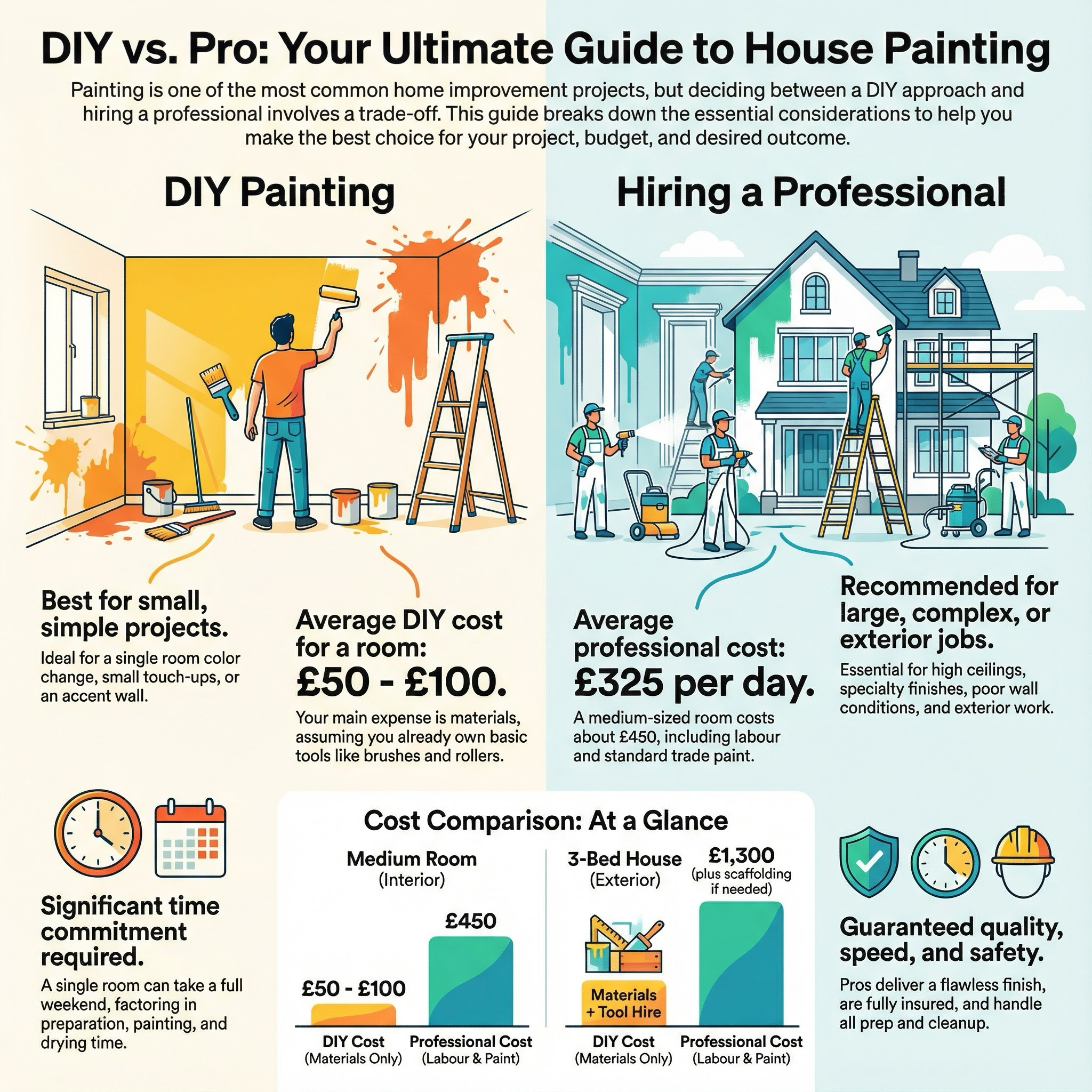
Painter / Decorator explained
A professional painter and decorator doesn't just "hide" a crack with paint; they stabilise the area to ensure the repair lasts. This guide covers the costs, timelines, and technical steps involved in restoring your walls to a smooth, seamless finish.
Prices for crack repairs vary depending on the extent of the damage and whether you require a local patch or a full-room repaint. The following figures represent realistic 2025/26 UK averages including VAT.
| Item | Low £ | High £ | Notes |
|---|---|---|---|
| Minor Crack Repair (Single Room) | £150 | £300 | Includes materials and local painting. |
| Extensive Cracking & Full Room Paint | £450 | £850 | Multiple walls with significant prep work. |
| Daily Labour Rate (Per Decorator) | £250 | £350 | Higher rates in London and SE England. |
| Materials & Sundries | £40 | £120 | Fillers, tapes, and premium trade paint. |
| Specialist Equipment (Scaffolding) | £350 | £600 | Required for high stairwells or external walls. |
The primary cost drivers are the condition of the existing plaster and the quality of the paint chosen. Repainting a whole wall is usually necessary to avoid "flashing," where the repaired patch is visible under certain lighting.
Fine hairline cracks (less than 1mm) are well within the reach of a confident DIYer with a steady hand and a sanding block. However, if the cracks are wider than a pound coin’s thickness or appear around door frames and windows, a professional is recommended.
Note: Professional decorators use trade-grade fillers and "dustless" sanding systems, which provide a significantly smoother finish and keep your home cleaner than standard DIY methods.
If you suspect structural issues—such as cracks that are wider at the top than the bottom or diagonal cracks—you must consult a structural engineer before any decorative work begins.
Questions to ask:
While standard internal painting and decorating do not usually fall under Building Regulations, there are specific standards to keep in mind:
This is usually due to structural movement or thermal expansion. If a crack isn't "bridged" with mesh tape or filled with a flexible compound, the natural movement of the building will simply reopen the stiff filler.
Ideally, you should repaint the entire wall where the crack was located. Spot-painting often leaves a visible "patch" because the new paint will be cleaner and have a slightly different texture than the aged paint around it.
No. Most fillers shrink as they dry and are highly absorbent. You must wait for it to dry completely, sand it smooth, and then apply a primer or mist coat before your final paint layers.
Hairline cracks are usually less than 1mm wide and are caused by plaster drying. Structural cracks are typically wider than 5mm, often diagonal, and may be visible on both the internal and external faces of the wall.
It is about 95-99% effective. While it significantly reduces the mess compared to hand sanding, a small amount of fine dust is inevitable, so decorators will still use dust sheets to protect your furniture.
This guide was written with AI assistance and is intended for general information only. Prices are estimates based on UK averages and may vary by region. Always get at least three quotes and consult a qualified professional before starting any work.
Ask follow-ups in plain English. The AI explains options, sequencing and what to ask the painter / decorator — so you walk in informed.
Professional decorating is about far more than simply changing a room's colour. It is a critical maintenance task that protects your home’s internal surfaces, i...
READ GUIDE →GuideA damaged or sagging ceiling is more than just an eyesore; it can be a safety risk and a sign of underlying issues like leaks or structural movement. Whether yo...
READ GUIDE →GuideTimber windows are a hallmark of British architecture, offering a level of character and aesthetic warmth that modern uPVC struggles to replicate. However, the ...
READ GUIDE →GuideProfessional paint spraying has become the gold standard for UK homeowners seeking a flawless, factory-grade finish. Unlike traditional brushing or rolling, spr...
READ GUIDE →GuideRefreshing your home’s exterior is about more than just curb appeal; it is the primary defence against the British weather. A high-quality exterior paint job se...
READ GUIDE →GuideRefreshing your living room is one of the most impactful home improvements you can undertake. As the heart of the British home, this space endures significant f...
READ GUIDE →