Instant
01 · Ask
Diagnose before you call
Tell the AI what's leaking, dripping or rumbling. It tells you whether you need a plumber, a gas engineer, or a drain specialist — and how urgent it is.

Trace methods — sound, moisture, thermal or pressure-test — to find the source before opening anything up.
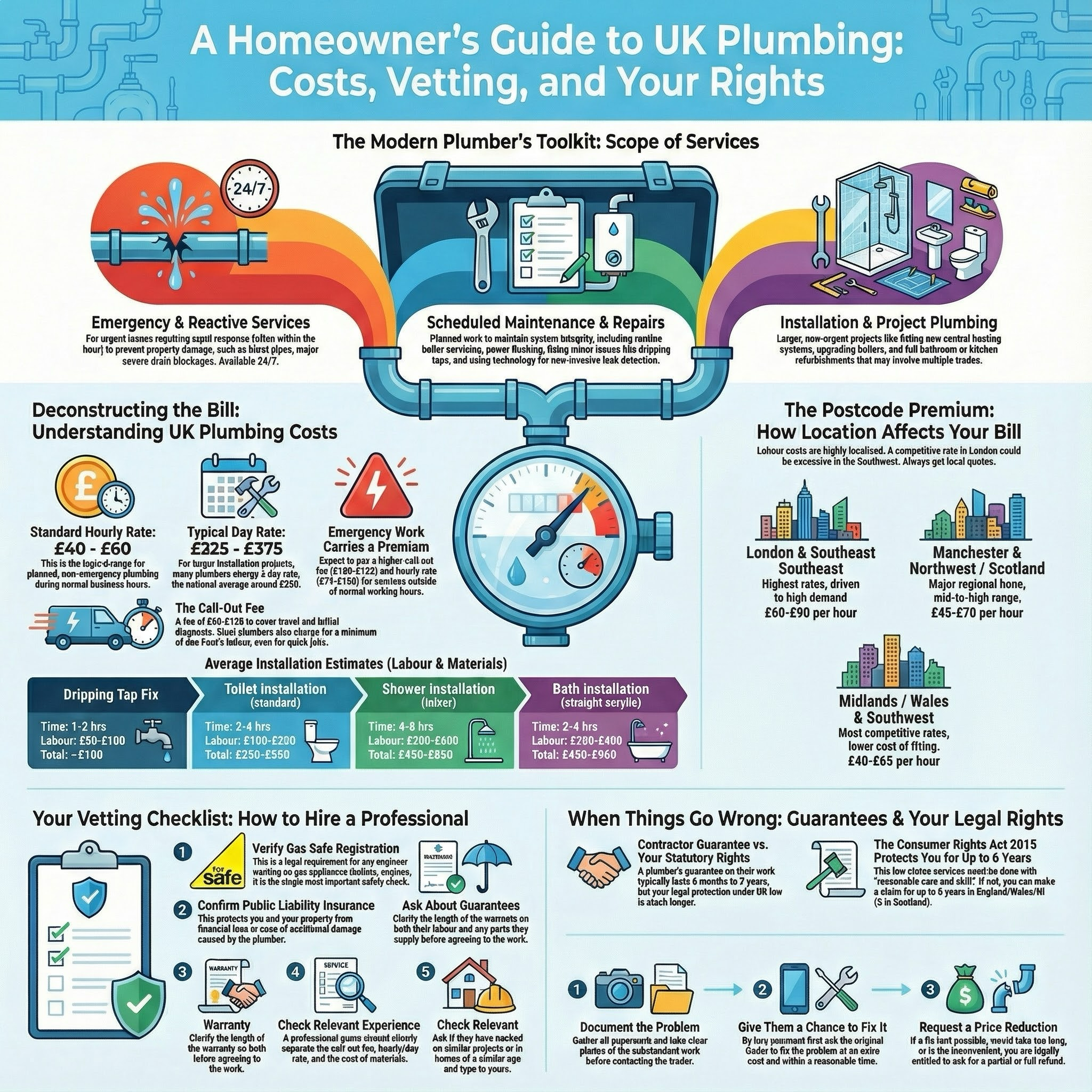
You've read the costs and the questions to ask. Now lean on us to find a Gas Safe-verified plumber — and keep the bill honest.
Tell the AI what's leaking, dripping or rumbling. It tells you whether you need a plumber, a gas engineer, or a drain specialist — and how urgent it is.
Gas Safe vs WaterSafe, boiler warranty conditions, unvented cylinder rules. The plumber brief covers the regs most homeowners learn the hard way.
Up to Three local plumbers come back with itemised quotes — parts, labour and call-out fees — so you can compare like-for-like.
Ready when you are
Enter your postcode and get free quotes from local pros.
Four moves that separate a smooth job from a nightmare.
If gas work is part of the job, the engineer must show their Gas Safe registration card. Verify the number at gassaferegister.co.uk before they touch anything.
Plumbing prices vary wildly by job and area. Three quotes shows you the market — anything more than 20% out from the others is a flag.
For boiler parts, valves and cylinders, ask for manufacturer receipts. Genuine parts come with warranty; refurbished kit often doesn't.
Pay in stages, not upfront. Hold the last 10–20% until you've run hot taps, flushed the system and seen the certificate.
Indicative UK ranges and what affects price.
By job type
Quote spread is typically ± 18% — always get 3 quotes.
Plumber quick-view
Plumber explained
Plumbing leak diagnosis in the UK typically costs £90–£300 for the inspection visit, plus repair costs. Most leaks are routine and fixable in a single visit. Hidden leaks (in walls, under floors, in cavities) require specialist diagnostic equipment — thermal cameras, moisture meters, acoustic detectors — and may run £200–£600 for the diagnostic phase alone.
The typical leak diagnostic process: visual inspection, pressure testing, isolation testing (turning off zones), and specialist tools where the leak isn't immediately visible. Most leaks are surprisingly simple once located — finding them is the skill.
| Service | Typical price |
|---|---|
| Standard leak callout + diagnosis | £90–£200 |
| Pressure test (system isolation) | £90–£250 |
| Thermal imaging survey (hidden leak) | £200–£500 |
| Acoustic detection (under floor / wall) | £250–£600 |
| Tracer gas detection (rare leaks) | £300–£800 |
| Visible leak fix (after diagnosis) | £80–£300 |
| Hidden leak repair (under floor / in wall) | £300–£1,200+ |
| Insurance-driven detailed survey | £250–£700 |
Standard diagnosis £90-£200. Hidden leak diagnosis (using thermal imaging, acoustic detection, tracer gas): £200-£600. Plus repair cost. Worth checking insurance "trace and access" cover first.
Three classic signs: water meter moving with all taps off (turn meter off too — if it's still moving you have a leak between meter and house, possibly stop tap), unexplained damp patches, or water bill creeping up with no usage change.
Most home insurance policies include "trace and access" cover (typically up to £5,000-£10,000) for finding the leak — even if the actual escape of water is excluded. Worth checking before paying.
Visual / standard diagnosis: 1-2 hours. Pressure testing: 2-3 hours. Thermal imaging or acoustic survey: 2-4 hours. Complex hidden leak with tracer gas: half-day to full day.
Worn flexible appliance hoses (washing machine, dishwasher), failed seals on tap and toilet connections, and pinhole corrosion in copper heating pipes (typically near radiator valves). All routine fixes once located.
Visible leaks: yes — track the water from the wettest spot upward. Hidden leaks: very difficult without diagnostic kit. The £100-£300 for a professional often saves much more in misdirected DIY repair work.
Want a local pro to handle this? A plumber with leak detection experience and the right tools resolves most leak diagnoses in a single visit. For complex cases requiring specialist equipment, leak detection specialists work alongside plumbers and insurance loss adjusters.
This guide was written with AI assistance and is intended for general information only. Prices are estimates based on UK averages and may vary by region. Always get at least three quotes and consult a qualified professional before starting any work.
Ask follow-ups in plain English. The AI explains options, sequencing and what to ask the plumber — so you walk in informed.
Upgrading a shower is one of the most impactful improvements you can make to a UK home. Whether you are replacing a tired electric unit or installing a high-end...
READ GUIDE →GuideA blocked toilet is more than just a minor inconvenience; it is a hygiene risk that can quickly lead to water damage if not handled correctly. For UK homeowners...
READ GUIDE →GuideUnderfloor heating (UFH) has moved from a luxury addition to a standard feature in modern British homes. It provides a consistent, radiant heat that eliminates ...
READ GUIDE →GuideSink Replacement Cost Guide Scope of Works Isolate water supplies and drain down local pipework. Remove the existing sink , taps, trap, silicone and fixings; ca...
READ GUIDE →GuideShower Repair Costs Guide Scope of Works Isolate water & electrics and protect adjacent finishes. Diagnose the fault (e.g. leaking mixer valve, cracked tray...
READ GUIDE →GuideA wet room is the ultimate upgrade for a modern UK home, offering a sleek, open-plan aesthetic and unparalleled accessibility. Unlike a traditional bathroom wit...
READ GUIDE →