Instant
01 · Ask
Ask the AI a follow-up
Got more questions about plumbing Maintenance? Describe the bit you're unsure about — the AI explains options, sequencing and what to ask the plumber.

Annual plumbing maintenance — checks taps, valves, traps, pressure and leaks. Catches issues before they cost serious money.
You've read the brief on plumbing Maintenance. Now lean on us to find the right plumber — and stay in control of the job.
Got more questions about plumbing Maintenance? Describe the bit you're unsure about — the AI explains options, sequencing and what to ask the plumber.
Costs, timelines, pitfalls and the right questions to ask before any plumber starts on plumbing Maintenance.
Itemised quotes from up to 3 local plumbers on plumbing Maintenance — so you can compare like-for-like, not lump sums.
Ready when you are
Enter your postcode and get free quotes from local pros.
Four moves that separate a smooth job from a nightmare.
If the main valve isn't turned for years, it can seize, leaving you unable to stop the water during a burst pipe.
Slow drips behind kitchen units or under floorboards can rot joists long before they become visible on the ceiling.
In hard water areas, scale buildup can destroy heating elements and restrict flow in modern thermostatic valves.
The braided metal hoses under sinks have a limited lifespan and are a common cause of major domestic floods.
Indicative UK ranges and what affects price.
By job type
Quote spread is typically ± 18% — always get 3 quotes.
Plumber quick-view
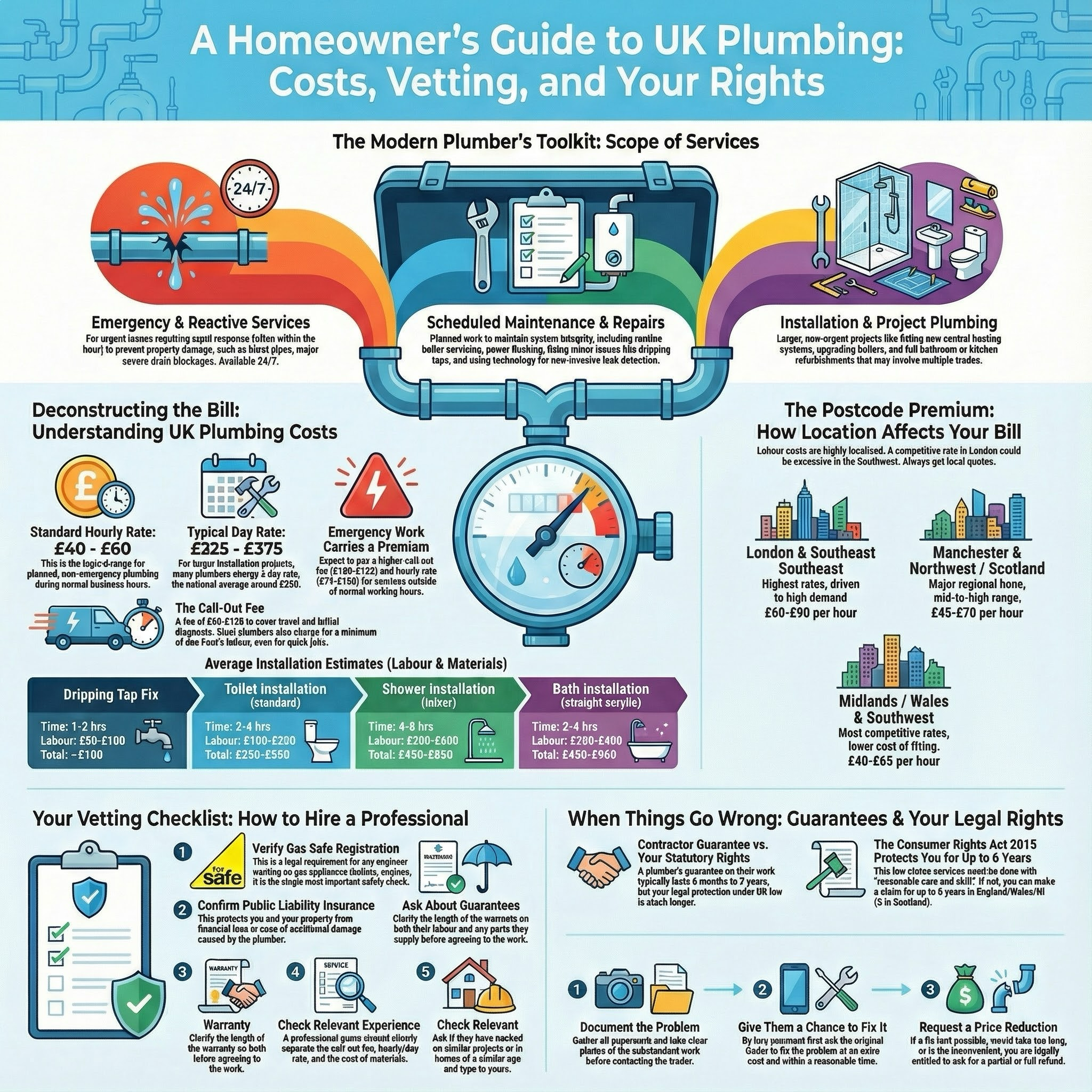
Plumber explained
A proactive approach not only protects your floorboards and ceilings from water damage but also helps maintain water pressure and reduces utility bills. This guide outlines what to expect from a professional maintenance visit and how to keep your home’s infrastructure in top condition.
| Item | Low £ | High £ | Notes |
|---|---|---|---|
| Standard Maintenance Visit | £120 | £250 | Basic inspection and minor adjustments. |
| Hourly Labour Rate | £60 | £110 | Varies by region (higher in London/SE). |
| Emergency Call-out (1st Hour) | £120 | £220 | Flat fee regardless of work done. |
| Consumables & Small Parts | £20 | £60 | Washers, seals, and specialist lubricants. |
Prices are influenced by your location and the complexity of your plumbing system. A standard maintenance check-up usually excludes the cost of major replacement parts like new taps, pumps, or cylinders.
Homeowners can handle basic tasks such as bleeding radiators, clearing hair from sink traps, or descaling showerheads. These small actions can significantly extend the life of your fixtures and prevent minor issues from escalating.
Warning: Any work involving the mains water supply, gas appliances, or unvented hot water cylinders must be performed by a qualified professional to comply with UK Building Regulations and insurance requirements.
A professional inspection is recommended every 12 to 24 months. If you live in a hard water area or an older property, an annual check is safer to prevent limescale and corrosion issues.
This could be caused by a partially closed stopcock, a blocked filter, a failing pressure-reducing valve, or a leak in the external supply pipe. A maintenance visit can diagnose the specific cause.
Plumbers focus on water systems (taps, toilets, pipes), while heating engineers specialise in gas appliances and central heating. Many UK tradespeople are qualified in both, but always check their Gas Safe ID card.
Yes, this is known as "verdigris" and usually indicates a slow, "weeping" leak or a reaction to flux left on the pipe. It suggests the joint is weakening and should be professionally inspected.
Yes, this is often "water hammer." It is usually caused by poorly secured pipework or high pressure, and a plumber can install shock arrestors or secure the pipes to stop the noise.
This guide was written with AI assistance and is intended for general information only. Prices are estimates based on UK averages and may vary by region. Always get at least three quotes and consult a qualified professional before starting any work.
Ask follow-ups in plain English. The AI explains options, sequencing and what to ask the plumber — so you walk in informed.
Upgrading a shower is one of the most impactful improvements you can make to a UK home. Whether you are replacing a tired electric unit or installing a high-end...
READ GUIDE →GuideA blocked toilet is more than just a minor inconvenience; it is a hygiene risk that can quickly lead to water damage if not handled correctly. For UK homeowners...
READ GUIDE →GuideUnderfloor heating (UFH) has moved from a luxury addition to a standard feature in modern British homes. It provides a consistent, radiant heat that eliminates ...
READ GUIDE →GuideSink Replacement Cost Guide Scope of Works Isolate water supplies and drain down local pipework. Remove the existing sink , taps, trap, silicone and fixings; ca...
READ GUIDE →GuideShower Repair Costs Guide Scope of Works Isolate water & electrics and protect adjacent finishes. Diagnose the fault (e.g. leaking mixer valve, cracked tray...
READ GUIDE →GuideA wet room is the ultimate upgrade for a modern UK home, offering a sleek, open-plan aesthetic and unparalleled accessibility. Unlike a traditional bathroom wit...
READ GUIDE →