Instant
01 · Ask
Ask the AI a follow-up
Got more questions about indian Sandstone & Sandstone Repair? Describe the bit you're unsure about — the AI explains options, sequencing and what to ask the stonemason.

Patio, paving or feature stone repaired — cleaned, repointed or replaced where damaged.
You've read the brief on indian Sandstone & Sandstone Repair. Now lean on us to find the right stonemason — and stay in control of the job.
Got more questions about indian Sandstone & Sandstone Repair? Describe the bit you're unsure about — the AI explains options, sequencing and what to ask the stonemason.
Costs, timelines, pitfalls and the right questions to ask before any stonemason starts on indian Sandstone & Sandstone Repair.
Itemised quotes from up to 3 local stonemasons on indian Sandstone & Sandstone Repair — so you can compare like-for-like, not lump sums.
Ready when you are
Enter your postcode and get free quotes from local pros.
Four moves that separate a smooth job from a nightmare.
Cement harder than sandstone causes accelerated decay. Use lime mortar or stone-matched mortar.
Sandstones vary by quarry. Match source — best from same quarry as original.
Silicone water-repellents trap moisture and accelerate frost damage. Use breathable consolidants only.
Sandblasting removes the protective patina. Severely damages soft sandstone.
Indicative UK ranges and what affects price.
By job type
Quote spread is typically ± 18% — always get 3 quotes.
Stonemason quick-view
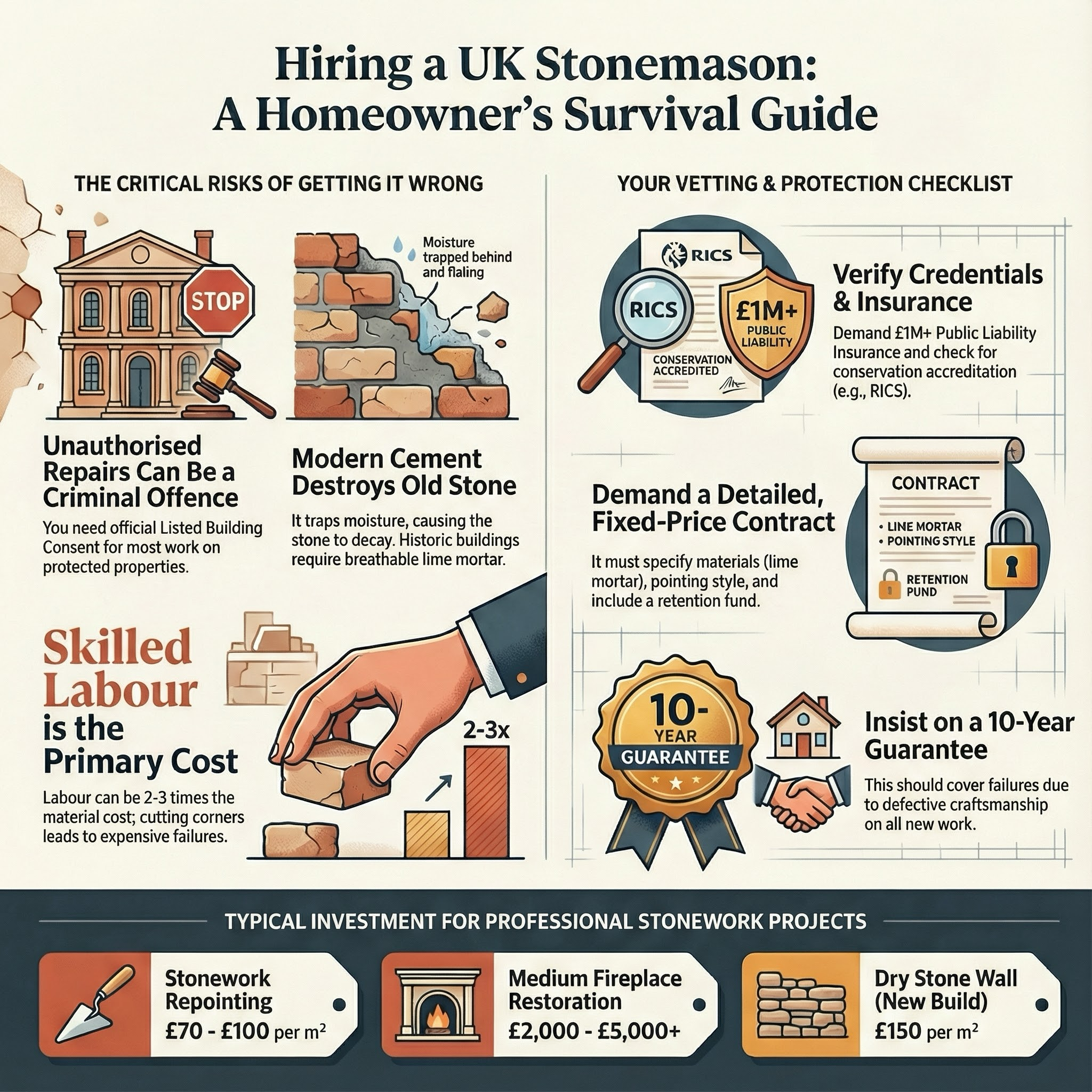
Stonemason explained
Sandstone is the most common UK heritage building stone but soft and vulnerable to frost weathering. Damaged stones need repair, indenting (insertion of new stone), or full replacement. Expect to pay £200–£3,500 for UK sandstone repair depending on scope.
Stonemason inspects damage — surface spalling, deep weathering, fractures. Surface repair: hand-tooled mortar matched to stone colour and texture. Indenting: damaged area cut out, new stone insert dressed to match. Full replacement: removing and replacing whole stone. Consolidation: applying breathable consolidant for cracking stone (Wacker BS OH 100).
| Item | Low (£) | High (£) | Notes |
|---|---|---|---|
| Surface repair (mortar pointing) | 40 | 140 | Per metre joint |
| Indent stone repair (per indent) | 250 | 700 | Insert replacement piece |
| Full stone replacement (per stone) | 400 | 2,500 | Match colour and tooling |
| Stone consolidation per m² | 40 | 120 | Wacker silicate consolidant |
| Soft sandstone repair (large area) | 1,500 | 4,500 | Multi-stone |
| Listed building stone repair | 500 | 3,500 | Per piece, period work |
| Architectural detail repair | 500 | 5,000 | Carved corbels, mullions |
Single indent: 1–2 days including curing. Multi-stone repair: 1–2 weeks. Architectural detail repair: 2–4 weeks.
Professional stonemason only. Stone matching, tooling, and indent fitting all require apprenticed skill.
SPAB-accredited stonemason. Master Stonemason qualification preferred. Listed building experience essential for heritage work.
Listed buildings need consent. Conservation areas may restrict materials. SPAB guidelines for heritage repair.
A piece of new stone cut into the existing damaged stone. Replaces the weathered face while keeping the rest of the original. Heritage-friendly repair.
Sandstones are sedimentary — sand grains held by carbonate or silica cement. Frost cycles dissolve carbonate cements, especially on exposed faces.
Heritage best practice: no. Painting traps moisture and causes worse damage. Breathable lime wash if appearance needs softening.
Indent: 50+ years (essentially as long as the original). Surface mortar repair: 30–50 years. Full replacement: 100+ years.
For major heritage work, yes — confirm replacement stone is geologically similar. Geological consultants advise on quarry sources.
Sandstone (Yorkshire, Northumberland): pale, weathers softly. Limestone (Cotswolds, Bath, Portland): cream/honey, weathers slowly. Both heritage UK stones with different properties.
This guide was written with AI assistance and is intended for general information only. Prices are estimates based on UK averages and may vary by region. Always get at least three quotes and consult a qualified professional before starting any work.
Ask follow-ups in plain English. The AI explains options, sequencing and what to ask the stonemason — so you walk in informed.
Stone is a defining feature of British architecture, from the honey-coloured limestone of the Cotswolds to the robust granite of Aberdeen. While incredibly dura...
READ GUIDE →GuideNatural stone flooring is a premium feature in many UK homes, from Victorian hallways with original encaustic tiles to modern open-plan kitchens finished in lim...
READ GUIDE →GuideStone is one of the most durable building materials used across the UK, from Cotswold cottages to Victorian terraces. However, even the toughest granite or sand...
READ GUIDE →GuideHeritage stone restoration is more than just a repair job; it is the essential preservation of a building’s character and structural integrity. In the UK, our a...
READ GUIDE →GuideCustom stone carving is one of the oldest and most prestigious crafts in the UK building industry. Whether you are looking to add a bespoke date stone to a new ...
READ GUIDE →GuideChoosing a memorial is a deeply personal task, but ensuring its safe and lasting installation is a technical job for a skilled stonemason. In the UK, strict cem...
READ GUIDE →