Instant
01 · Ask
Ask the AI a follow-up
Got more questions about repair Bathroom Tiles Cost & Work? Describe the bit you're unsure about — the AI explains options, sequencing and what to ask the surface repair.

Cracked, loose or damaged bathroom tiles — replaced, re-grouted and re-sealed.
You've read the brief on repair Bathroom Tiles Cost & Work. Now lean on us to find the right surface repair — and stay in control of the job.
Got more questions about repair Bathroom Tiles Cost & Work? Describe the bit you're unsure about — the AI explains options, sequencing and what to ask the surface repair.
Costs, timelines, pitfalls and the right questions to ask before any surface repair starts on repair Bathroom Tiles Cost & Work.
Itemised quotes from up to 3 local surface repairs on repair Bathroom Tiles Cost & Work — so you can compare like-for-like, not lump sums.
Ready when you are
Enter your postcode and get free quotes from local pros.
Four moves that separate a smooth job from a nightmare.
Even if you have the same tile, different "batch numbers" can have slight shade variations.
If the plaster behind the tile has turned to "mush" due to a leak, the new tile will not stick.
Cutting out a tile often nicks the waterproof membrane; this must be patched before the new tile is laid.
If the repair area is subject to structural movement, standard grout will crack again within weeks; flexible grout is required.
Indicative UK ranges and what affects price.
By job type
Quote spread is typically ± 18% — always get 3 quotes.
Surface Repair quick-view
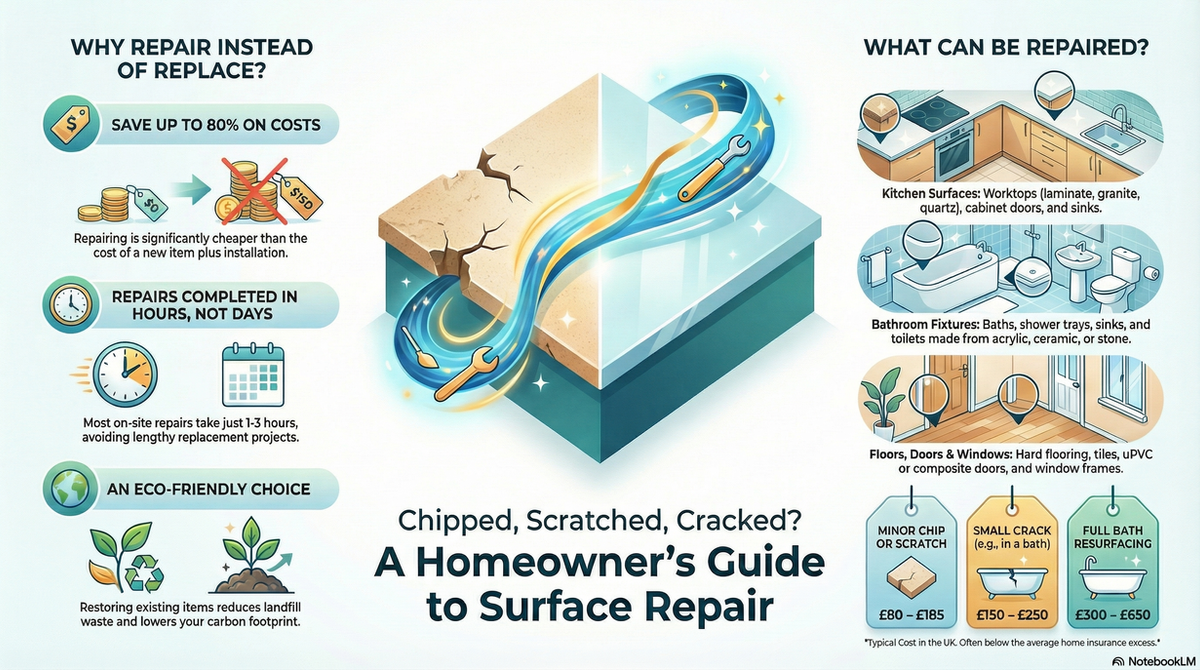
Surface Repair explained
For UK homeowners, surface repair specialists or professional tilers can often restore a bathroom to its former glory without the expense of a full renovation. This guide breaks down the costs, timelines, and technical requirements for repairing bathroom tiles in 2025.
Prices for tile repairs vary based on your location in the UK and the type of tile (natural stone typically costs more to work with than ceramic). Most professionals charge a minimum call-out fee to cover travel and setup for small repair jobs.
| Item / Service | Low £ | High £ | Notes |
|---|---|---|---|
| Minimum Call-out Fee | £80 | £150 | Covers the first hour of labour and travel. |
| Labour (Hourly Rate) | £50 | £85 | Higher rates apply in London and the South East. |
| Single Tile Replacement | £120 | £200 | Assumes homeowner provides the matching tile. |
| Regrouting (Small Area) | £150 | £300 | Includes removal of old, mouldy grout. |
| Materials (Adhesive/Grout) | £20 | £50 | Standard waterproof materials inc. VAT. |
Note: If the damage is caused by a leaking pipe behind the wall, costs will increase significantly as a plumber will be required before the tiling can be finished.
While replacing a single floor tile is a manageable DIY task for a confident hobbyist, wall tiles in "wet zones" (showers and baths) are best left to professionals. A poorly sealed tile can allow water to rot the floor joists or blow the plaster off the wall, leading to repairs costing thousands.
Professional surface repairers have the tools to remove grout without chipping neighbouring tiles—a common mistake made during DIY attempts.
When looking for a specialist, look for those with experience in "Surface Repair" or "Wall and Floor Tiling." Avoid general handymen for high-end stone or intricate mosaics.
Yes, specialist surface repairers can use resin fillers and colour-matching pigments to "hide" a crack. This is often better than replacement if you don't have a spare tile, though it is an aesthetic fix rather than a structural one.
A pro may be able to "borrow" a tile from an inconspicuous place, such as from behind the toilet or under the bath panel, to use for the visible repair. Alternatively, they can try to source a match from a tile specialist, though exact matches for old tiles are rare.
Generally, you should wait 24 hours. Even if the grout feels dry to the touch, it needs time to chemically cure to become fully waterproof.
This is usually mould or bacteria buildup caused by standing water. If cleaning doesn't work, the grout may need to be raked out and replaced with an anti-fungal epoxy grout.
If the crack is in a shower enclosure, it should be treated as urgent. Water will seep through the crack every time you shower, potentially causing damp in the room below or adjacent walls.
This guide was written with AI assistance and is intended for general information only. Prices are estimates based on UK averages and may vary by region. Always get at least three quotes and consult a qualified professional before starting any work.
Ask follow-ups in plain English. The AI explains options, sequencing and what to ask the surface repair — so you walk in informed.
Kitchen Countertop Replacement Guide Scope of Works Pre‑visit survey & templating – measure runs, confirm joins, splashback height and hob/sink cut‑outs. Di...
READ GUIDE →GuideLaminate flooring is a popular choice for UK homeowners due to its durability and aesthetic appeal. However, despite its tough wear layer, it is not indestructi...
READ GUIDE →GuideWood hole filling is an essential maintenance task for UK homeowners looking to preserve the aesthetic and structural integrity of their timber. From repairing ...
READ GUIDE →GuideCeramic Surface Repair: A Guide for UK Homeowners Ceramic surfaces—from bathroom tiles and kitchen splashbacks to porcelain sinks and floor tiles—are incredibly...
READ GUIDE →GuideA cracked or chipped shower tray is more than just a cosmetic eyesore; it is a significant risk to your home’s structural integrity. Even a hairline fracture ca...
READ GUIDE →GuideReplacing a glass panel is about more than just fixing a crack. Whether you are dealing with a shattered pane, a "blown" double-glazed unit filled with condensa...
READ GUIDE →