Instant
01 · Ask
Ask the AI a follow-up
Got more questions about ceramic job repair? Describe the bit you're unsure about — the AI explains options, sequencing and what to ask the surface repair.

Cracked or chipped ceramic basin, bath or splashback — fixed on-site with colour-matched filler.
You've read the brief on ceramic job repair. Now lean on us to find the right surface repair — and stay in control of the job.
Got more questions about ceramic job repair? Describe the bit you're unsure about — the AI explains options, sequencing and what to ask the surface repair.
Costs, timelines, pitfalls and the right questions to ask before any surface repair starts on ceramic job repair.
Itemised quotes from up to 3 local surface repairs on ceramic job repair — so you can compare like-for-like, not lump sums.
Ready when you are
Enter your postcode and get free quotes from local pros.
Four moves that separate a smooth job from a nightmare.
Repairs that look great under artificial light but stand out in natural daylight. Always check the match in different lighting.
If a crack is repaired while the substrate is still damp, the resin will eventually fail or mould will grow behind the tile.
Often caused by using the wrong grout for the substrate (e.g., non-flexible grout on a wooden subfloor).
If the resin isn't feathered and polished correctly, you will see a "halo" or ring around the repair site.
Indicative UK ranges and what affects price.
By job type
Quote spread is typically ± 18% — always get 3 quotes.
Surface Repair quick-view
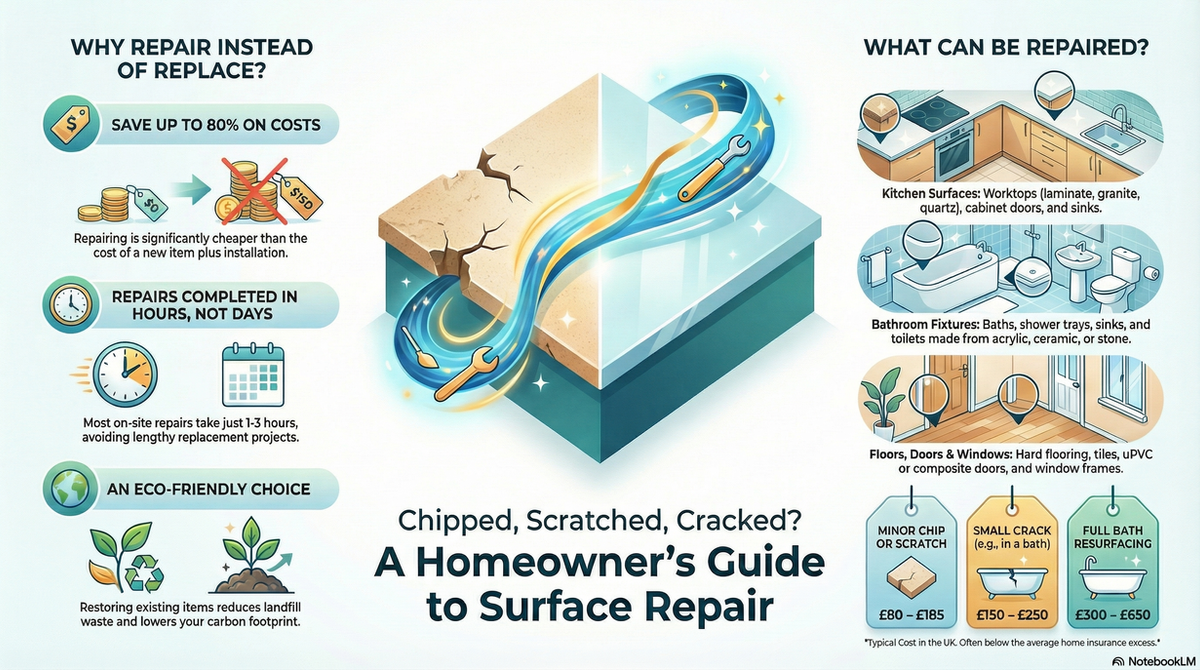
Surface Repair explained
Ceramic surfaces—from bathroom tiles and kitchen splashbacks to porcelain sinks and floor tiles—are incredibly durable but not invincible. Whether it is a dropped heavy pan in the kitchen or a hairline crack in a washbasin, damage to ceramics can look unsightly and, if left untreated, lead to water ingress and structural damp issues.
Professional surface repair is a cost-effective alternative to full replacement, particularly for discontinued tile ranges or high-end sanitaryware. Modern resins and colour-matching techniques allow specialists to make chips and cracks virtually invisible, saving you the disruption of a full renovation.
Prices for ceramic repairs in the UK vary based on the extent of the damage and your location, with London and the South East typically seeing a 15-20% premium. Most specialists operate on a minimum call-out fee that covers the first hour of work.
| Item | Low £ | High £ | Notes |
|---|---|---|---|
| Minimum Call-out Fee | £80 | £130 | Covers first 60 minutes of labour. |
| Small Chip Repair (Single) | £120 | £180 | Using specialist UV-cured resins. |
| Multiple Tile Replacement | £200 | £450 | Assumes you have the replacement tiles. |
| Sanitaryware Repair (Sink/Bath) | £150 | £300 | Structural crack or large impact chip. |
| Materials & Consumables | £20 | £60 | Resins, pigments, and specialist adhesives. |
The total cost is largely driven by the time required for colour matching. If you have a unique or discontinued tile pattern, the technician may spend more time "painting" the repair to blend in, which will increase the labour charge.
Small chips in inconspicuous areas can be tackled with DIY ceramic repair kits found in most hardware stores. However, these kits rarely offer a perfect colour match and the finish can often look "plastic."
Professional repair is essential for "invisible" results on high-gloss surfaces or structural repairs to basins and toilets.
If the repair involves moving radiators or disconnecting taps to reach tiles, you may need to ensure the person is competent in basic plumbing. However, for surface-only repairs, no specific Gas Safe or Part P (electrical) registrations are required unless fixtures are being permanently moved or replaced.
Not all tilers are surface repair specialists. Look for "Fine Surface Repair" or "Hard Surface Repair" technicians who specialise in cosmetic restoration.
Yes, most hairline cracks and chips in ceramic or Belfast sinks can be repaired using waterproof epoxy resins. However, if the crack is leaking and structural, replacement is often safer in the long term.
A specialist can often perform a cosmetic repair using resin without removing the tile. If the tile is shattered, they may have to source a "closest match," though this is rarely perfect unless the tile is a standard white or black.
A professional repair using UV-cured resins should last for many years, provided it is not cleaned with harsh abrasives or subjected to further heavy impacts.
To the naked eye, a professional repair is usually 90-95% invisible. You might spot it if you know exactly where to look and use a torch, but for everyday use, it should blend in completely.
If the crack is caused by a dropped object, repair is worth it. If the crack has appeared on its own, it may indicate "heave" or movement in the subfloor, meaning a repair will likely crack again until the floor is stabilised.
This guide was written with AI assistance and is intended for general information only. Prices are estimates based on UK averages and may vary by region. Always get at least three quotes and consult a qualified professional before starting any work.
Ask follow-ups in plain English. The AI explains options, sequencing and what to ask the surface repair — so you walk in informed.
Damaged bathroom tiles are more than just an eyesore; they can lead to significant structural issues if water penetrates the substrate. Whether it is a hairline...
READ GUIDE →GuideKitchen Countertop Replacement Guide Scope of Works Pre‑visit survey & templating – measure runs, confirm joins, splashback height and hob/sink cut‑outs. Di...
READ GUIDE →GuideLaminate flooring is a popular choice for UK homeowners due to its durability and aesthetic appeal. However, despite its tough wear layer, it is not indestructi...
READ GUIDE →GuideWood hole filling is an essential maintenance task for UK homeowners looking to preserve the aesthetic and structural integrity of their timber. From repairing ...
READ GUIDE →GuideA cracked or chipped shower tray is more than just a cosmetic eyesore; it is a significant risk to your home’s structural integrity. Even a hairline fracture ca...
READ GUIDE →GuideReplacing a glass panel is about more than just fixing a crack. Whether you are dealing with a shattered pane, a "blown" double-glazed unit filled with condensa...
READ GUIDE →