Instant
01 · Ask
Ask the AI a follow-up
Got more questions about wood hole filling? Describe the bit you're unsure about — the AI explains options, sequencing and what to ask the surface repair.

Holes, dents or gouges in timber surfaces — filled with matched colour, sanded and refinished.
You've read the brief on wood hole filling. Now lean on us to find the right surface repair — and stay in control of the job.
Got more questions about wood hole filling? Describe the bit you're unsure about — the AI explains options, sequencing and what to ask the surface repair.
Costs, timelines, pitfalls and the right questions to ask before any surface repair starts on wood hole filling.
Itemised quotes from up to 3 local surface repairs on wood hole filling — so you can compare like-for-like, not lump sums.
Ready when you are
Enter your postcode and get free quotes from local pros.
Four moves that separate a smooth job from a nightmare.
Cheap, water-based fillers shrink as they dry, leaving a visible "ring" around the repair; professionals use non-shrink resins.
Filling over damp wood or active wet rot will cause the timber to decay faster behind the repair.
Wood filler often absorbs stain differently than natural timber; a pro will "over-stain" or use artist pigments to blend the patch.
Using a rigid filler on an exterior joint that needs to move with the seasons will result in the repair cracking within one year.
Indicative UK ranges and what affects price.
By job type
Quote spread is typically ± 18% — always get 3 quotes.
Surface Repair quick-view
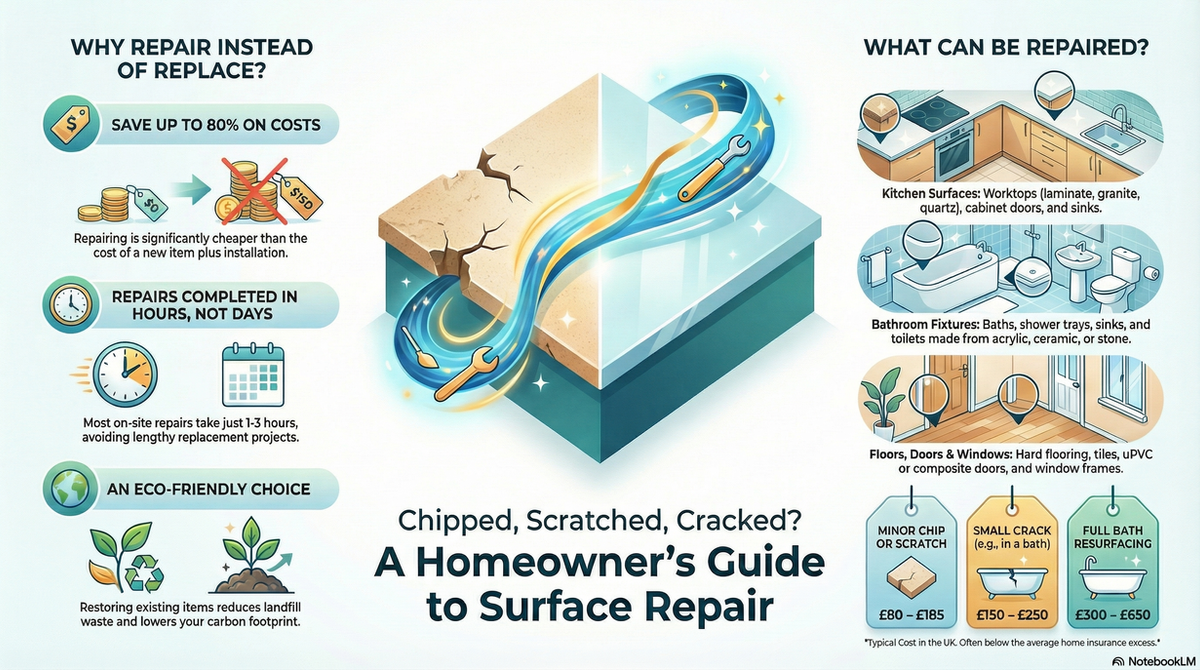
Surface Repair explained
In the UK's damp climate, leaving holes in exterior woodwork can quickly lead to wet rot, which is far more expensive to rectify than a simple fill-and-finish job. High-quality repairs use specialist resins that expand and contract with the wood, ensuring a seamless finish that lasts for years.
The following table outlines the expected costs for wood hole filling in the UK for 2025/26. Prices include VAT and are based on professional carpenter or surface repair specialist rates.
| Item | Low £ | High £ | Notes |
|---|---|---|---|
| Call-out / Minimum Charge | £90 | £150 | Covers travel and the first hour of labour. |
| Labour (per hour) | £50 | £85 | Higher rates apply in London and the South East. |
| Specialist Materials | £15 | £65 | Two-part resins, hardeners, and matching stains. |
| Small Repair (e.g., door handle hole) | £140 | £220 | Includes prep, fill, sand, and basic finish. |
| Large/Complex Repair (e.g., rotted sill) | £350 | £600 | May require multiple visits for curing and painting. |
Costs are primarily driven by the type of filler required and the complexity of the finish. Matching a specific wood grain on a natural oak floor is significantly more time-consuming than filling a hole in a painted white skirting board.
Small nail holes or minor scuffs on painted indoor surfaces are well within the reach of a confident DIYer using a standard "one-strike" filler. However, for structural timber, exterior joinery, or high-end hardwood flooring, a professional is recommended.
Professional surface repairers use two-part chemical resins that are much stronger than DIY wood doughs. These resins bond chemically to the wood, ensuring the patch won't pop out when the temperature changes.
If the wood is structural (such as a floor joist or roof rafter), you should consult a carpenter to ensure the integrity of the timber isn't compromised. For exterior work, professionals ensure the repair is "weather-tight," preventing future rot.
Yes, but it requires a specialist surface repairer. They use various shades of resin and "grain pens" to manually draw the wood patterns across the filler, making it virtually impossible to spot from a standing height.
Standard two-part chemical fillers are usually sandable within 30 to 60 minutes. Deep-fill epoxy resins used for structural repairs may take 12 to 24 hours to cure fully before they can be finished.
Never use caulk for holes in the middle of wood; it cannot be sanded and will remain rubbery. Caulk is only for "perimeters" where wood meets a wall. Wood filler is designed for the timber surface itself.
Only if the rot is minor and has been treated. All soft, decayed wood must be cut out back to "sound" timber, and the remaining area treated with a wood preserver and hardener before filling.
Only if the wrong product is used or the preparation was poor. High-quality exterior resins are designed to bond with the fibres and move with the timber, preventing them from popping out during frost or heatwaves.
This guide was written with AI assistance and is intended for general information only. Prices are estimates based on UK averages and may vary by region. Always get at least three quotes and consult a qualified professional before starting any work.
Ask follow-ups in plain English. The AI explains options, sequencing and what to ask the surface repair — so you walk in informed.
Damaged bathroom tiles are more than just an eyesore; they can lead to significant structural issues if water penetrates the substrate. Whether it is a hairline...
READ GUIDE →GuideKitchen Countertop Replacement Guide Scope of Works Pre‑visit survey & templating – measure runs, confirm joins, splashback height and hob/sink cut‑outs. Di...
READ GUIDE →GuideLaminate flooring is a popular choice for UK homeowners due to its durability and aesthetic appeal. However, despite its tough wear layer, it is not indestructi...
READ GUIDE →GuideCeramic Surface Repair: A Guide for UK Homeowners Ceramic surfaces—from bathroom tiles and kitchen splashbacks to porcelain sinks and floor tiles—are incredibly...
READ GUIDE →GuideA cracked or chipped shower tray is more than just a cosmetic eyesore; it is a significant risk to your home’s structural integrity. Even a hairline fracture ca...
READ GUIDE →GuideReplacing a glass panel is about more than just fixing a crack. Whether you are dealing with a shattered pane, a "blown" double-glazed unit filled with condensa...
READ GUIDE →