Instant
01 · Ask
Ask the AI a follow-up
Got more questions about log Extraction Process? Describe the bit you're unsure about — the AI explains options, sequencing and what to ask the tree surgeon.

Felled-tree timber removed, cut into logs and stacked — for firewood, milling or disposal.
You've read the brief on log Extraction Process. Now lean on us to find the right tree surgeon — and stay in control of the job.
Got more questions about log Extraction Process? Describe the bit you're unsure about — the AI explains options, sequencing and what to ask the tree surgeon.
Costs, timelines, pitfalls and the right questions to ask before any tree surgeon starts on log Extraction Process.
Itemised quotes from up to 3 local tree surgeons on log Extraction Process — so you can compare like-for-like, not lump sums.
Ready when you are
Enter your postcode and get free quotes from local pros.
Four moves that separate a smooth job from a nightmare.
Heavy logs or machinery can leave deep ruts in soft soil; always ask for ground protection boards in winter.
Some quotes only cover "felling"—ensure "extraction and disposal" are explicitly listed.
Narrow gates or parked cars can prevent extraction; always measure your narrowest point for the contractor.
Log extraction usually stops at the ground level; stump grinding is typically a separate service.
Indicative UK ranges and what affects price.
By job type
Quote spread is typically ± 18% — always get 3 quotes.
Tree Surgeon quick-view
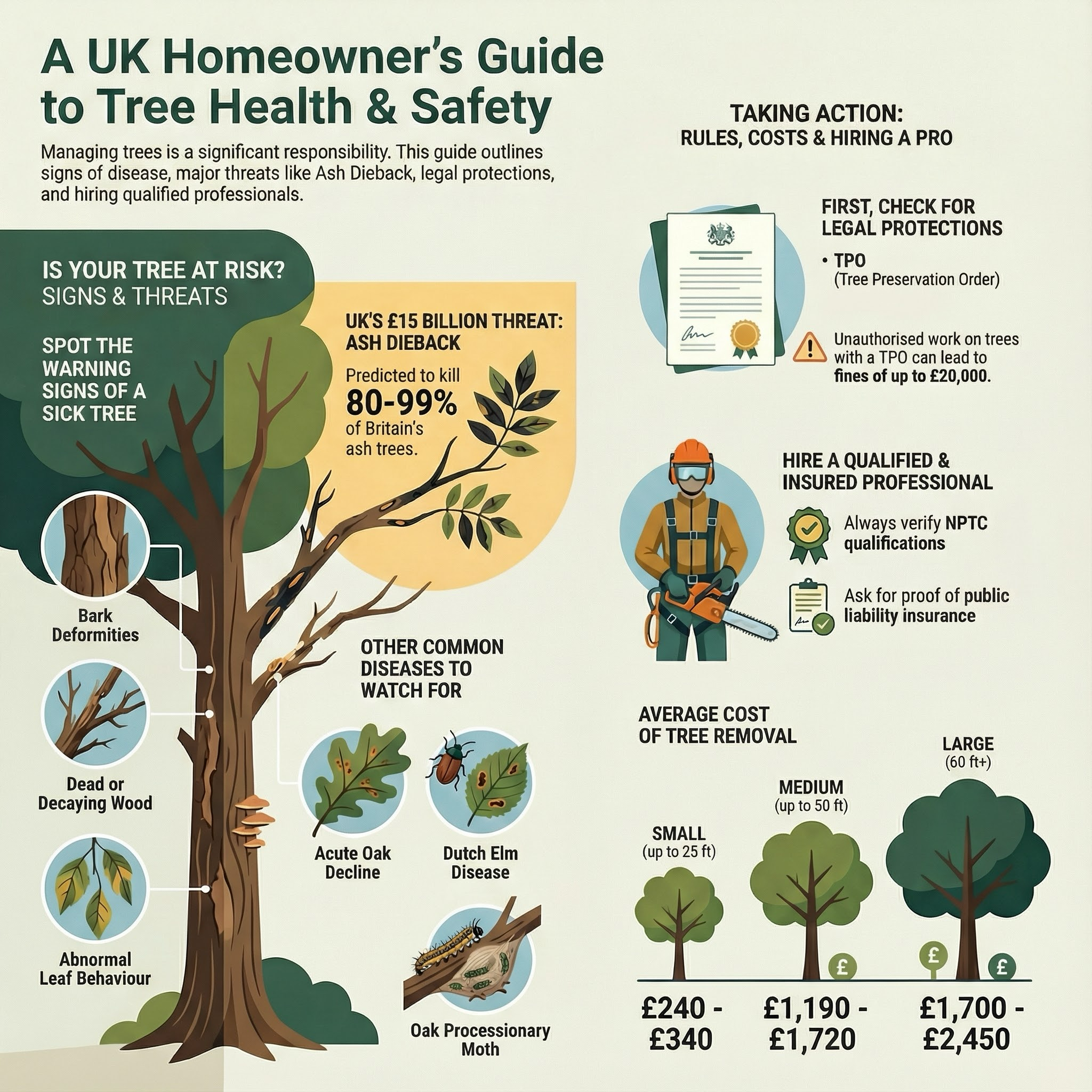
Tree Surgeon explained
For UK homeowners, efficient log extraction ensures your outdoor space is left clear, safe, and ready for use. Whether you intend to keep the timber for a wood burner or need it hauled away entirely, professional extraction prevents the physical strain and property risks associated with moving large-scale green waste.
Prices for log extraction vary based on the volume of timber and how difficult it is to move the wood to a vehicle. Costs typically include labour, fuel, and disposal fees if the wood is not staying on-site.
| Item | Low £ | High £ | Notes |
|---|---|---|---|
| Minimum Call-Out / Small Load | £150 | £300 | Single small tree or pre-cut logs. |
| Half-Day Extraction (2-man team) | £400 | £600 | Standard garden clearance with good access. |
| Full-Day Heavy Extraction | £800 | £1,400 | Large trees or multiple loads. |
| Specialist Crane (HIAB) Hire | £450 | £850 | Required for very large trunks or over-wall lifts. |
Factors affecting the price include the distance from the tree to the road, the presence of narrow side gates, and whether the ground is soft, requiring protective tracking to prevent lawn damage.
Moving large logs is deceptively dangerous; a single section of a fresh oak trunk can weigh several hundred kilograms. While you can move small branches yourself, extracting large timber requires professional chainsaws, heavy-duty lifting gear, and often hydraulic machinery.
Professional tree surgeons carry Public Liability insurance and have the training to move heavy loads without compromising their safety or your property's integrity.
Yes, most tree surgeons are happy to leave the wood for you. They will usually "ring" it up (cut it into discs) for an agreed fee, though you will still need to split and season it for at least 12-24 months before burning.
Professional teams use timber trolleys with pneumatic tyres or ground mats to minimise impact. However, some minor scuffing of grass is common when moving several tonnes of wood.
A HIAB is a lorry-mounted crane. You only need one if the logs are too heavy to lift by hand and there is no room for a mini-loader, or if the logs need to be lifted over a wall or fence.
Generally, no. For insurance reasons, professionals usually prefer you stay clear of the work zone. It is safer and more efficient for a coordinated team to handle the extraction.
Most full-service tree surgeons will chip the smaller branches (brash) and take them away as part of the extraction process, leaving the site tidy.
This guide was written with AI assistance and is intended for general information only. Prices are estimates based on UK averages and may vary by region. Always get at least three quotes and consult a qualified professional before starting any work.
Ask follow-ups in plain English. The AI explains options, sequencing and what to ask the tree surgeon — so you walk in informed.
Products & Services • Supply a wide range of premium timber products including softwood, hardwood, and treated timber • Custom cutting and sizing services t...
READ GUIDE →GuideProfessional tree and bush maintenance is essential for more than just a tidy garden. In the UK, proper arboriculture ensures the safety of your property, the h...
READ GUIDE →GuideTree felling is a high-risk task that requires precision, specialist equipment, and a deep understanding of tree biology. Whether you are removing a dead tree f...
READ GUIDE →GuideMaintaining the trees on your property is about more than just aesthetics; it is a critical part of property safety and health. Whether you have a towering oak ...
READ GUIDE →GuideCrown thinning is a precise arboricultural technique designed to improve a tree's structure without altering its overall size or shape. By selectively removing ...
READ GUIDE →GuideProper tree maintenance is essential for the safety, health, and aesthetic value of your UK property. Whether you are dealing with an overgrown oak, a storm-dam...
READ GUIDE →