Instant
01 · Ask
Ask the AI a follow-up
Got more questions about chimney Sweep Costs &? Describe the bit you're unsure about — the AI explains options, sequencing and what to ask the chimney sweep.

What sweeps charge in 2026, by flue type, region and fuel — and what extra services typically add.
You've read the brief on chimney Sweep Costs &. Now lean on us to find the right chimney sweep — and stay in control of the job.
Got more questions about chimney Sweep Costs &? Describe the bit you're unsure about — the AI explains options, sequencing and what to ask the chimney sweep.
Costs, timelines, pitfalls and the right questions to ask before any chimney sweep starts on chimney Sweep Costs &.
Itemised quotes from up to 3 local chimney sweeps on chimney Sweep Costs & — so you can compare like-for-like, not lump sums.
Ready when you are
Enter your postcode and get free quotes from local pros.
Four moves that separate a smooth job from a nightmare.
Burning unseasoned (wet) wood creates a sticky, tar-like substance that is highly flammable and difficult to remove.
Jackdaws frequently build nests in chimneys; these are massive structures that can completely block the flue and cause smoke to back up into the room.
If a chimney isn't swept regularly, large clumps of soot can fall, potentially damaging the appliance or causing a mess in the living room.
Over time, clay or metal liners can crack or corrode, allowing dangerous gases to seep into the wall cavities or upper floors.
Indicative UK ranges and what affects price.
By job type
Quote spread is typically ± 18% — always get 3 quotes.
Chimney Sweep quick-view
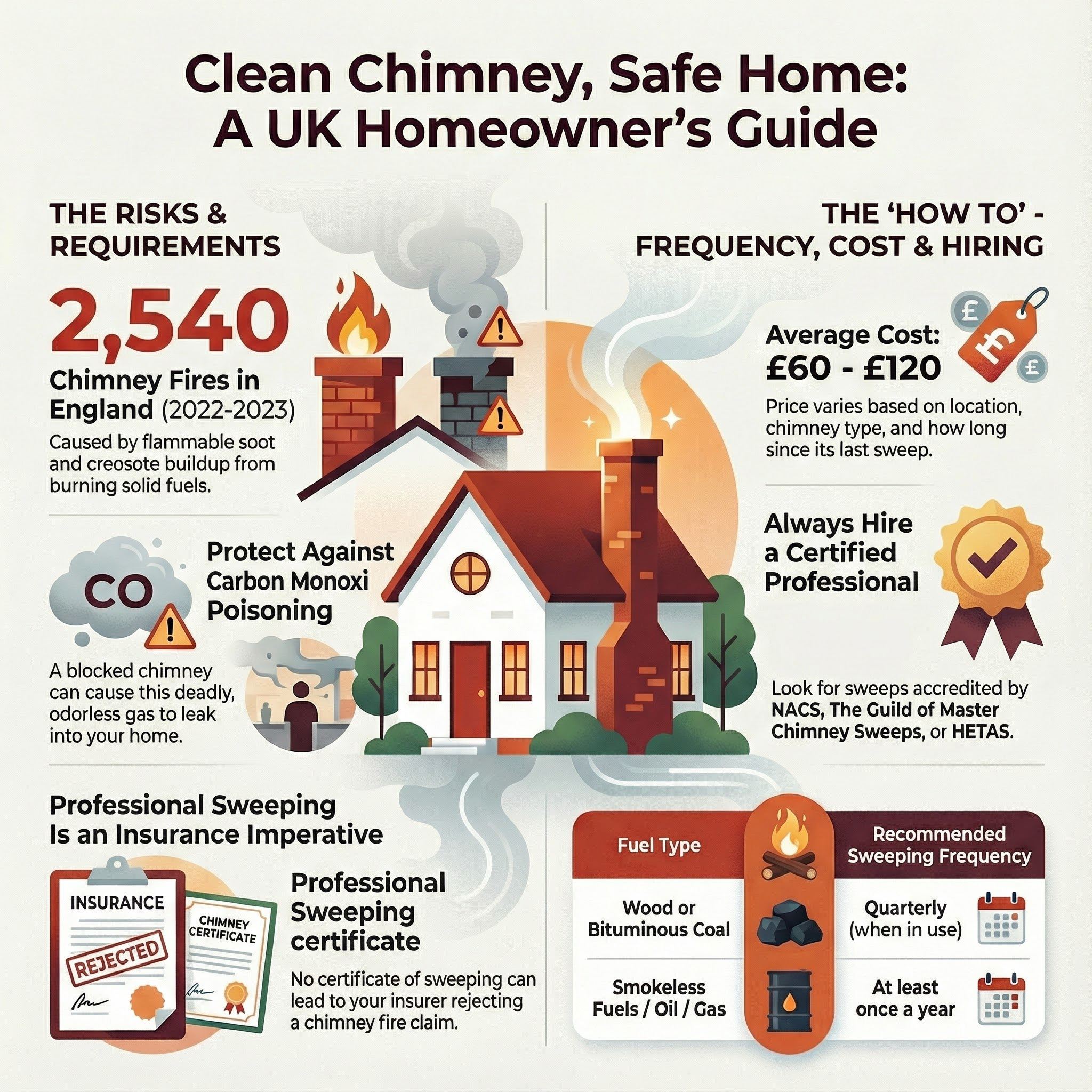
Chimney Sweep explained
In addition to fire safety, a clean flue ensures that combustion gases, including the "silent killer" carbon monoxide, are vented safely out of your home. Most UK home insurance providers now require proof of professional sweeping at least once a year to maintain valid cover.
Prices for chimney sweeping in the UK remain relatively stable, though homeowners in London and the South East should expect to pay a "capital premium" of roughly 20-30%.
| Service Type | Low £ | High £ | Notes |
|---|---|---|---|
| Standard Open Fire Sweep | £60 | £90 | Basic annual maintenance. |
| Wood Burner / Multi-Fuel Stove | £70 | £110 | Includes liner cleaning and baffle plate removal. |
| Bird Nest Removal | £100 | £180 | Includes sweep and disposal of debris. |
| CCTV Flue Inspection | £150 | £300 | Detailed internal survey for damage or leaks. |
| Inglenook Fireplace | £90 | £150 | Larger flues requiring more time and equipment. |
The total cost is influenced by the type of appliance, the height of the property, and the time since the last sweep. If the sweep discovers a major blockage or a dead animal, additional hourly rates may apply for the extra labour involved.
While you can buy DIY chimney rod kits at most hardware stores, sweeping your own chimney is rarely advisable. Professional sweeps have the training to spot early signs of dangerous structural failure or carbon monoxide leaks that an amateur would miss.
Most UK home insurance policies are void if a chimney fire occurs and you cannot produce a certificate from a registered professional sweep.
Furthermore, professional equipment like HEPA vacuums and specialized power-heads are far more effective at removing stubborn tar and creosote than manual DIY brushes. If you have a lined stove, using the wrong DIY brush can actually tear or damage the expensive stainless steel liner.
Chimney sweeping is an unregulated industry in the UK, meaning anyone can buy a brush and call themselves a sweep. It is essential to vet your tradesperson thoroughly.
For wood-burning stoves, you should sweep twice a year when in use. For smokeless coal or oil-fired appliances, once a year is usually sufficient. If you are burning bituminous coal, quarterly sweeps may be necessary during the winter months.
No. Professional sweeps use "soot sheets" to cover the hearth and industrial vacuums to catch dust at the source. When done correctly, there should be no visible dust or soot left in your room.
Absolutely not. Lighting a fire under a nest is a major fire hazard and will likely lead to carbon monoxide poisoning as the smoke cannot escape. You must have the nest professionally removed first.
Yes. While smokeless fuel produces less visible smoke, it still produces soot and chemical deposits that can build up and corrode your flue or cause blockages over time.
This is a safety check performed after sweeping. The sweep lights a smoke pellet in the fireplace to ensure the smoke travels up the flue and exits the pot efficiently, confirming there are no major leaks or air pockets.
This "downdraught" can be caused by a blockage (like a nest), a cold flue, or even the height of nearby trees or buildings. A professional sweep can diagnose the cause and recommend a specific cowl or solution.
This guide was written with AI assistance and is intended for general information only. Prices are estimates based on UK averages and may vary by region. Always get at least three quotes and consult a qualified professional before starting any work.
Ask follow-ups in plain English. The AI explains options, sequencing and what to ask the chimney sweep — so you walk in informed.
Regular chimney sweeping is more than just a traditional household chore; it is a critical safety requirement for any UK homeowner with a functional fireplace o...
READ GUIDE →GuideRegular chimney sweeping is more than just a traditional chore; it is a vital safety requirement for any UK home with a working fireplace, wood-burning stove, o...
READ GUIDE →GuideA chimney cap—often referred to as a cowl or bird guard—is a vital line of defence for your UK home. It prevents rainwater from entering the flue, stops birds f...
READ GUIDE →GuideRegular chimney maintenance is about more than just a clear flue; it is a critical safety measure for any UK home with a working fireplace or wood-burning stove...
READ GUIDE →GuideRegular chimney sweeping is a vital maintenance task for any UK homeowner with an open fire, wood-burning stove, or multi-fuel appliance. Beyond ensuring your f...
READ GUIDE →GuideA blocked chimney is more than just a nuisance; it is a serious fire hazard and a leading cause of carbon monoxide poisoning in UK homes. Whether caused by soot...
READ GUIDE →