Instant
01 · Ask
Ask the AI a follow-up
Got more questions about bathroom and Kitchen Tile Cleaning? Describe the bit you're unsure about — the AI explains options, sequencing and what to ask the cleaning services.

Grout scrubbed, limescale removed and tiles polished — better than DIY with a steam cleaner.
You've read the brief on bathroom and Kitchen Tile Cleaning. Now lean on us to find the right cleaning services — and stay in control of the job.
Got more questions about bathroom and Kitchen Tile Cleaning? Describe the bit you're unsure about — the AI explains options, sequencing and what to ask the cleaning services.
Costs, timelines, pitfalls and the right questions to ask before any cleaning services starts on bathroom and Kitchen Tile Cleaning.
Itemised quotes from up to 3 local cleaning servicess on bathroom and Kitchen Tile Cleaning — so you can compare like-for-like, not lump sums.
Ready when you are
Enter your postcode and get free quotes from local pros.
Four moves that separate a smooth job from a nightmare.
Using the wrong acidic cleaner on limestone or marble can "eat" the surface, leaving dull, white marks that are difficult to fix.
If mould isn't treated with a professional-grade fungicide, the "musty" smell will return within weeks.
Inexperienced cleaners using excessive water without proper extraction can cause moisture to seep behind tiles, potentially damaging floorboards or plasterboard.
If a sealant is applied before the grout is 100% dry, it can trap moisture, leading to cloudy white patches known as efflorescence.
Indicative UK ranges and what affects price.
By job type
Quote spread is typically ± 18% — always get 3 quotes.
Cleaning Services quick-view
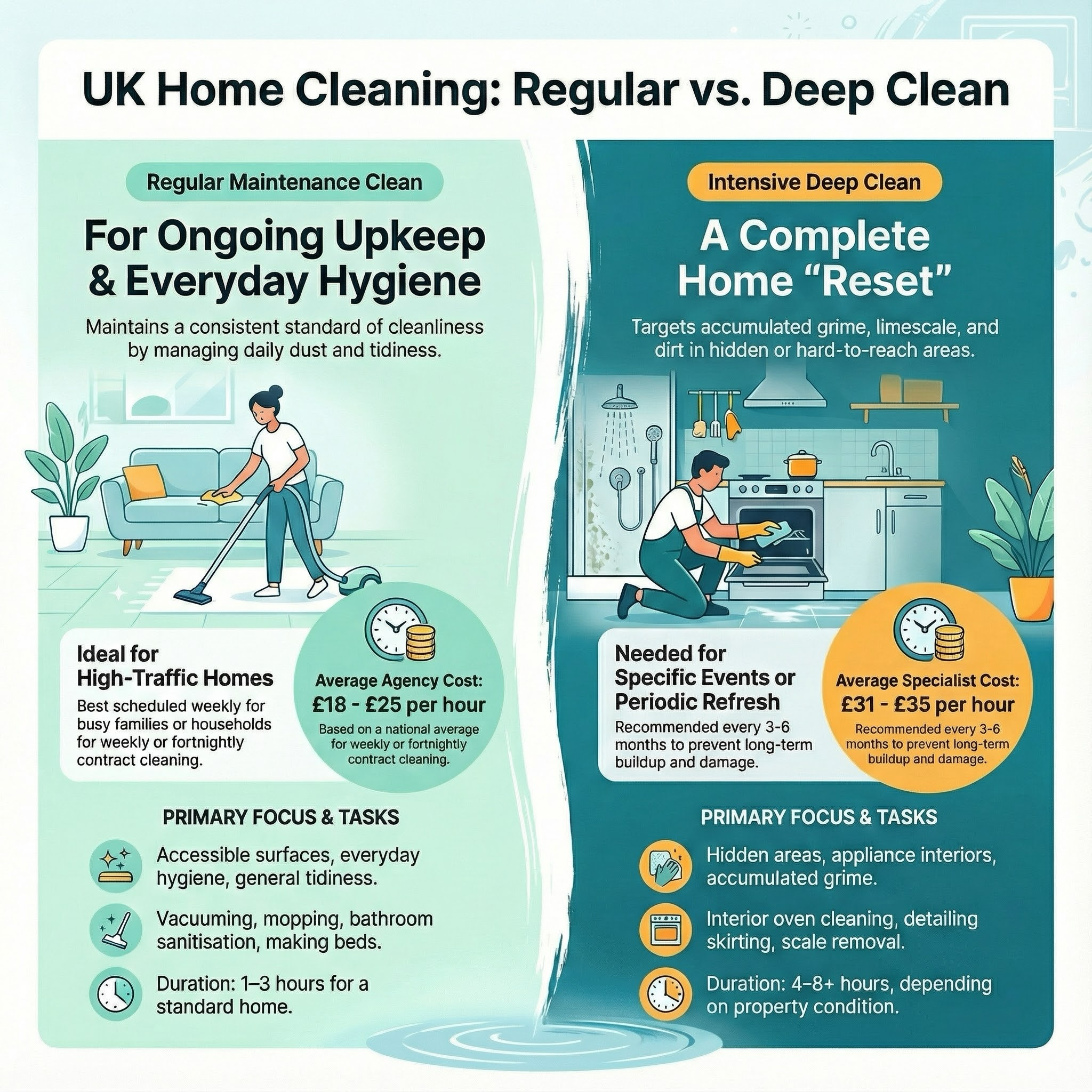
Cleaning Services explained
For UK homeowners, maintaining these surfaces isn't just about aesthetics; it is about hygiene and protecting the structural integrity of your walls and floors. A professional deep clean removes deeply embedded contaminants that domestic sprays simply cannot reach, often restoring tiles to their original "just-installed" look.
Prices for tile cleaning vary based on the size of the room and the level of soiling. Natural stone tiles (like marble or travertine) often cost more as they require specialised, non-acidic products and post-clean sealing.
| Item | Low £ | High £ | Notes |
|---|---|---|---|
| Minimum Call-Out Fee | £75 | £120 | Covers travel and initial setup for small jobs. |
| Standard Bathroom (Deep Clean) | £150 | £250 | Includes walls, floor, and shower enclosure. |
| Large Kitchen Floor (Per m²) | £10 | £20 | Price decreases as the total area increases. |
| Grout Sealing (Optional) | £50 | £100 | Protects clean grout from future staining. |
| Natural Stone Restoration | £250 | £500 | Includes diamond polishing and specialist sealing. |
Most reputable UK cleaning firms will include the cost of professional-grade chemicals and equipment in their quote. Always clarify if VAT is included, as many independent tradespeople may sit below the VAT threshold while larger companies will add 20%.
While weekly maintenance is a DIY task, a restorative deep clean often requires professional intervention. Domestic "off-the-shelf" cleaners are frequently too weak to remove deep-seated mould or too acidic for natural stone, which can lead to permanent etching or damage.
Professional cleaners use high-pressure steam and industrial vacuums that extract dirty water immediately, preventing it from simply soaking back into the porous grout lines.
If your bathroom has significant black mould growth, a professional can safely treat it using biocides that kill spores at the root. However, if the grout is physically crumbling or falling out, you may need a tiler to "rake out" and regrout the area rather than just a cleaner.
While there are no specific building regulations for cleaning, professionals must adhere to COSHH (Control of Substances Hazardous to Health). This ensures that the chemicals used in your home are handled safely and ventilated correctly.
In most cases, yes. Professional deep cleaning removes the majority of surface stains. For permanent staining, many pros offer "grout recolouring," which involves applying an epoxy-based pigment over the grout to provide a uniform, waterproof finish.
For high-traffic areas like kitchens or family bathrooms, a professional clean every 12 to 18 months is recommended. This prevents the build-up of bacteria and keeps the sealant (if applied) in good condition.
Yes. To get the best results, you should remove all toiletries, towels, bath mats, and small items of furniture. The cleaner needs clear access to all edges and corners to ensure a thorough finish.
Professional steam cleaning and specialised biocides will kill active mould spores. However, if the mould has grown behind the silicone sealant, the sealant will likely need to be stripped and replaced rather than just cleaned.
Absolutely. Grout is naturally porous and acts like a sponge for dirty water. Applying a high-quality impregnating sealer creates a barrier that gives you more time to wipe up spills before they soak in and cause stains.
This guide was written with AI assistance and is intended for general information only. Prices are estimates based on UK averages and may vary by region. Always get at least three quotes and consult a qualified professional before starting any work.
Ask follow-ups in plain English. The AI explains options, sequencing and what to ask the cleaning services — so you walk in informed.
Leather furniture is a significant investment for any UK home, offering durability and timeless style. However, scuffs, scratches, and fading are inevitable ove...
READ GUIDE →GuideThe kitchen and lounge are the hardest-working rooms in any UK home. While the lounge is your primary space for relaxation, the kitchen is a high-traffic zone t...
READ GUIDE →GuideMaintaining a clean commercial environment is about more than just appearances; it is a fundamental requirement for health, safety, and operational efficiency. ...
READ GUIDE →GuideMaintaining a professional workspace is about more than just aesthetics; it is essential for employee health, productivity, and making the right impression on c...
READ GUIDE →GuideMoving house is one of life’s most stressful events, and the final hurdle is often the most daunting: the end-of-tenancy deep clean. This isn't a standard weekl...
READ GUIDE →GuideA flat deep clean is more than just a quick vacuum and a wipe-down of surfaces. It is a comprehensive, "top-to-bottom" sanitisation of your home, designed to ta...
READ GUIDE →