Instant
01 · Ask
Ask the AI a follow-up
Got more questions about building cleaning? Describe the bit you're unsure about — the AI explains options, sequencing and what to ask the cleaning services.

Office, shop or commercial premises — regular slots or one-off, daytime or out-of-hours.
You've read the brief on building cleaning. Now lean on us to find the right cleaning services — and stay in control of the job.
Got more questions about building cleaning? Describe the bit you're unsure about — the AI explains options, sequencing and what to ask the cleaning services.
Costs, timelines, pitfalls and the right questions to ask before any cleaning services starts on building cleaning.
Itemised quotes from up to 3 local cleaning servicess on building cleaning — so you can compare like-for-like, not lump sums.
Ready when you are
Enter your postcode and get free quotes from local pros.
Four moves that separate a smooth job from a nightmare.
Using excessive pressure near window seals or vents can cause internal flooding and damp.
Using the wrong pH cleaner on natural stone (like limestone or sandstone) can cause permanent orange or white staining.
Failing to notify residents often leads to complaints regarding blocked access or wet paint/floors.
Pressure washing without checking gullies first can lead to flash flooding in bin stores or basement areas.
Indicative UK ranges and what affects price.
By job type
Quote spread is typically ± 18% — always get 3 quotes.
Cleaning Services quick-view
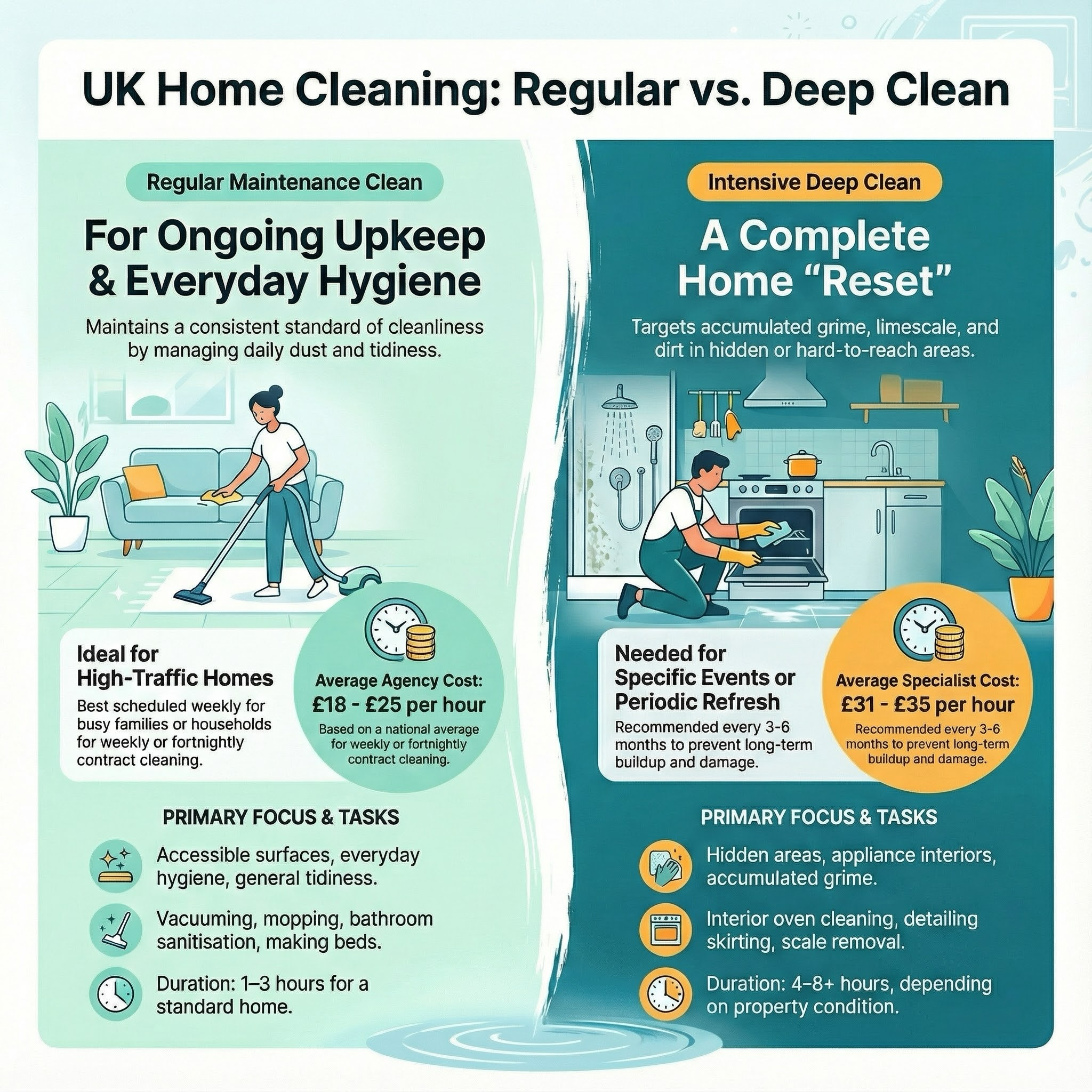
Cleaning Services explained
In the UK's damp climate, moss, algae, and lichens can quickly take hold on brickwork and walkways, leading to slippery surfaces and potential water ingress. A comprehensive clean not only improves the look of your property but also identifies minor maintenance issues before they become expensive repairs.
Pricing for building cleaning varies significantly based on the size of the property and the level of "soiling." Most UK contractors charge a minimum call-out fee to cover travel and equipment setup.
| Item | Low £ | High £ | Notes |
|---|---|---|---|
| Call-out / Minimum Charge | £85 | £160 | Covers the first 60 minutes on site. |
| Labour (per hour) | £45 | £80 | Per operative; includes VAT and standard kit. |
| Materials & Biocides | £25 | £300 | Higher costs for specialist stone restorers. |
| Waste Disposal | £40 | £180 | Required for contaminated waste or heavy debris. |
| Access Equipment | £150 | £1,000 | Daily hire for cherry pickers or scaffolding towers. |
| Typical Total Project | £220 | £850 | Average for a small-to-medium communal block. |
Factors affecting the final price include the height of the building, the proximity to a water source, and whether specialist "soft wash" equipment is required for delicate heritage masonry.
While basic internal vacuuming and mopping are manageable for homeowners, external building cleaning is strictly professional territory. Pressure washing brickwork incorrectly can strip mortar and cause internal damp, while working at height requires specialist training and equipment.
Professional cleaners use regulated biocides and steam systems (like DOFF or JOS) that clean effectively without damaging the substrate of the building.
Furthermore, handling hazardous waste like bird guano or heavy mould requires specific PPE and disposal protocols under UK health and safety legislation that most DIYers cannot meet.
Questions to ask:
Internal communal areas usually require weekly or fortnightly cleaning. External pressure washing and window cleaning are typically performed every 6 to 12 months to prevent algae build-up.
Most modern biocides are biodegradable and safe once dry. However, your contractor should pre-wet surrounding plants and keep pets away from the work area until the treatment has fully absorbed.
Most external cleaners use van-mounted "reach and wash" systems or petrol-powered pressure washers, but they may need access to an external water bib-tap. Internal cleaners usually require access to a communal power socket and a cleaner's sink.
Yes, but this is often a specialist service. It requires specific chemical strippers or high-temperature steam to remove the ink without ghosting the brickwork underneath.
Soft washing uses low-pressure pumps to apply chemical cleaners rather than relying on high-pressure water. It is the safest method for cleaning UK render (like K-Rend) and delicate heritage brickwork.
This guide was written with AI assistance and is intended for general information only. Prices are estimates based on UK averages and may vary by region. Always get at least three quotes and consult a qualified professional before starting any work.
Ask follow-ups in plain English. The AI explains options, sequencing and what to ask the cleaning services — so you walk in informed.
Leather furniture is a significant investment for any UK home, offering durability and timeless style. However, scuffs, scratches, and fading are inevitable ove...
READ GUIDE →GuideThe kitchen and lounge are the hardest-working rooms in any UK home. While the lounge is your primary space for relaxation, the kitchen is a high-traffic zone t...
READ GUIDE →GuideMaintaining a clean commercial environment is about more than just appearances; it is a fundamental requirement for health, safety, and operational efficiency. ...
READ GUIDE →GuideMaintaining a professional workspace is about more than just aesthetics; it is essential for employee health, productivity, and making the right impression on c...
READ GUIDE →GuideMoving house is one of life’s most stressful events, and the final hurdle is often the most daunting: the end-of-tenancy deep clean. This isn't a standard weekl...
READ GUIDE →GuideA flat deep clean is more than just a quick vacuum and a wipe-down of surfaces. It is a comprehensive, "top-to-bottom" sanitisation of your home, designed to ta...
READ GUIDE →