Instant
01 · Ask
Ask the AI a follow-up
Got more questions about carpet and Upholstery Cleaning? Describe the bit you're unsure about — the AI explains options, sequencing and what to ask the cleaning services.

Hot-water extraction, low-moisture or dry-foam — when each suits which carpet.
You've read the brief on carpet and Upholstery Cleaning. Now lean on us to find the right cleaning services — and stay in control of the job.
Got more questions about carpet and Upholstery Cleaning? Describe the bit you're unsure about — the AI explains options, sequencing and what to ask the cleaning services.
Costs, timelines, pitfalls and the right questions to ask before any cleaning services starts on carpet and Upholstery Cleaning.
Itemised quotes from up to 3 local cleaning servicess on carpet and Upholstery Cleaning — so you can compare like-for-like, not lump sums.
Ready when you are
Enter your postcode and get free quotes from local pros.
Four moves that separate a smooth job from a nightmare.
Can cause carpet shrinkage, browning (cellulosic browning), or a lingering musty odour.
Occurs when cheap detergents are not properly rinsed out, leaving a sticky residue that attracts dirt.
Using high-pH chemicals on natural wool carpets can cause permanent "yellowing" or fibre degradation.
Stains that disappear when wet but reappear as the carpet dries; usually solved by better extraction or specialized drying techniques.
Indicative UK ranges and what affects price.
By job type
Quote spread is typically ± 18% — always get 3 quotes.
Cleaning Services quick-view
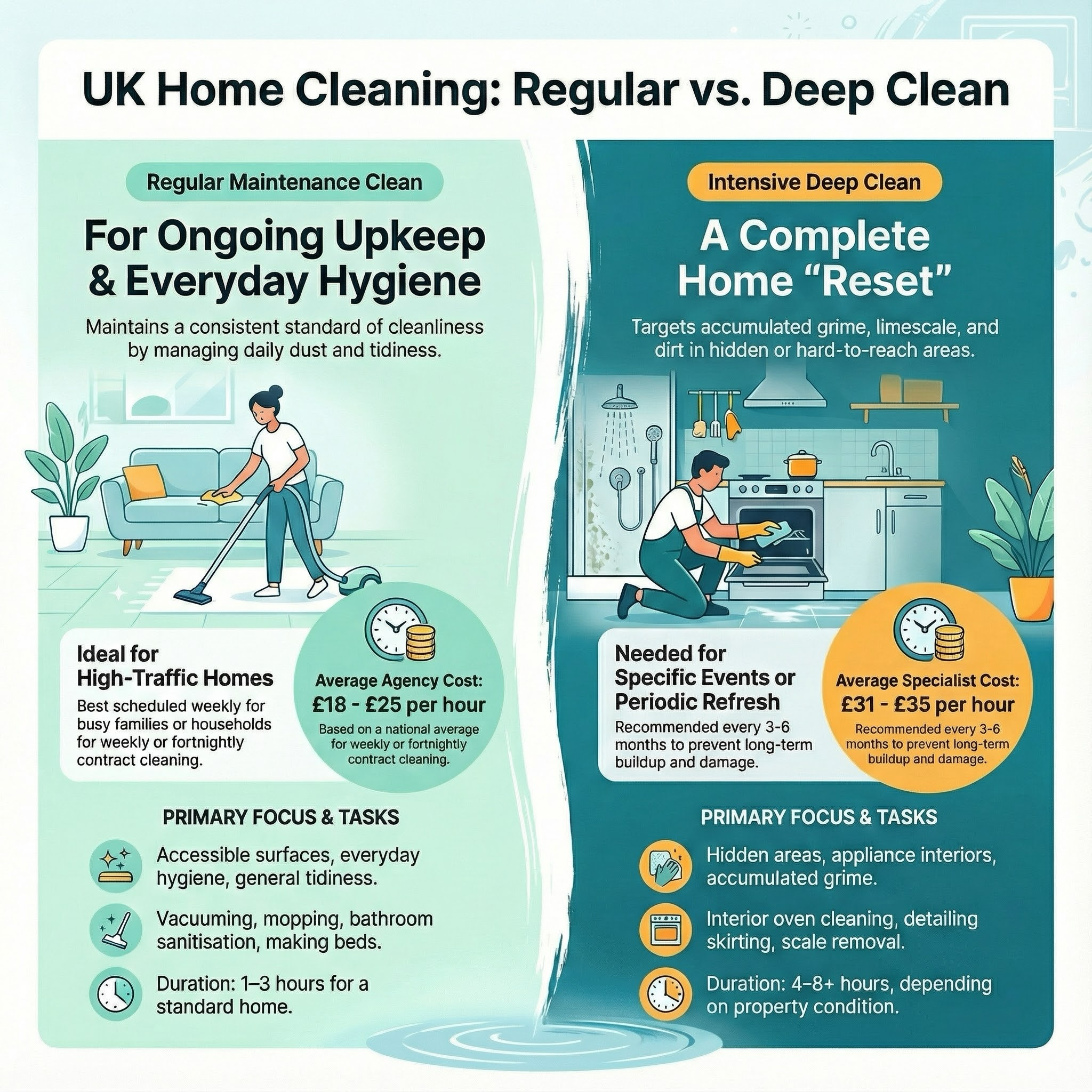
Cleaning Services explained
Engaging a professional ensures your carpets and sofas are treated with the correct pH-balanced chemicals and high-powered extraction equipment. This guide outlines what to expect, from current UK market rates to the technical standards required for a high-quality finish.
Prices in the UK vary based on your location, the size of the rooms, and the type of fabric being cleaned. Most professionals have a minimum call-out fee to cover travel and setup costs.
| Item | Low £ | High £ | Notes |
|---|---|---|---|
| Single Room (Small/Medium) | £40 | £70 | Minimum call-out fees often apply. |
| 3-Bedroom House (Full Clean) | £180 | £300 | Includes hallways and landings. |
| 3-Seater Sofa | £60 | £110 | Price varies by fabric (e.g., velvet vs. polyester). |
| Staircase (per flight) | £30 | £50 | Labour-intensive due to individual treads. |
| Stain Protection Treatment | £15 | £30 | Per room; usually an optional add-on. |
Factors affecting the final quote include the level of staining, the presence of pet odours requiring enzyme treatments, and whether you require furniture to be moved and replaced on protective tabs.
While hiring a supermarket carpet cleaner is cheaper, these machines lack the suction power and heat of professional-grade equipment. Excessive moisture from DIY machines often leads to "wet dog" smells or mould if the carpet stays damp for too long.
Pro Tip: Professionals use "truck-mount" or high-end portable extractors that remove 90% of the water used, ensuring your carpets are dry and safe to walk on much faster.
In the UK, the carpet cleaning industry is unregulated, so it is vital to vet your technician carefully to avoid "splash and dash" operators.
You can usually walk on it immediately with clean socks or indoor slippers, but avoid outdoor shoes or bare feet for at least 4-6 hours. Walking on damp carpet with bare feet can transfer oils from your skin back onto the fibres.
While most stains can be removed, some substances (like bleach, certain dyes, or old urine) can permanently alter the fibre colour. Professional "pet packages" use enzyme cleaners to break down urea and salts, which is far more effective than standard cleaning.
Most cleaners will move light furniture (chairs, small tables) but ask that you remove breakables and electronics. Large items like wardrobes or heavy sideboards are usually cleaned around unless otherwise agreed.
Hot Water Extraction (steam) is generally considered the deepest clean for most carpets. However, dry or low-moisture cleaning is preferred for delicate sisal, seagrass, or in commercial settings where immediate foot traffic is required.
For a typical UK household, once every 12 to 18 months is recommended. If you have pets, allergies, or young children, you may benefit from a professional clean every 6 months to maintain air quality.
This guide was written with AI assistance and is intended for general information only. Prices are estimates based on UK averages and may vary by region. Always get at least three quotes and consult a qualified professional before starting any work.
Ask follow-ups in plain English. The AI explains options, sequencing and what to ask the cleaning services — so you walk in informed.
Leather furniture is a significant investment for any UK home, offering durability and timeless style. However, scuffs, scratches, and fading are inevitable ove...
READ GUIDE →GuideThe kitchen and lounge are the hardest-working rooms in any UK home. While the lounge is your primary space for relaxation, the kitchen is a high-traffic zone t...
READ GUIDE →GuideMaintaining a clean commercial environment is about more than just appearances; it is a fundamental requirement for health, safety, and operational efficiency. ...
READ GUIDE →GuideMaintaining a professional workspace is about more than just aesthetics; it is essential for employee health, productivity, and making the right impression on c...
READ GUIDE →GuideMoving house is one of life’s most stressful events, and the final hurdle is often the most daunting: the end-of-tenancy deep clean. This isn't a standard weekl...
READ GUIDE →GuideA flat deep clean is more than just a quick vacuum and a wipe-down of surfaces. It is a comprehensive, "top-to-bottom" sanitisation of your home, designed to ta...
READ GUIDE →