Instant
01 · Ask
Ask the AI a follow-up
Got more questions about office cleaning? Describe the bit you're unsure about — the AI explains options, sequencing and what to ask the cleaning services.

Daily, weekly or monthly — desks, kitchens, washrooms and floors, by an out-of-hours team.
You've read the brief on office cleaning. Now lean on us to find the right cleaning services — and stay in control of the job.
Got more questions about office cleaning? Describe the bit you're unsure about — the AI explains options, sequencing and what to ask the cleaning services.
Costs, timelines, pitfalls and the right questions to ask before any cleaning services starts on office cleaning.
Itemised quotes from up to 3 local cleaning servicess on office cleaning — so you can compare like-for-like, not lump sums.
Ready when you are
Enter your postcode and get free quotes from local pros.
Four moves that separate a smooth job from a nightmare.
This often happens when different staff members are sent each week; look for companies that assign a dedicated cleaner to your site.
Ensure the company uses a colour-coded cloth system (e.g., red for toilets, blue for desks) to prevent the spread of germs.
Dust often accumulates on top of cupboards and door frames; ensure these are included in the periodic cleaning schedule.
Without a "comms book" or digital log, small issues (like a broken soap dispenser) can go unreported for weeks.
Indicative UK ranges and what affects price.
By job type
Quote spread is typically ± 18% — always get 3 quotes.
Cleaning Services quick-view
Cleaning Services explained
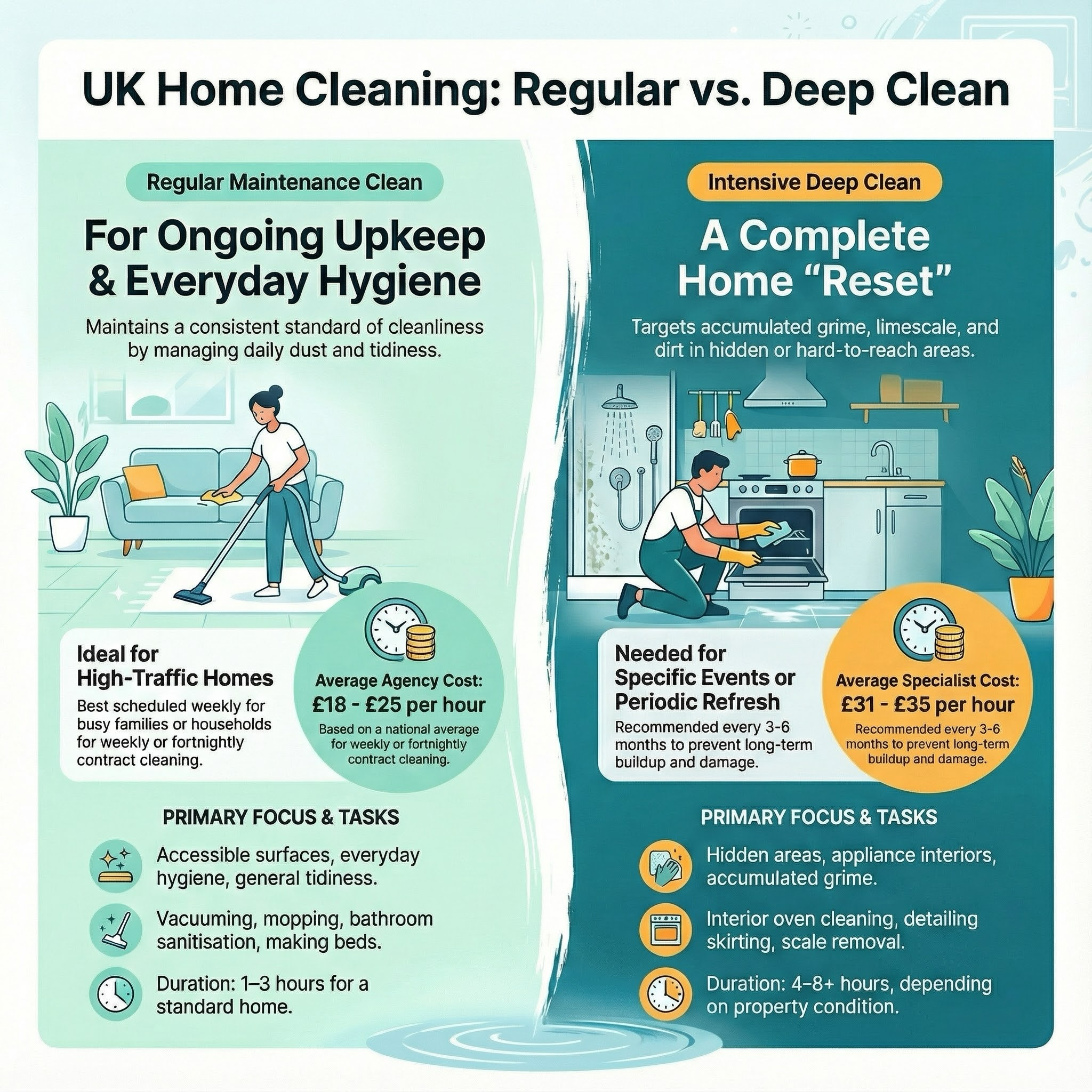
Whether you manage a small home-based studio or a multi-storey corporate headquarters, hiring professional cleaners provides access to industrial-grade equipment and specialist knowledge. From sanitising high-touch points to managing communal kitchen hygiene, a structured cleaning contract takes the burden off your staff and ensures a consistently high standard of cleanliness.
| Item / Service | Low £ | High £ | Notes |
|---|---|---|---|
| Labour (Per Hour, Per Cleaner) | £20 | £45 | Higher rates typically apply in London and for out-of-hours work. |
| Minimum Call-Out Charge | £60 | £150 | Often covers the first 1-2 hours of cleaning. |
| Monthly Contract (Small Office) | £300 | £600 | Based on 2-3 visits per week for a small team. |
| Deep Clean / End of Tenancy | £250 | £1,200+ | One-off intensive clean including carpets and upholstery. |
| Consumables (Monthly) | £30 | £100 | Cost for soap, paper towels, and bin liners. |
The total cost of office cleaning is primarily influenced by the square footage of the premises and the frequency of visits. Offices requiring daily evening cleans will benefit from lower hourly rates compared to ad-hoc or one-off "deep clean" requests which require more intensive labour and chemicals.
While small startups might consider "mucking in," professional cleaning is essential for any business with employees or public access. Professionals are trained in COSHH (Control of Substances Hazardous to Health), ensuring that chemicals are used safely and stored correctly to prevent accidents.
Professional services also carry Public Liability Insurance, protecting your business if a cleaner trips or damages expensive IT equipment. Furthermore, professional-grade HEPA-filter vacuums and hospital-grade disinfectants provide a level of hygiene that domestic equipment simply cannot match.
Top Tip: Always ask for a "Site Specification" document. This outlines exactly what will be cleaned and how often, preventing disputes over "missed" areas later on.
Most professional office cleaning companies provide their own industrial-grade equipment and chemicals. However, some smaller local cleaners may ask you to provide consumables like bin liners and toilet rolls to keep costs down.
This is your choice. Many businesses prefer "out-of-hours" cleaning (early morning or evening) to avoid noise disruption. However, "daytime cleaning" is becoming more popular as it reduces energy costs for lighting and heating.
For a standard UK office, a professional carpet deep clean (hot water extraction) is recommended every 6 to 12 months to remove allergens and extend the life of the flooring.
Reputable office cleaning firms include basic GDPR and confidentiality training in their induction. They should follow a "clear desk" policy and never move or read papers left on workstations.
A professional company will have Public Liability Insurance to cover accidental damage. You should report any damage immediately, and the company should have a formal procedure for handling claims.
This guide was written with AI assistance and is intended for general information only. Prices are estimates based on UK averages and may vary by region. Always get at least three quotes and consult a qualified professional before starting any work.
Ask follow-ups in plain English. The AI explains options, sequencing and what to ask the cleaning services — so you walk in informed.
Leather furniture is a significant investment for any UK home, offering durability and timeless style. However, scuffs, scratches, and fading are inevitable ove...
READ GUIDE →GuideThe kitchen and lounge are the hardest-working rooms in any UK home. While the lounge is your primary space for relaxation, the kitchen is a high-traffic zone t...
READ GUIDE →GuideMaintaining a clean commercial environment is about more than just appearances; it is a fundamental requirement for health, safety, and operational efficiency. ...
READ GUIDE →GuideMaintaining a professional workspace is about more than just aesthetics; it is essential for employee health, productivity, and making the right impression on c...
READ GUIDE →GuideMoving house is one of life’s most stressful events, and the final hurdle is often the most daunting: the end-of-tenancy deep clean. This isn't a standard weekl...
READ GUIDE →GuideA flat deep clean is more than just a quick vacuum and a wipe-down of surfaces. It is a comprehensive, "top-to-bottom" sanitisation of your home, designed to ta...
READ GUIDE →